

AI search in service manuals helps technicians to ask questions in plain language and receive accurate answers from complex technical documentation. Instead of scrolling through hundreds or thousands of pages, a technician types or speaks a query and gets a direct, correct result.
AI-powered service manuals index understand natural language queries, and give the right information to the technician or dealer. For OEMs, dealerships, and independent workshops, this shift from static PDFs to intelligent digital service manuals is changing how technical knowledge gets used in practice.
Issue With Traditional PDF Service Manuals
Most OEM service manuals are large, unstructured PDF files, which have thousands of pages, organized by model year, product line, or system, with no intelligent search layer. A technician in the field looking for a specific fault code or wiring diagram has to know exactly where to look; otherwise, they will spend significant time scrolling and cross-referencing.
Some of the issues dealer technicians all over the world have to face while using traditional service manuals are:
- Searching parts from traditional PDF service manuals requires technicians to flip through pages to find specific torque settings, part numbers, or repair guides, which often take several minutes to sometimes hours. Technicians lose time switching between documents, cross-referencing part numbers, and manually locating diagrams, which could have been spent fixing the vehicle, thereby delaying repair.
- Updating the service manual requires distributing a new service manual across the global network, which often may take months. In such cases, technicians are left operating on out-of-date specifications that lead to errors and further delays.
- Moreover, errors are inevitable with traditional service manuals. A PDF cannot distinguish between a query about a diesel variant and a hybrid variant of the same model, making technicians follow the wrong steps in the absence of clear visual or real-time updates, compromising compliance and safety.
- Multilingual service teams face barriers with English-only or poorly localized service manual content.
A report by McKinsey found that knowledge workers spend an average of 1.8 hours per day searching for information. This shows that using paper-based service manuals delays repair, introduces errors, and makes it harder for OEMs to manage inspection at scale
Why OEM Technical Documentation Demands a Modern Approach
The complexity of modern machinery has outpaced the ability of static documentation to keep up. Equipment now ships with sophisticated electronics, networked sensors, and software-controlled systems. A Gartner report projects that 40% of enterprise applications will include task-specific AI agents by the end of 2026, reflecting how deeply AI is being embedded into operational workflows across industries.
For OEMs, this means the expectation from dealers, aftersales networks, and field service organizations is shifting. Service teams expect documentation that behaves more like a knowledgeable colleague and less like a filing cabinet. OEM technical documentation software built on an AI search architecture is built on that expectation in ways static PDFs cannot. As it pushes real-time updates without manual redistribution, surfaces content relevant to a technician's role and skill level, integrates with dealer management systems and warranty platforms, and gives technical publications teams analytics that show exactly where documentation gaps exist.
What Is AI Search in Service Manuals for Technicians Look Like?
AI search in service manuals uses machine learning and natural language processing (NLP) to interpret technician queries and return relevant results from technical content. When a technician types a fault code or a symptom description, an AI search layer throws the most relevant answer from the service manual, including diagnostics, root cause analysis, repair steps, and part references. It goes beyond keyword matching.
This kind of contextual retrieval is what separates AI-powered service documentation from traditional search. It reduces cognitive load on the technician and compresses the time from problem identification to resolution.
In practice, AI search in digital service manuals can support:
- Fault code lookup along with full diagnostic workflow, common causes, and associated parts.
- Symptom-based search retrieves the most relevant procedures without requiring exact terminology.
- Parts identification, including 2D-3D diagrams, surfaced alongside the repair procedure.
- Multilingual support serves technicians in their preferred language, reducing errors arises from translation gaps in global aftersales teams.
Book a Free Demo Today: See how Intelli Manual helps technicians diagnose faster, improve first-time fix rates, and boost aftermarket service efficiency.
How AI Search Helps Technicians Work Faster
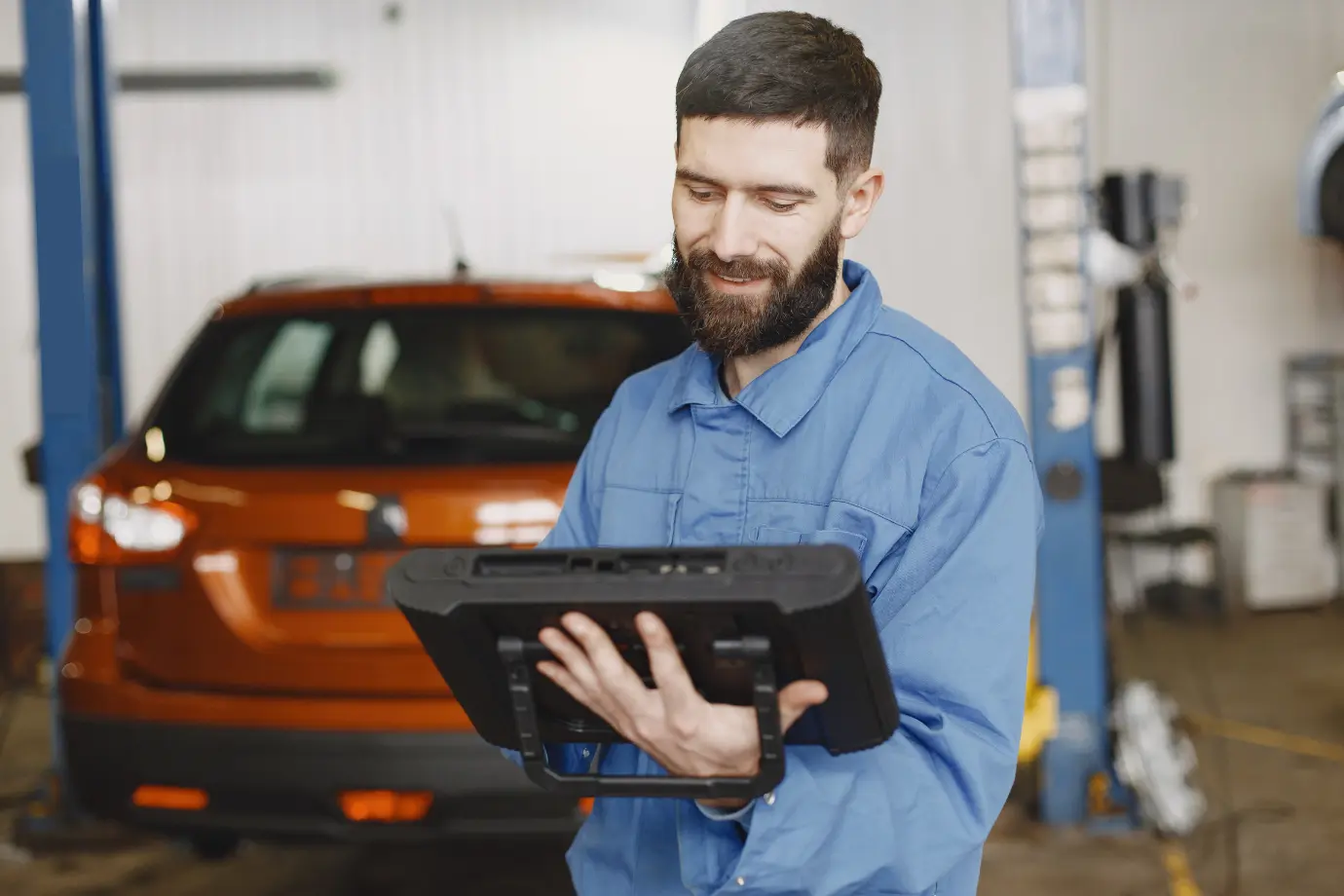
The performance gains from AI-powered search in service manuals show up across four core areas of workshop operations.
- Faster Diagnostics
When a technician encounters an unfamiliar fault code or symptom, AI search returns the relevant diagnostic procedure, applicable TSBs, and common misdiagnosis patterns associated with that fault. This compresses the time between vehicle arrival and confirmed diagnosis, turning what was once a document hunt into a direct answer.
- Reduced Repair Time
Getting to the right procedure faster means less time per job. When technicians no longer need to manually cross-reference multiple documents or re-read sections to confirm applicability, repair workflows become more direct and errors introduced through interruption drop accordingly.
- Better First-Time Fix Rates
First-time fix rate (FTFR), whether a technician resolves a repair on the first visit without a return call, is one of the most closely tracked KPIs in after-sales service. Low FTFR generates direct costs: return visits, parts delays, customer dissatisfaction, and technician rescheduling. AI-powered troubleshooting reduces misdiagnosis by surfacing complete, vehicle-specific information before and during the repair, giving technicians what they need to get it right the first time.
- Improved Information Access Across Skill Levels
A newer technician can query a complex system and receive a guided, step-by-step response without needing to know the document structure or naming conventions the OEM uses internally. This reduces dependency on senior technicians for routine guidance, improves throughput in understaffed workshops, and means institutional knowledge is no longer locked behind years of experience. It is accessible at the point of need.
Interactive Digital Manuals as the Standard for Modern OEMs
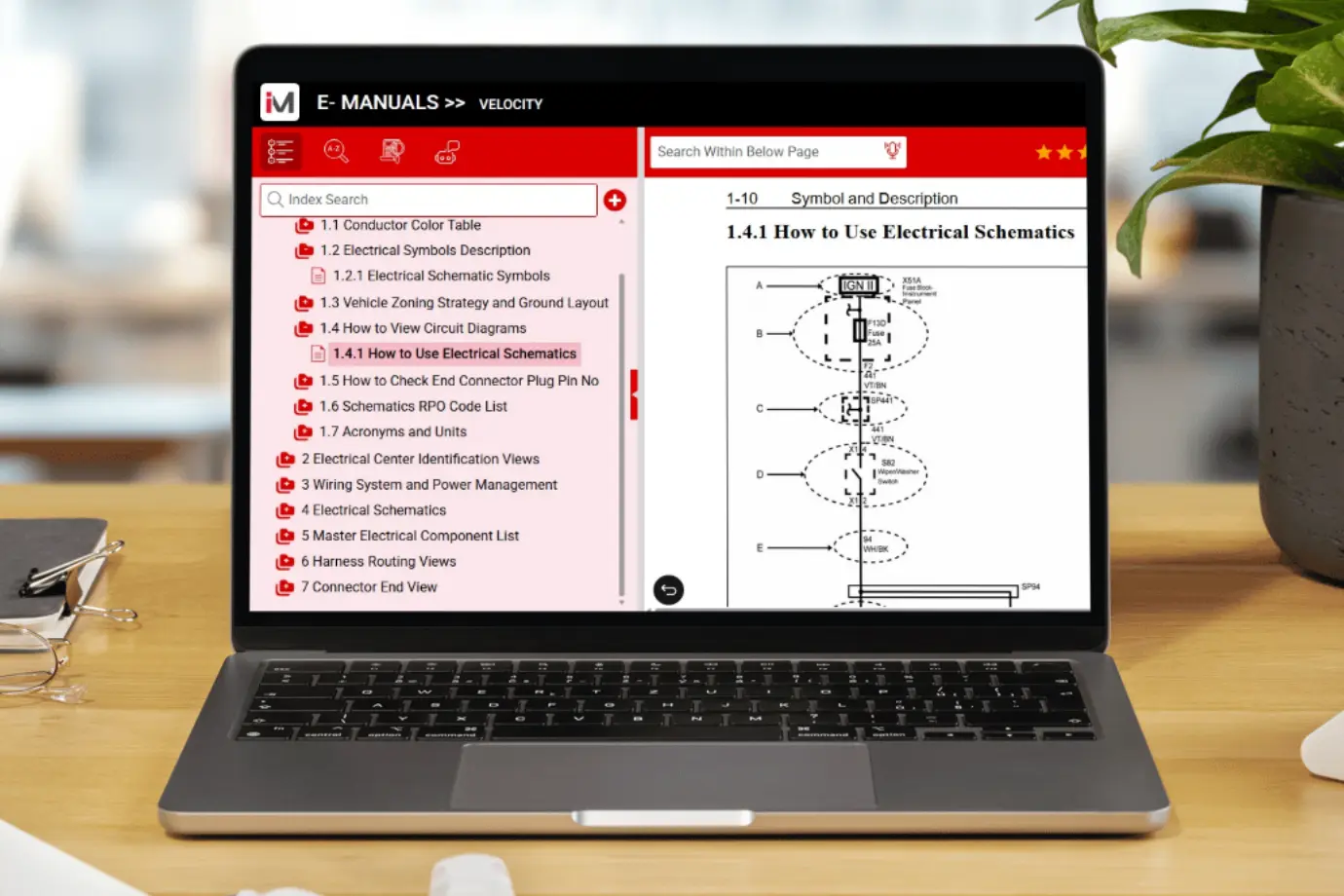
Digital service manuals like Intelli Manual, built on interactive platforms, take AI search a step further. Rather than simply searching a document, technicians interact with content that is structured for how service work actually happens. Diagrams are zoomable and linked to parts catalogs. Procedures are broken into steps that can be checked off; moreover, videos and annotations are embedded alongside text.
This is where the distinction between a searchable PDF and a true interactive digital manual becomes commercially significant. An interactive manual built on an AI-capable platform serves as a living technical resource that scales with product complexity, supports global service networks, and continuously improves based on usage data.
For technical publications teams at OEMs, this means a fundamental shift in how content is authored, maintained, and distributed. Instead of producing a PDF that gets emailed to a dealer network and forgotten, the content of the digital service manual is updated in real time and accessed through a consistent digital interface by every technician in the network.
What are the Key Features of AI-Powered Interactive Service Manuals
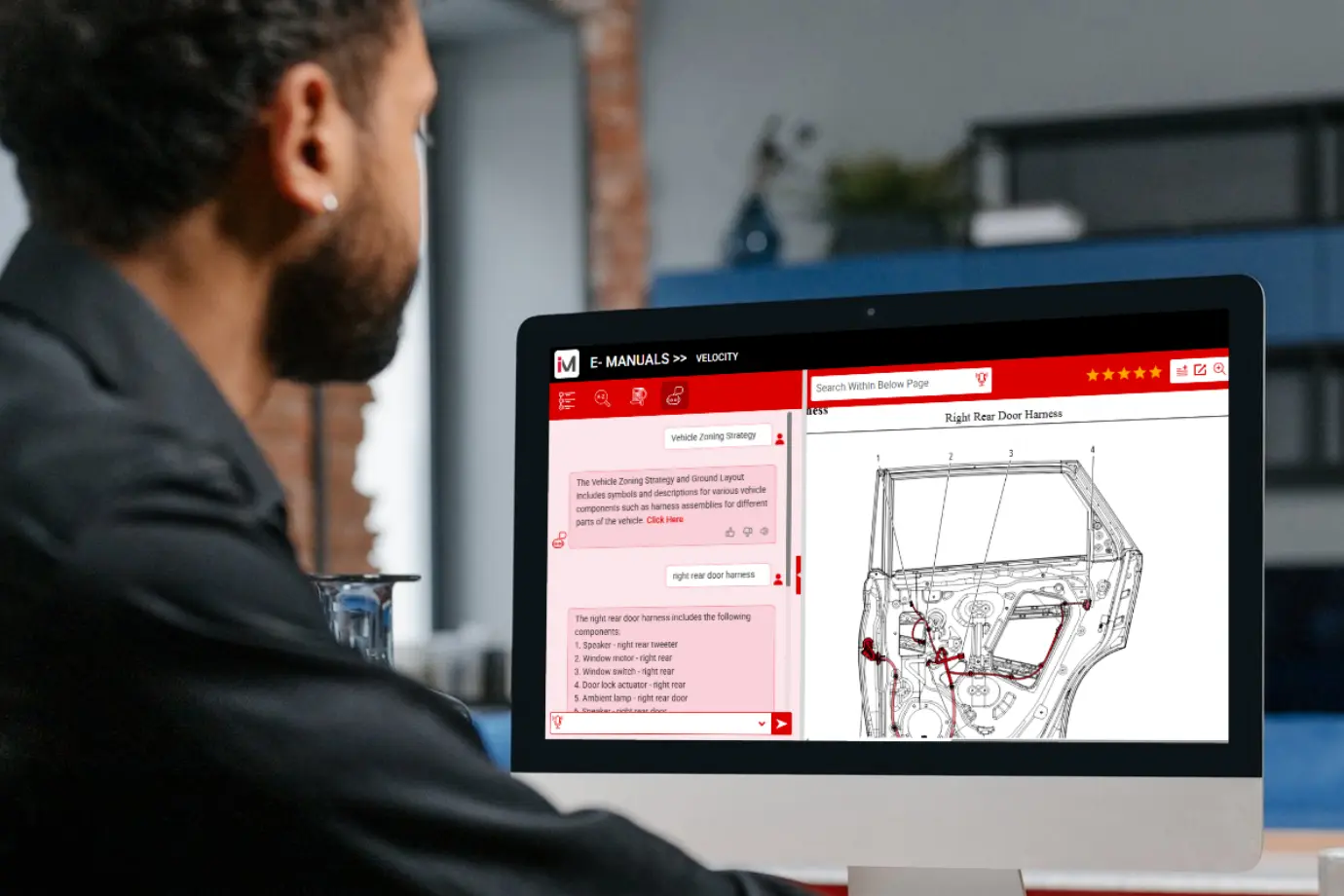
AI-powered interactive digital manuals like Intelli Manual bring together several capabilities that static documents cannot replicate.
- Natural Language Queries
The system interprets queries written or spoken in everyday language. Technicians do not need to know document codes, part number prefixes, or OEM-specific terminology hierarchies to find what they need.
- Smart Recommendations
Based on a technician's current query and prior search activity, the system suggests related procedures, applicable warnings, torque specifications, and cross-references to wiring diagrams or parts catalogs, reducing the chance that a related step gets missed.
- Voice Search
Hands-free voice input allows technicians to query documentation without breaking their workflow. This is particularly useful during active repairs where typing is impractical. Voice search queries are processed using the same NLP engine as text queries.
- Interactive HTML Manuals
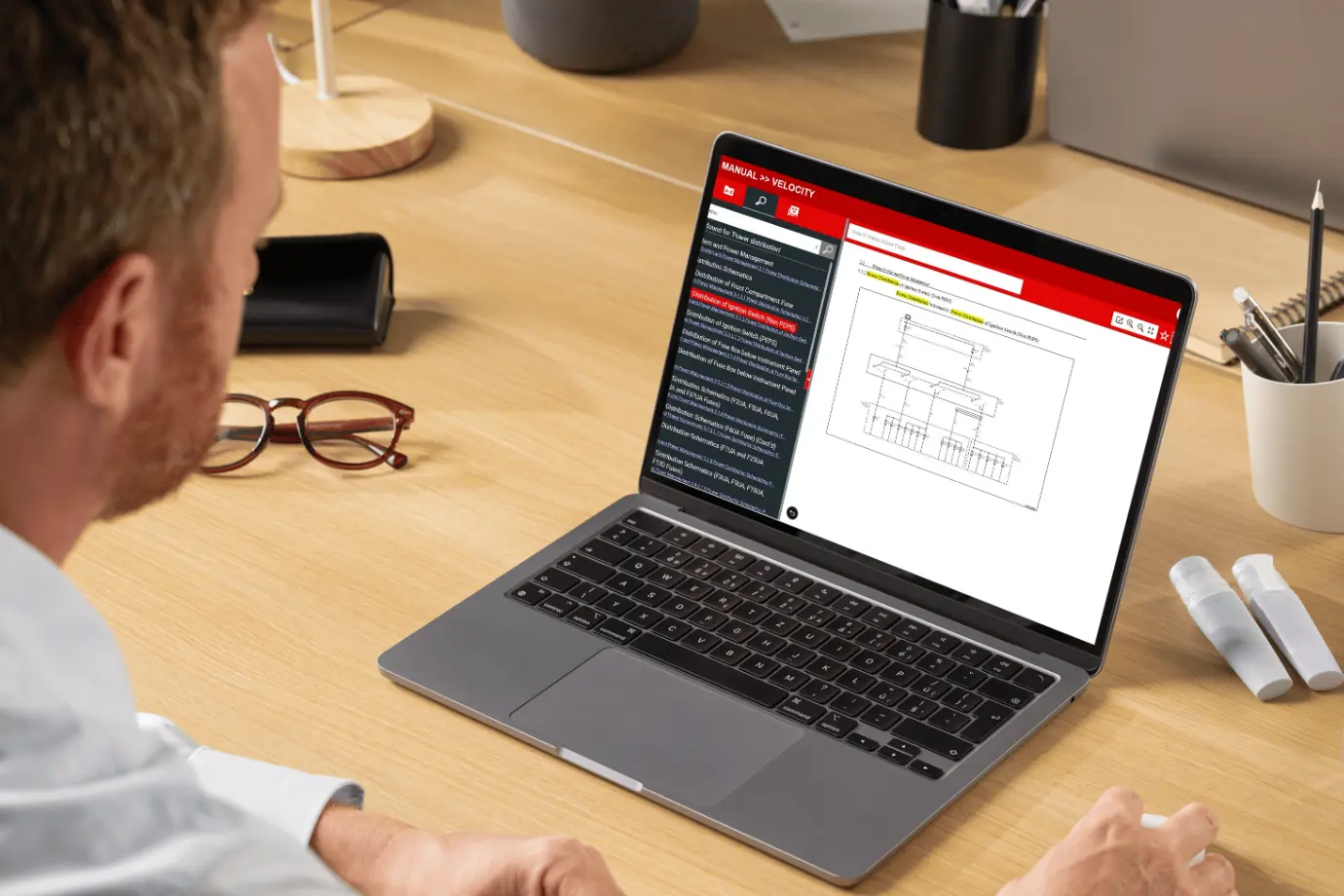
Interactive HTML-based manuals replace static PDFs with structured, navigable content. Procedures can include clickable step indicators, expandable component details, embedded wiring diagrams, and inline part references. Platforms such as Intelli Manual deliver structured, searchable HTML documentation that integrates with existing dealer management systems.
- AI Summaries
For complex multi-step procedures, the AI-powered Intelli Manual generates a plain-language summary before presenting the full technical content, helping technicians confirm they are looking at the right procedure before reading the complete instructions.
- Context-Aware Troubleshooting
When a technician is diagnosing an issue, the digital service manual tracks which vehicle and fault code are in scope and returns only relevant content. It can surface known failure patterns, applicable TSBs, and calibration requirements specific to that vehicle configuration.
- Embedded Videos and Diagrams
Step-by-step procedures can include embedded instructional videos, exploded-view diagrams, and annotated photographs. This is useful for complex procedures, and where text descriptions alone are insufficient.
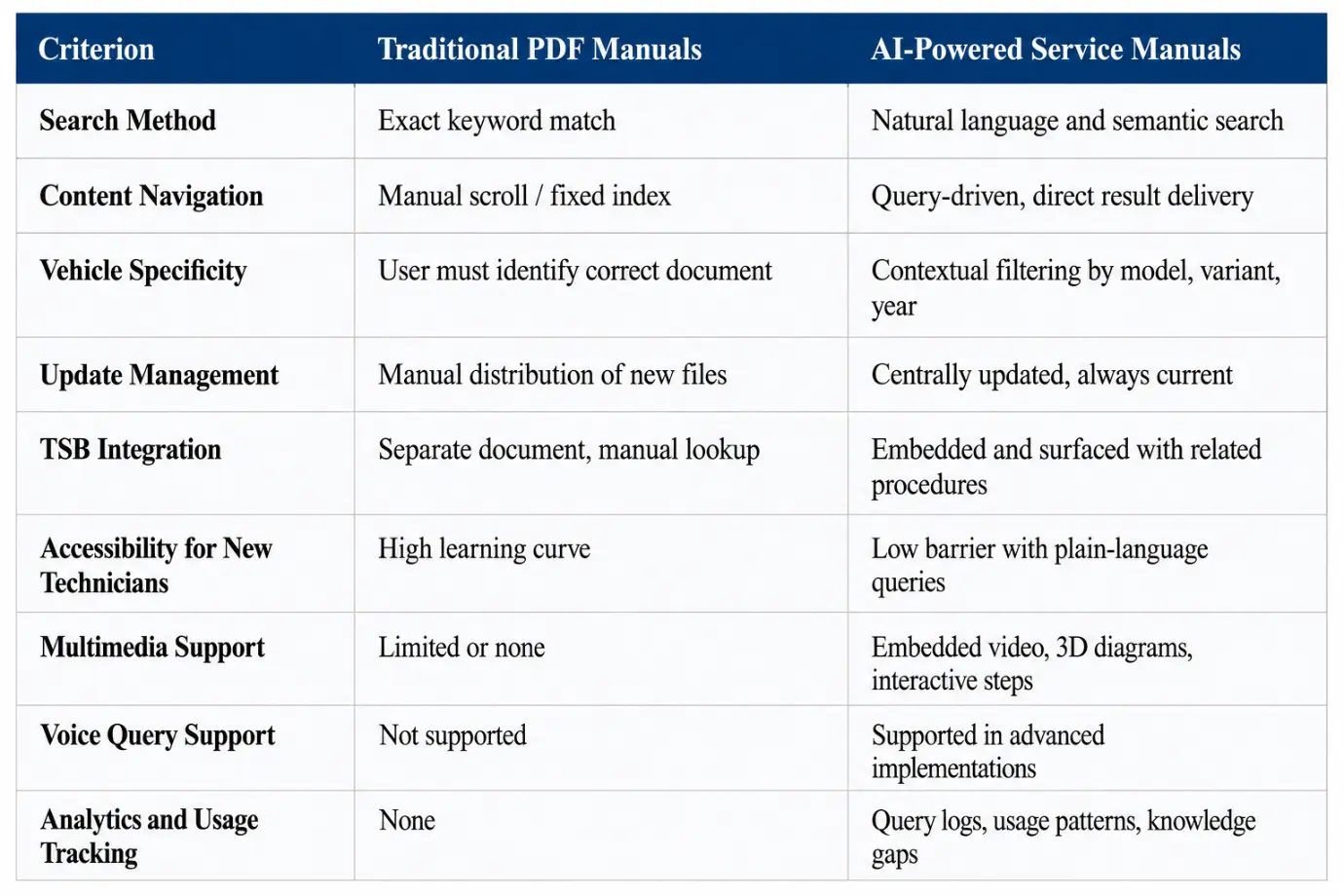
Traditional PDF Manuals vs. AI-Powered Service Manuals
Moving from PDFs to AI-Powered Service Documentation
The path from static PDFs to an AI-powered interactive digital manual does not require starting from scratch. Existing technical documentation can be converted, structured, and indexed to support AI search and interactive navigation. What changes is the experience on the technician's end and the control on the OEM's end.
OEMs gain the ability to track how documentation is being used, push updates without version control headaches, and reduce the burden on technical support helpdesks that currently handle queries that a well-structured digital manual would answer automatically.
The field service industry is undergoing a measurable transition. 93% of service organizations have already implemented AI in some form, with documentation and knowledge retrieval among the highest-priority use cases. OEMs that delay modernizing their technical documentation infrastructure risk falling behind not just technologically but competitively, as dealers and service partners increasingly evaluate OEM support quality based on the tools they provide.
Book a Demo to see how Intelli Manual can convert your existing PDF-based service manual to AI-powered service documentation.
Frequently Asked Questions
What is AI search in service manuals?
AI search in service manuals allows dealer technicians to describe a symptom, fault code, or procedure in plain language and receive precise results from the relevant documentation.
What sets Intelli Manual apart from traditional service manuals?
Using traditional service manuals to search for parts, repair procedures, or fixes takes time, but Intelli Manual helps get work done quickly with the help of AI-search.
Which industries gain the most return from implementing an AI-Powered digital service manual, like Intelli Manual?
OEMs, such as automotive, EV, aerospace, industrial equipment, construction& mining, agriculture & farm equipment, see the quickest ROI.
Can AI search integrate with existing dealer management systems?
Yes. Most enterprise-grade AI-powered documentation platforms support API integration with common dealer management systems. This allows vehicle data, fault history, and open repair orders to flow directly into the documentation interface, giving technicians a pre-populated context before they begin searching.


Explore More Insights







.webp)


About the Author


Chandra Shekhar
Chandra Shekhar is the Senior Manager, Strategy & Business Development at Intellinet Systems. With over a decade of experience in the automotive industry, Chandra Shekhar has led digital transformation and aftersales strategy initiatives for OEMs across multiple markets. His background combines deep industry knowledge with a practical understanding of how technology can solve real operational challenges. He focuses on making complex ideas clear and relevant for automotive and aftermarket professionals navigating ongoing change.


