

Most OEMs know their distributor network has inefficiencies. Orders arrive late, pricing discrepancies lead to disputes, and field teams lack visibility into what retailers are actually ordering. These are treated as operational friction, a cost of running a multi-tier sales network.
But the financial consequences of an unmanaged distributor network challenge are not friction. It is a revenue loss. OEMs face an average annual loss of USD 3.5 million due to excess inventory alone, while dealerships miss out on 15% to 20% of potential sales from stockouts caused by poor demand visibility.
Each of the seven signs below represents a specific revenue risk that grows the longer a distributor network operates without a structured management system. If more than three apply to your network, the cost of inaction is likely already measurable.
Sign 1: You Have No Visibility Into What Retailers Are Actually Ordering
In most OEM secondary sales networks, order flow moves from retailer to distributor and then to the OEM. The OEM sees only what the distributor reports, what the distributor chose to share, at the frequency and detail the distributor chose to provide. What the retailer is actually ordering, from which distributor, at what price, and at what volume, is invisible to the OEM.
This is one of the most common challenges in OEM distributor management. When secondary sales data is unreported or inconsistently captured, OEMs lose visibility into demand trends, struggle with accurate inventory planning, and cannot detect when retailers shift to non-genuine parts outside the official channel. According to Data Bridge Market Research, the global automotive aftermarket was valued at USD 430.51 billion in 2024 and is projected to grow at a CAGR of 4.75%. A significant portion of this growth is captured by non-genuine parts suppliers who exploit gaps created by limited visibility in OEM channels.
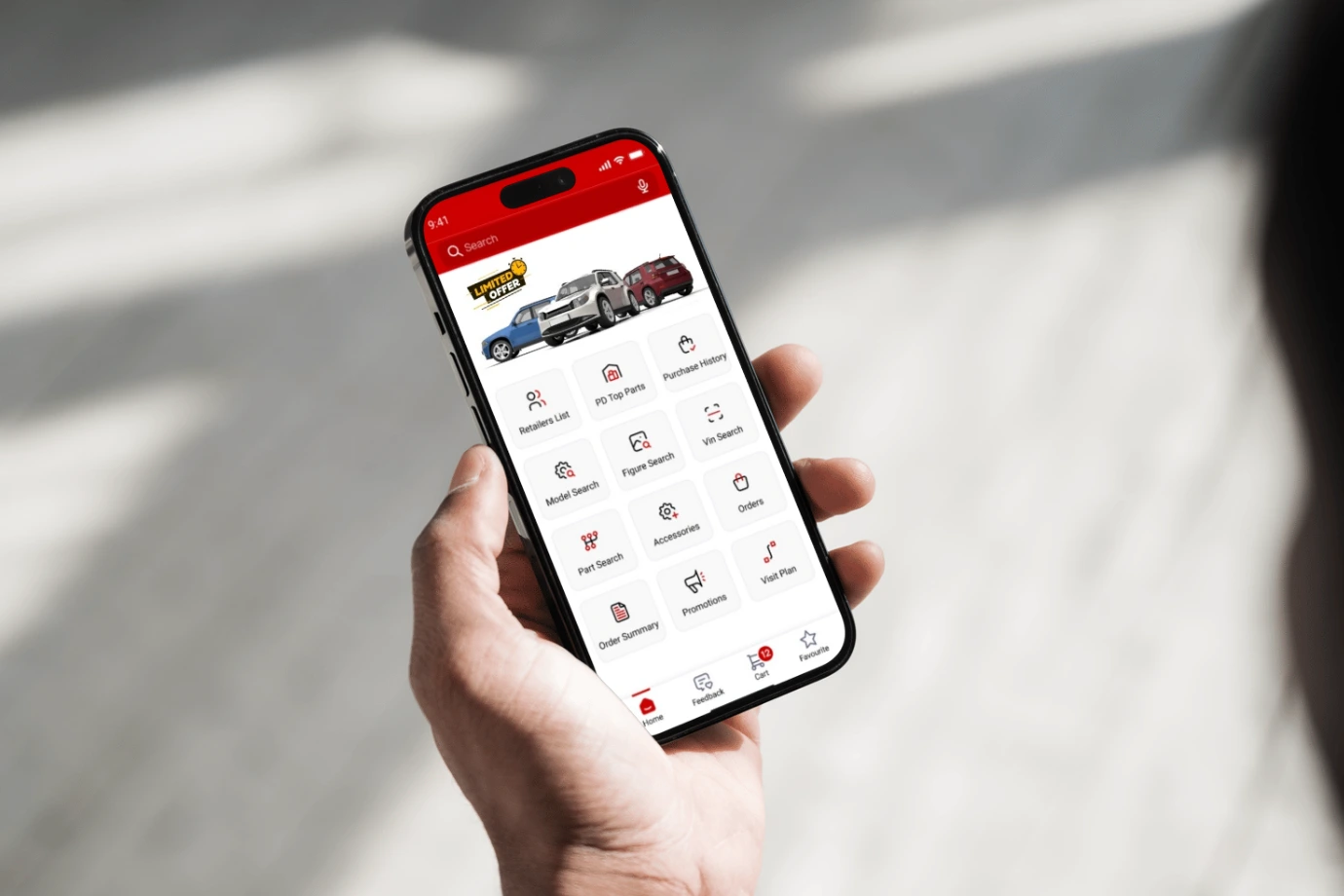
Distributor management system solves this by connecting retailers, distributors, and field teams on a single platform. Every order placed at the retailer level is captured in real time and visible to OEM headquarters, giving aftermarket leaders the secondary sales data they need to make accurate inventory and pricing decisions.
Sign 2: Your Field Sales Team Is Still Collecting Orders Manually
When distributor field sales executives collect retailer orders via phone calls, WhatsApp messages, or paper forms and then manually enter them into an ERP or spreadsheet, each step introduces delays and increases the risk of errors. The order arrives late, the quantity may be transcribed incorrectly, and by the time it reaches the warehouse, the retailer may have already sourced the part elsewhere.
Manual order entry by sales representatives is one of the clearest signals that a distributor network has exceeded the capabilities of its existing tools. It creates delays that scale with headcount rather than with technology, meaning the only way to process more orders is to hire more people. The cost of building and maintaining large field sales teams is high, and those costs do not reduce when order volumes fluctuate seasonally.
A management system for distributors like Intelli Commerce enables retailers to place orders directly through a mobile app, bypassing the need for a sales executive to collect and re-enter the order. Sales executives receive real-time push notifications for new orders, allowing them to focus on relationship management and upselling rather than manual entry. Orders placed through the app are created directly in the OEM’s ERP system, eliminating manual input and the errors associated with it.
Sign 3: Pricing Inconsistencies Are Creating Disputes Across Your Network
Parts prices change frequently. Manufacturer price revisions, promotional campaigns, regional pricing structures, and currency fluctuations all require distributor price lists to be updated and communicated across the network. When this happens manually, through email or printed price sheets, different distributors and retailers operate on different price versions simultaneously.
The result is disputes. A retailer who ordered at a price from last month's list argues against an invoice reflecting this month's revision. A distributor in one region applies a discount that was not authorised for their tier. These disputes consume account management time, delay payment collection, and create the impression that the OEM's channel is unreliable.
Intelli Commerce maintains a single live price list that updates instantly across all distributors and retailers when a change is made at the OEM level. Every order is priced against the current authorised rate for that distributor tier and region, eliminating the version discrepancies that drive pricing disputes.
Sign 4: Retailers Are Waiting for Distributor Reps to Visit Before They Can Order
In distributor networks where retailers depend on field sales executive visits to place orders, ordering frequency is limited by visit schedules. A retailer who runs low on a fast-moving part between visits either sources it from an alternative supplier or leaves the shelf empty. Neither outcome benefits the OEM.
This dependency on visit-driven ordering is a structural revenue constraint. This means the OEM’s genuine parts sales are tied to the visit frequency of field sales representatives rather than actual retailer demand. Retailers who find an alternative channel during the gap between visits may not return to the official channel, often leading to permanent revenue leakage.
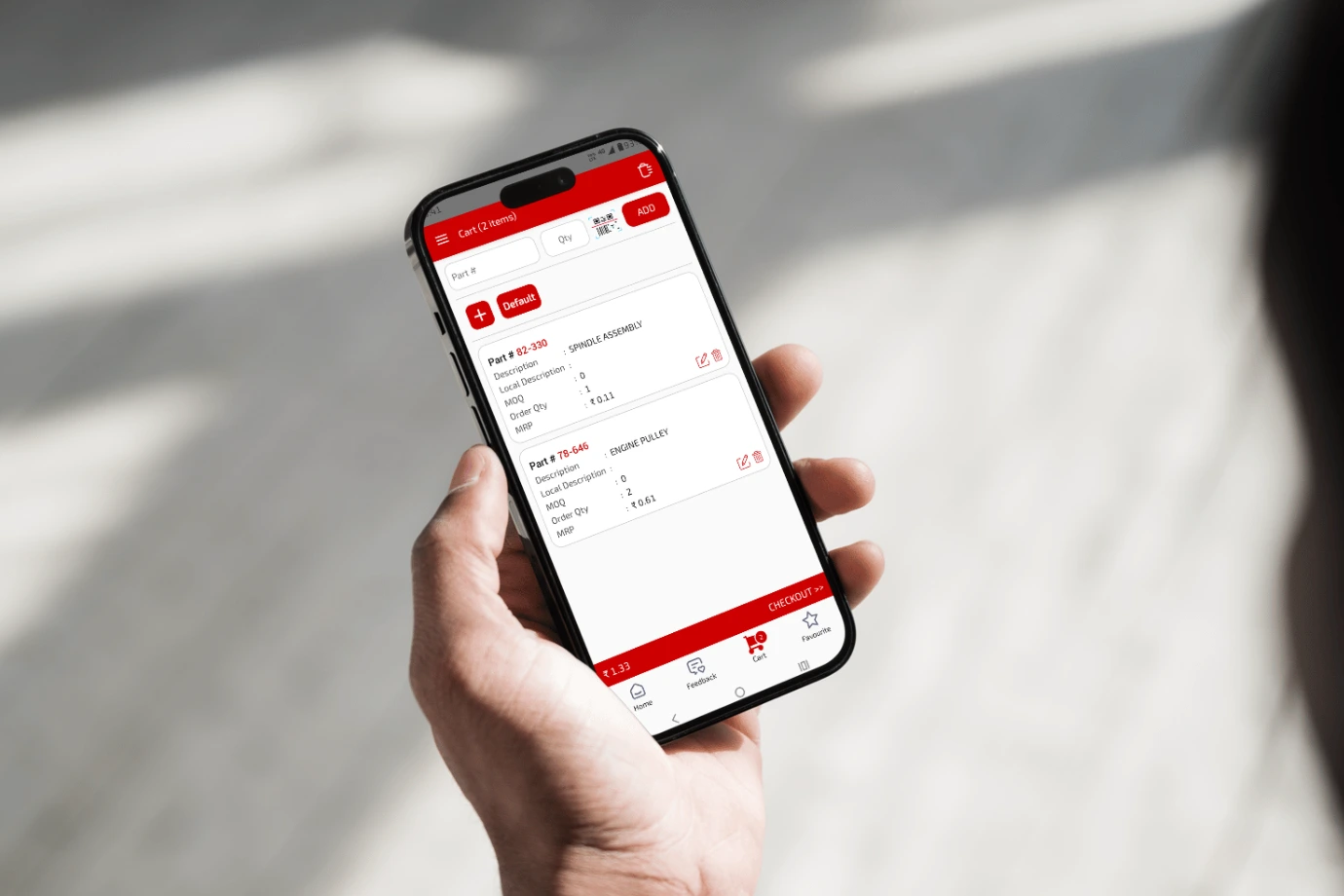
Intelli Commerce enables retailers to place orders independently at any time through the mobile app, without waiting for a distributor representative. The seamless checkout process works like any standard e-commerce platform, allowing retailers to browse, add to cart, and submit orders in minutes. Distributor network challenges caused by visit-dependent ordering are eliminated because the ordering channel is always open.
Sign 5: You cannot Tell Which Distributor Is Serving Which Retailer.
In a multi-tier distribution network, the mapping of which distributor serves which retailer must be clearly defined and enforced. When it is not, distributors compete for the same retailers, pricing consistency breaks down, and order accountability becomes difficult to maintain. An OEM trying to resolve a delivery dispute cannot determine which distributor was responsible because the retailer-distributor relationship was never formally defined in the system.
This is a governance problem that manual tools cannot solve. Spreadsheets and email records can document the intended mapping, but cannot enforce it at the point of ordering. A retailer who knows they can order from any distributor will route orders based on price or convenience rather than the channel structure the OEM intended.
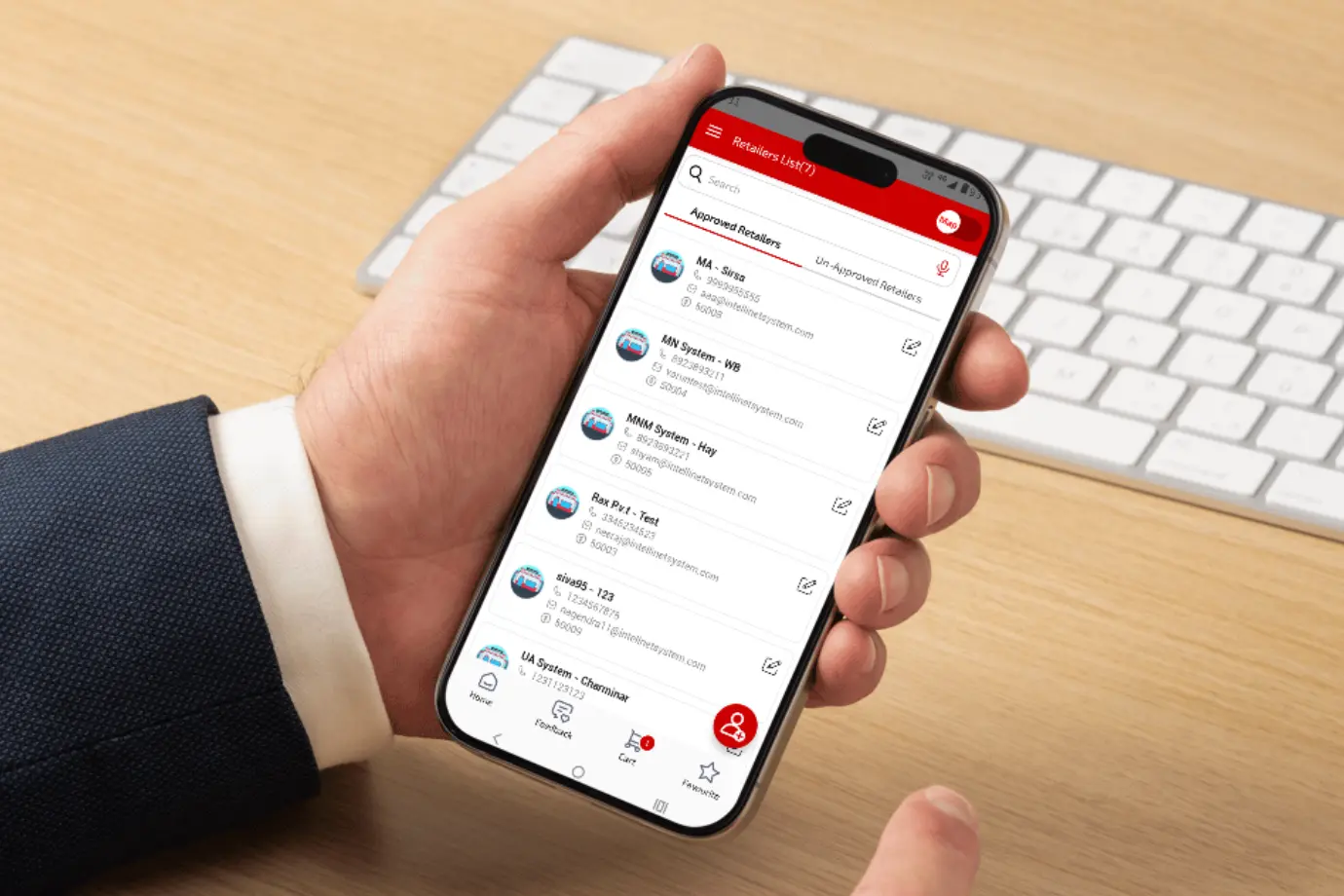
Intelli Commerce's distributor-retailer mapping feature allows OEMs to define and enforce which distributors serve which retailers and which field sales executives are responsible for which accounts. This structured mapping is applied automatically at the point of order, ensuring the channel operates as designed and that accountability is clear at every level.
Sign 6: Stockouts and Excess Inventory Coexist Across Your Network
One of the most commercially damaging distributor network challenges is the simultaneous occurrence of stockouts and overstock within the same network. While one distributor holds excess inventory of slow-moving parts, another is out of stock on a fast-moving item that retailers actively demand. Neither situation is visible to the OEM in real time, and the disconnect between supply and demand worsens with every order cycle.
This pattern is driven by the absence of demand data flowing from retailers through distributors to OEM inventory planning. Without it, inventory allocation is based on historical orders and distributor estimates rather than actual demand from retailers. OEMs face an average annual loss of USD 3.5 million from excess inventory alone, not counting the revenue lost to stockouts.
Intelli Commerce captures real-time order data across the full retailer network and uses that data for stock analysis and demand forecasting at the distributor warehouse level. Historical order patterns across distributors and retailers enable more accurate stock prediction, reducing both excess inventory carrying costs and stockout-driven sales losses.
Sign 7: Your Distributor Network Has No Real-Time Order Status Visibility
When a retailer places an order and has no way to track its status until the goods arrive, they call the distributor. The distributor calls the OEM. The OEM checks the ERP manually and reports back. This loop consumes time at every level of the network and creates a poor retailer experience, eroding confidence in the official channel.
Real-time order status visibility is not a luxury feature. It is a baseline expectation in any commercial ordering relationship. Without order tracking visibility, retailers switch to suppliers who provide it, even if they sell non-genuine parts. According to Grand View Research, the uncertified parts segment of the global aftermarket is expected to experience relatively rapid growth from 2026 to 2033, driven in part by accessibility advantages over official OEM channels.
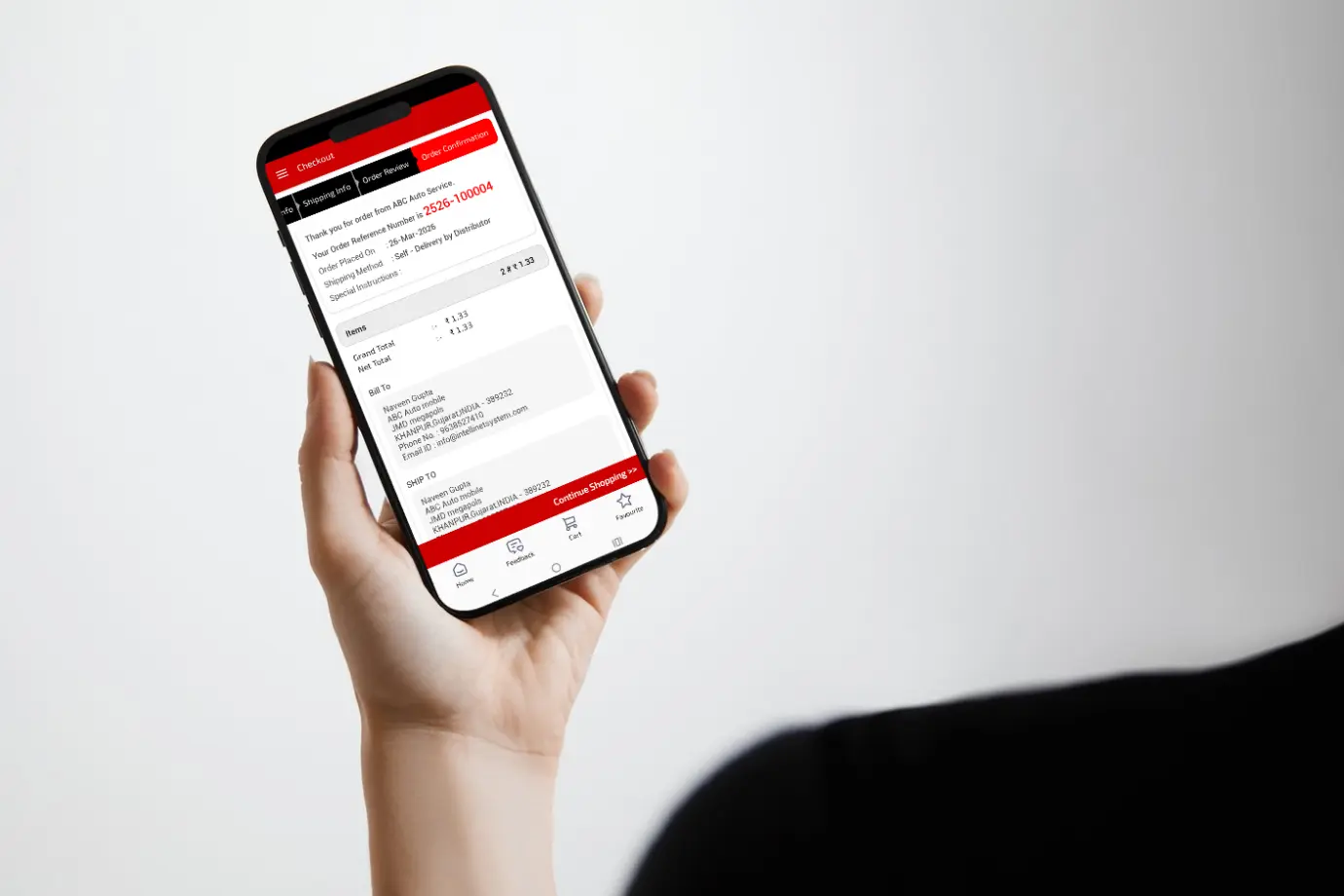
Intelli Commerce integrates directly with the OEM's ERP system. Orders placed through the mobile or web app are created directly in the ERP, and dispatch details from the ERP are fed back into Intelli Commerce, giving retailers a single live view of every order, including open orders, confirmed dispatch, and backorder status. The follow-up call loop is eliminated.
What to Do If More Than Three of These Apply to Your Network
Each of the seven signs above represents a specific, quantifiable revenue risk. Individually, each creates friction that costs time and money. Together, they describe a distributor network operating below its revenue potential, losing genuine parts sales to non-genuine alternatives, and carrying operational costs that scale with headcount rather than with technology.
Intelli Commerce is Intellinet Systems' mobile-based management system for distributors, built specifically for OEMs managing secondary sales networks. It connects distributors, retailers, and field teams on a single platform, digitises the order flow from retailer to ERP, enforces channel structure through distributor-retailer mapping, and provides OEM headquarters with the real-time secondary sales data needed to plan inventory, price accurately, and protect genuine parts revenue.
OEMs using Intelli Commerce include Ford Motor Company Europe, Mahindra and Mahindra, Maruti Suzuki, and others. These organizations recognized the revenue risks of unmanaged distributor networks and invested in infrastructure to address them systematically.
Book a personalised demo with Intellinet Systems and see how Intelli Commerce maps to your specific distributor network structure, ERP system, and secondary sales goals.
Frequently Asked Questions
What is a distributor management system, and why do OEMs need one?
A distributor management system is a digital platform that connects an OEM with its secondary sales network, including distributors, retailers, and field teams, on a single system. OEMs need one because manual distribution management creates visibility gaps, order errors, pricing inconsistencies, and stockout problems that cannot be resolved at scale without structured data flowing across every tier of the network in real time.
How does Intelli Commerce help OEMs gain visibility into secondary sales data?
Intelli Commerce captures every order placed by retailers through the platform and makes that data available to OEM headquarters in real time. Rather than relying on distributor-reported summaries, OEM aftermarket teams see actual retailer order volume, part demand patterns, and distributor performance across the full network. This data feeds directly into inventory planning and demand forecasting.
Can Intelli Commerce integrate with our existing ERP system?
Yes. Intelli Commerce integrates directly with OEM ERP systems, including SAP.
How does Intelli Commerce reduce non-genuine parts usage in dealer networks?
Non-genuine parts usage increases when the official OEM channel is slower, less accessible, or less transparent than alternative sources. Intelli Commerce eliminates friction in the official channel by enabling 24/7 mobile ordering, real-time order tracking, live pricing, and instant visibility into part availability. When the official channel is as easy to use as any alternative, retailers have no reason to source outside it.
How long does it take to deploy Intelli Commerce across a distributor network?
Intelli Commerce is a mobile-first platform designed for rapid deployment across distributor and retailer networks of any size. The onboarding process includes distributor-retailer mapping configuration, ERP integration, and mobile app rollout to field teams. Intellinet Systems supports the full deployment process, and OEMs can begin capturing live secondary sales data from their network shortly after go-live.


Explore More Insights


.webp)


About the Author


Chandra Shekhar
Chandra Shekhar is the Senior Manager, Strategy & Business Development at Intellinet Systems. With over a decade of experience in the automotive industry, Chandra Shekhar has led digital transformation and aftersales strategy initiatives for OEMs across multiple markets. His background combines deep industry knowledge with a practical understanding of how technology can solve real operational challenges. He focuses on making complex ideas clear and relevant for automotive and aftermarket professionals navigating ongoing change.


