
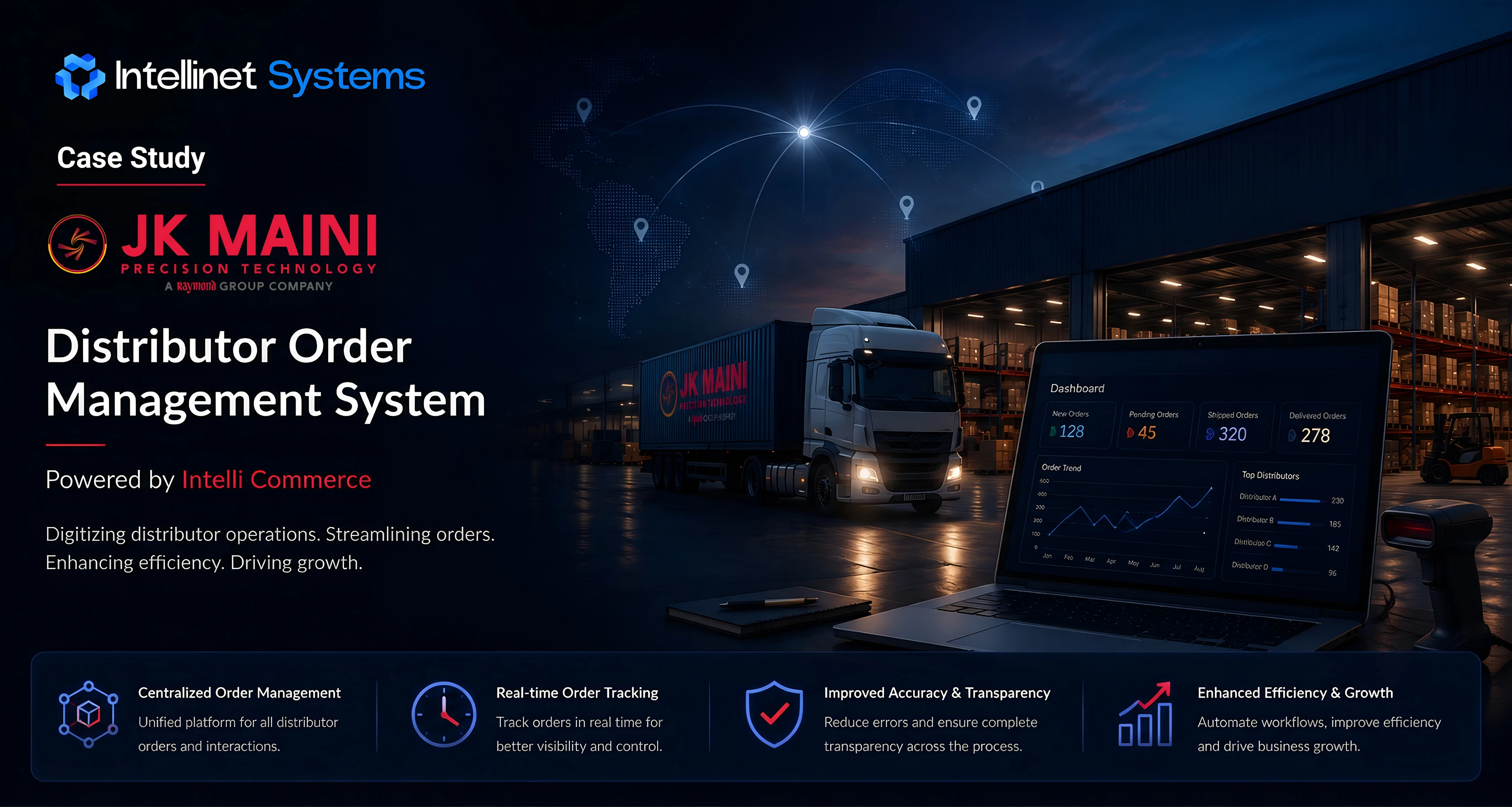


How JK Maini Turned Manufacturing Capacity Into a New Aftermarket Revenue Line with Intelli Commerce
Customer: JK Maini Precision Technology Limited (a Raymond Group company)
Industry : Precision-engineered automotive components and assemblies
Markets : Global automotive OEM supply and independent automotive aftermarket
Solution : Intelli Commerce (Distributor Order Management System)
Executive Summary
JK Maini Precision Technology Limited, a Raymond Group company, manufactures precision-engineered automotive components and assemblies, supplying major automotive OEMs including Mahindra, Maruti Suzuki, and Tata Motors. Its OEM business was digitally mature and operating efficiently: customer orders flowed through SAP, production was triggered automatically, and the manufacturing and logistics processes were fully integrated end-to-end.
The opportunity was not a technology gap; it was underused manufacturing capacity. The company had built production capability ahead of current OEM demand, and that surplus capacity pointed toward a new business: selling the same genuine components directly into the independent aftermarket, where nearly 60-70% of demand was being met by non-genuine or counterfeit parts.
The business case was compelling: an estimated ₹100 crore in year-one revenue with a path to ₹1,000 crore within 12–18 months, and significantly higher margins than those achieved through its high-volume OEM supply business. But the strategy created a new problem: there was no platform, network, or ecosystem through which to market and sell directly to distributors.
Every software vendor approached, proposed the same solution: a comprehensive e-commerce catalog mapping every part to every compatible OEM, model, and variant, with a quoted development time of roughly 12 months. Intellinet Systems took a different approach: rather than build a new mapping engine, it studied how the business actually operated, simplified the underlying data model, and configured the Accessories module of its existing Intelli Commerce platform. The result was delivered in roughly one week of development effort and went live within two months.
Result at a Glance
- Delivered in roughly one week of development effort, live within about two months, against an industry estimate of 6-12 months.
- Simplified applicability matrix using 10-15 key attributes instead of a 200-250 parameter mapping engine
- Reversed the traditional catalog workflow from Model → Parts to Part → Applicable Models to match how distributors actually search
- Native SAP integration reused from the existing platform: orders sync to SAP and validated changes sync back automatically
- Ongoing annual licensing engagement, with the business targeting ₹25 crore in initial aftermarket revenue
- Field users who tested the simplified search-based prototype no longer wanted the originally proposed e-commerce-style interface.
Turn your existing products, inventory, and manufacturing capacity into a scalable aftermarket revenue channel. Book a Demo
Customer Overview
JK Maini is part of the Raymond Group, best known for its apparel business but diversified across several industrial sectors. Its vertical is precision-engineered automotive components and assemblies, supplied to major automotive OEMs including Mahindra, Maruti Suzuki, and Tata Motors.
The company’s core manufacturing and OEM supply operations were already digitally mature: OEM orders were placed and received through SAP, and production and logistics were tightly integrated around it. The challenge was not digitizing an existing operation. It was entering an entirely new go-to-market motion, direct sales into the independent automotive aftermarket, for which no systems, network, or platform yet existed.
Business Challenges
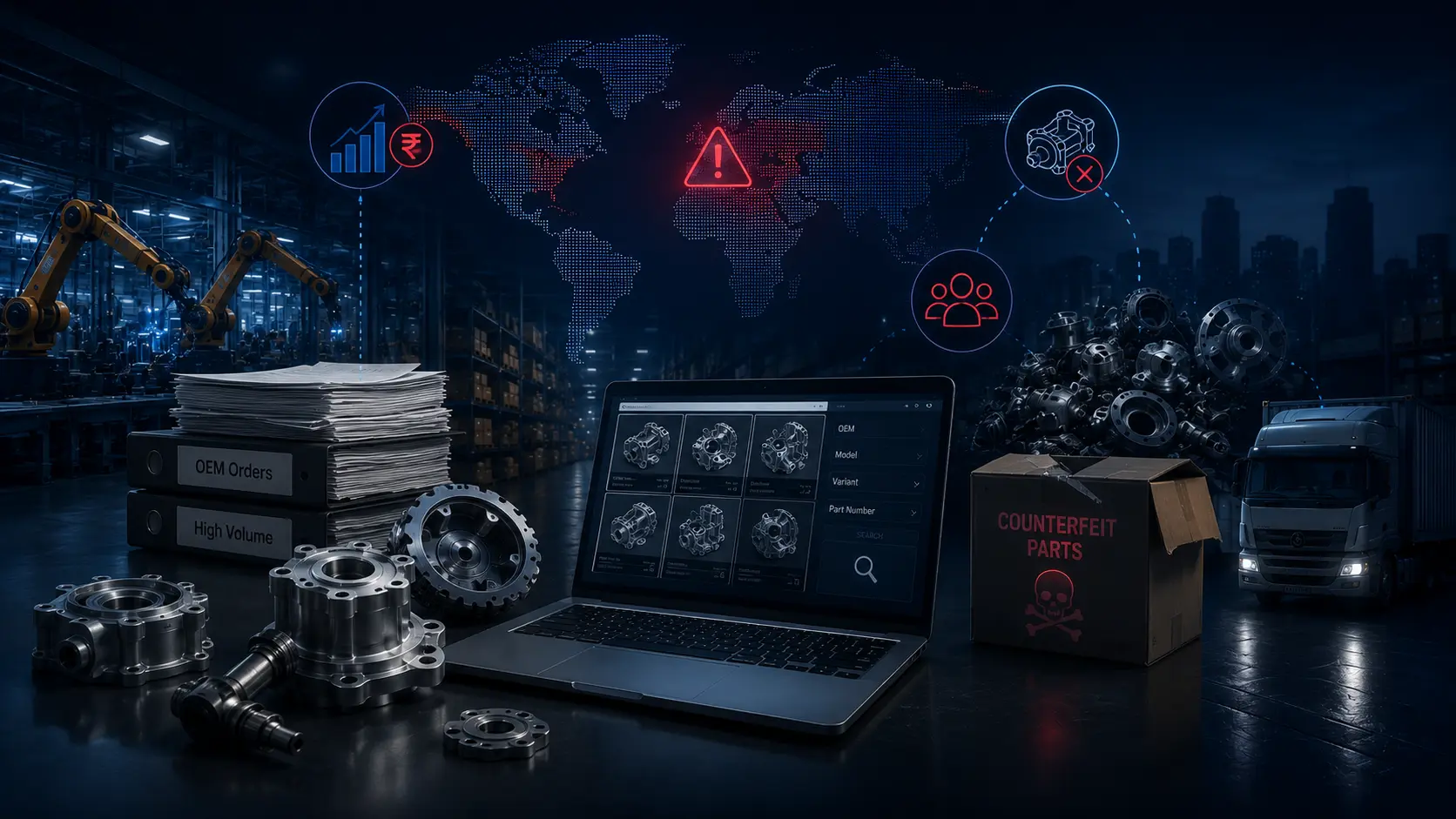
Underused Manufacturing Capacity and a Margin-Constrained OEM Model
- JK Maini had built production capacity for future growth, leaving current capability ahead of current OEM demand.
- OEMs purchase in high volumes and negotiate aggressive pricing, limiting margins on the components it manufactures to approximately 15–20%, depending on the product and supply arrangement.
- A genuine component manufactured in-house and sold to an OEM for roughly ₹15 might reach the end customer at roughly ₹25 once the OEM and dealer network each add their margin, leaving the manufacturer with only a small share of the total value created.
A Large Aftermarket Dominated by Counterfeit Parts
- Across the overall components market, only an estimated 30 - 40% of demand was met by OEM-authorized genuine parts.
- The remaining 60–70% consisted largely of non-genuine or counterfeit parts that closely resembled the original components but were manufactured to lower-quality and material standards.
- Leadership recognized the company could supply the identical, warranty-backed genuine component directly into this segment at a price below the authorized dealer price and, in many cases, below counterfeit pricing, all without competing against its own OEM channel.
No Platform to Sell Directly to an Aftermarket Distributor Network
- Once the strategic decision was made, the company had a product, a sizable first-year opportunity, and a distributor network under development, but no digital platform for searching parts and placing orders.
A Catalog Logic That Ran in the Opposite Direction from Standard EPC Design
- In a conventional OEM parts catalog, users navigate OEM → Model → Variant → Parts. Aftermarket distributors already knew the part they needed and instead wanted to identify every compatible vehicle model and variant. This required a Part-to-Applicable Models workflow that reversed the traditional catalog structure.
- A single component could be applicable across multiple OEMs, and as many as 250 vehicle variants out of an estimated 400–500 variants in the market, and the complete applicability data was already maintained in-house.
- Other vendors attempted to adapt their standard model-first catalog structure to this requirement and could not configure the resulting web of OEM, model, variant, and part relationships in a way that stayed accurate and maintainable.
A Timeline That Standard Proposals Could Not Meet
- Every vendor consulted proposed essentially the same solution: a comprehensive e-commerce platform that mapped every part to every applicable OEM, model, and variant.
- Each vendor estimated roughly 12 months of development, driven by the perceived need for a large-scale relationship and mapping engine.
- JK Maini’s initial aftermarket target was approximately ₹25 crore, and a year-long implementation was hard to justify at the start of a new business line. The company needed delivery within two months, without the complexity every vendor kept proposing.
Solution
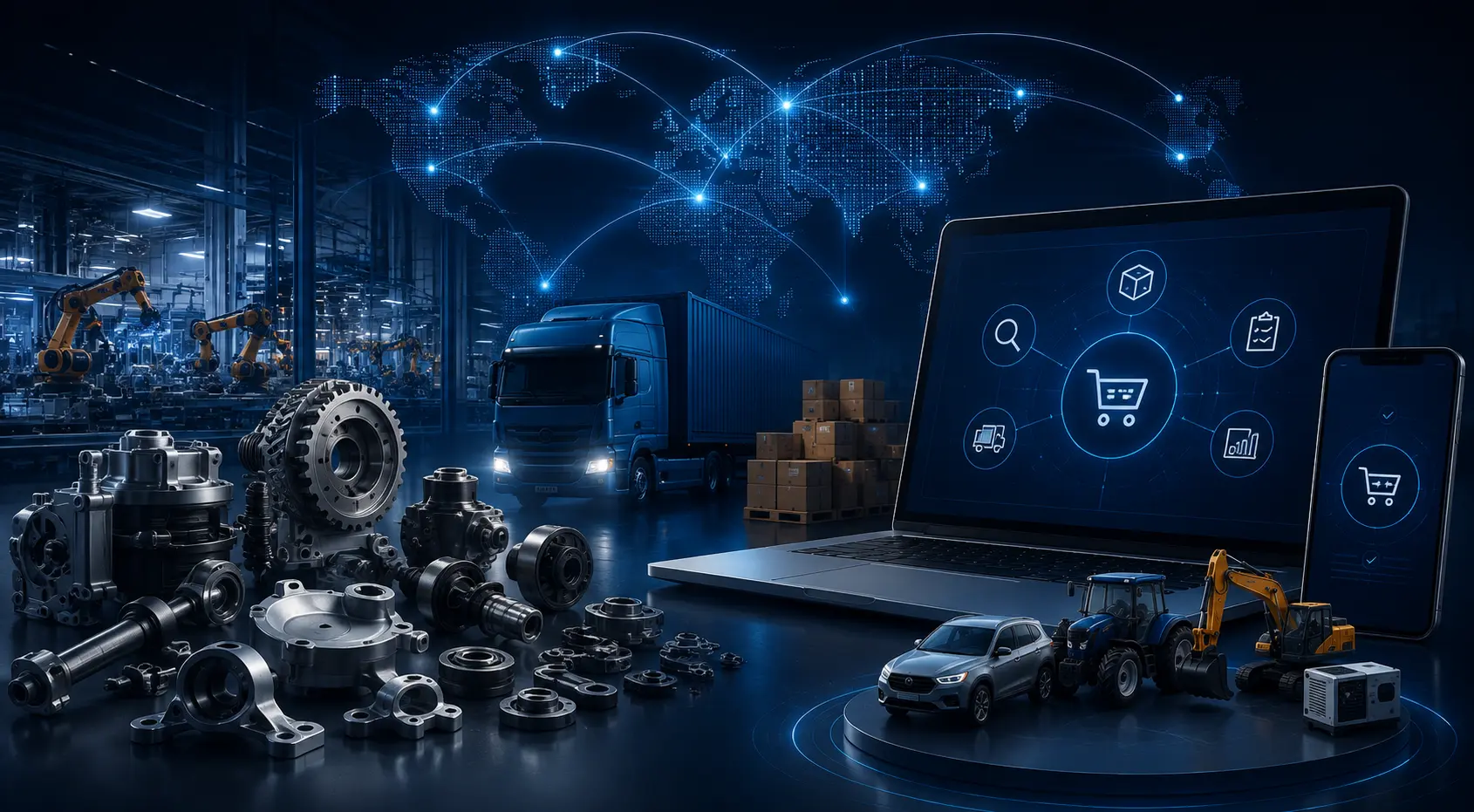
Intellinet Systems approached the engagement by first understanding the business rather than the technology. Rather than accepting the Amazon-style architecture converged on by the customer and other vendors had already converged on, Intellinet studied the products, vehicle applicability data, and historical sales workflows, including interviews with the team that had run the business before digitization, when it was still managed through Excel spreadsheets of model mappings, variant mappings, and product applicability.
Reframing the Problem Before Reaching for Technology
- Understanding how the business operated made clear that the perceived need for a 200-250 parameter mapping engine was overstated relative to what distributors actually needed to do their jobs.
- Intellinet’s internal team, like the other vendors, had initially assumed the project would require a comparable level of complexity; the reframing came from studying the workflow directly rather than the requirement document.
A Simplified Applicability Matrix Instead of a Complex Mapping Engine
- Intellinet identified the essential attributes of every spare part, including part number, dimensions, descriptions, and other identifying characteristics, and paired them with a separate, simplified OEM applicability structure covering OEM, model, variant, and applicability.
- Instead of a sprawling relationship engine, the team designed a matrix using only 10-15 carefully selected attributes, sufficient to capture the applicability relationships distributors needed.
An Intelligent Search Experience Built on the Reversed Workflow
- On top of the simplified matrix, Intellinet implemented advanced search by OEM, vehicle model, variant, free-text keywords, and parts attributes, so a distributor could type an OEM name and immediately see applicable parts, then narrow by model.
- This delivered the Part → Applicable Models workflow distributors needed without requiring users to navigate a complex hierarchical menu structure.
Validating with a Working Prototype Before Any Commercial Commitment
- Intellinet built a working prototype before asking for a commitment, confident that demonstrating the solution would make its value immediately apparent.
- The prototype was tested across multiple combinations of parts, models, and applicability searches, and requested only a small number of additional fields, which Intellinet incorporated.
- The prototype was then handed to field users, who used it to complete real day-to-day tasks, confirming that the simplified, search-based approach held up in actual distributor workflows, not just in testing.
Reusing an Existing Product Instead of Building New
- The solution was delivered on Intelli Commerce, Intellinet’s existing Distributor Order Management system, by customizing its Accessories module rather than developing a new application.
- Orders placed through the portal were automatically transferred to SAP for validation, while updates made in SAP were synchronized back to Intelli Commerce using the platform's existing integration capabilities, eliminating the need for custom integration development.
Business Outcomes
- Faster Time to Market: The aftermarket portal was delivered in roughly one week of development effort and went live within two months, compared with the 6-12 months quoted by every other vendor evaluated.
- A Catalog Architecture That Matched How Distributors Actually Search: By inverting the workflow to Part → Applicable Models and simplifying the underlying data model to 10-15 attributes, the platform gave distributors a fast, accurate way to find every vehicle a part applied to, without the complexity of a full relationship engine.
- Reused Integration, No New Infrastructure: Order flow into SAP and validated updates flowing back to Intelli Commerce were delivered using integration capability already native to the platform, avoiding additional integration delay.
- A New, Higher-Margin Revenue Line: The engagement gave JK Maini the platform needed to pursue its aftermarket strategy directly, selling genuine, warranty-backed components into a segment where 60–70% of demand had been served by non-genuine parts, at margins well above those of its roughly 15% OEM business.
- An Ongoing Platform Relationship: The initial implementation evolved into an annual licensing agreement, with the platform now successfully in use in production.
Technologies Implemented
The engagement centered on Intelli Commerce, specifically its Accessories module, configured with a simplified OEM-model-variant applicability matrix and a search experience based on OEM, model, variant, keywords, and product attributes. The platform’s existing SAP integration was reused for two-way order and update synchronization between the distributor portal and the customer’s SAP environment.
Implementation
The engagement moved from business discovery to a validated prototype to a production-ready module in a matter of weeks. Once JK Maini’s business users and field distributors confirmed the prototype held up in real use, Intellinet finalized the solution on the Accessories module of Intelli Commerce and connected it to SAP for order processing, with no separate integration phase required.
Overall Outcome
The JK Maini engagement shows how understanding a customer’s actual business workflow can outperform a technically sophisticated but over-built solution. Every vendor JK Maini approached, including Intellinet’s own team at the outset, assumed the reversed Part → Applicable Models requirement demanded a large-scale mapping engine. Studying how the business genuinely operated, down to the Excel sheets distributors had used for years, showed that a simplified applicability matrix and an intelligent search experience, built on an existing platform module, could deliver the same outcome distributors actually needed: finding the right part quickly and placing an order. That reframing turned a project the industry estimated at 6-12 months into a production-ready solution delivered in roughly one week of effort, opening a new aftermarket revenue line with a path from an initial ₹100 crore target toward ₹1,000 crore.
See how Intelli Commerce helps OEMs and component manufacturers launch new sales channels, simplify parts applicability searches, and build a connected distributor ecosystem.


About the Author

Nishant Sharma
Nishant Sharma is the Marketing & Sales Lead at Intellinet Systems, specializing in B2B sales, digital marketing, and automotive aftermarket solutions. With extensive experience in driving business growth, lead generation, and go-to-market strategies, he is passionate about helping businesses adopt innovative technologies that enhance operational efficiency and customer experience. Through his articles, Nishant shares practical insights on industry trends, emerging technologies, and best practices shaping the future of the automotive aftermarket.
Explore More Case Studies


Schedule a Free Demo, and go live in just 7 days

Our team will get back to you in 24 hours

