


For OEMs, the aftermarket is not a secondary revenue channel; it’s the highest margin segment of the business. According to McKinsey, aftermarket services can generate two to three times higher margins than equipment sales. Yet most OEMs still operate with disconnected systems and paper-based workflows with limited visibility across the dealer and distributor networks.
The gap between aftermarket potential and actual performance comes down to technology. Outdated parts catalogs, fragmented distributor data, and manual warranty processing cost OEMs in revenue, time, and customer trust.
In this article, Intellinet Systems’ global team identifies the top 12 aftermarket technology trends for OEMs we expect to shape 2026 across Artificial Intelligence, Mobile-First Approach, and Predictive Analytics. These latest developments reflect where leading manufacturers are actively investing to increase channel revenue, improve parts order accuracy, warranty cost control, and reduce operational friction
1. AI in Aftermarket Operations Is Moving From Pilot to Production
OEMs are deploying AI in aftermarket operations to solve high-cost problems across parts identification, warranty fraud, and demand planning.
A 2023 report by Deloitte found that AI-driven demand forecasting reduced excess inventory costs by up to 20% for industrial manufacturers. Intellinet Systems integrates AI-powered spare parts identification and demand forecasting directly into its aftermarket platform, reducing wrong-part orders and improving inventory planning for OEM dealer networks.
Key applications OEMs are deploying:
- VIN-based and image-based spare parts lookup
- Warranty claim fraud detection using image and document verification
- Predictive demand signals for parts replenishment
2. Electronic Parts Catalog Software Is Replacing Static Legacy Systems

PDF-based and static parts catalogs are a main cause of misidentification, return orders, and service delays. As equipment complexity increases, parts supersessions become more frequent, dealer cannot operate efficiently without real-time electronic parts catalog software.
According to Aberdeen Group, companies using electronic parts catalogs achieve up to a 35% reduction in parts ordering errors. Intelli Catalog, an electronic parts catalog software built for OEM dealer networks, offers multiple search options like VIN or serial number lookup, model-based search, figure-based navigation, and part number search. It also provides interactive exploded diagrams, real-time BOM tracking, and automated supersession updates without manual intervention.
What modern electronic parts catalog software delivers:
- VIN-based fitment verification to eliminate wrong-part orders
- Interactive 2D and 3D illustrations make it easy for hotspotting, reducing the lookup time of the exact part
- Track part supersession chain keeps all dealers updated in real-time
- Live pricing updates across all dealer touchpoints
3. Warranty Management Software Is Reducing Cost Leakage at Scale
Manual warranty processing is one of the highest controlled costs in OEM aftermarket operations. Inconsistent validations, undetected fraud, and missed supplier recoveries raise warranty expense without delivering any service benefit.
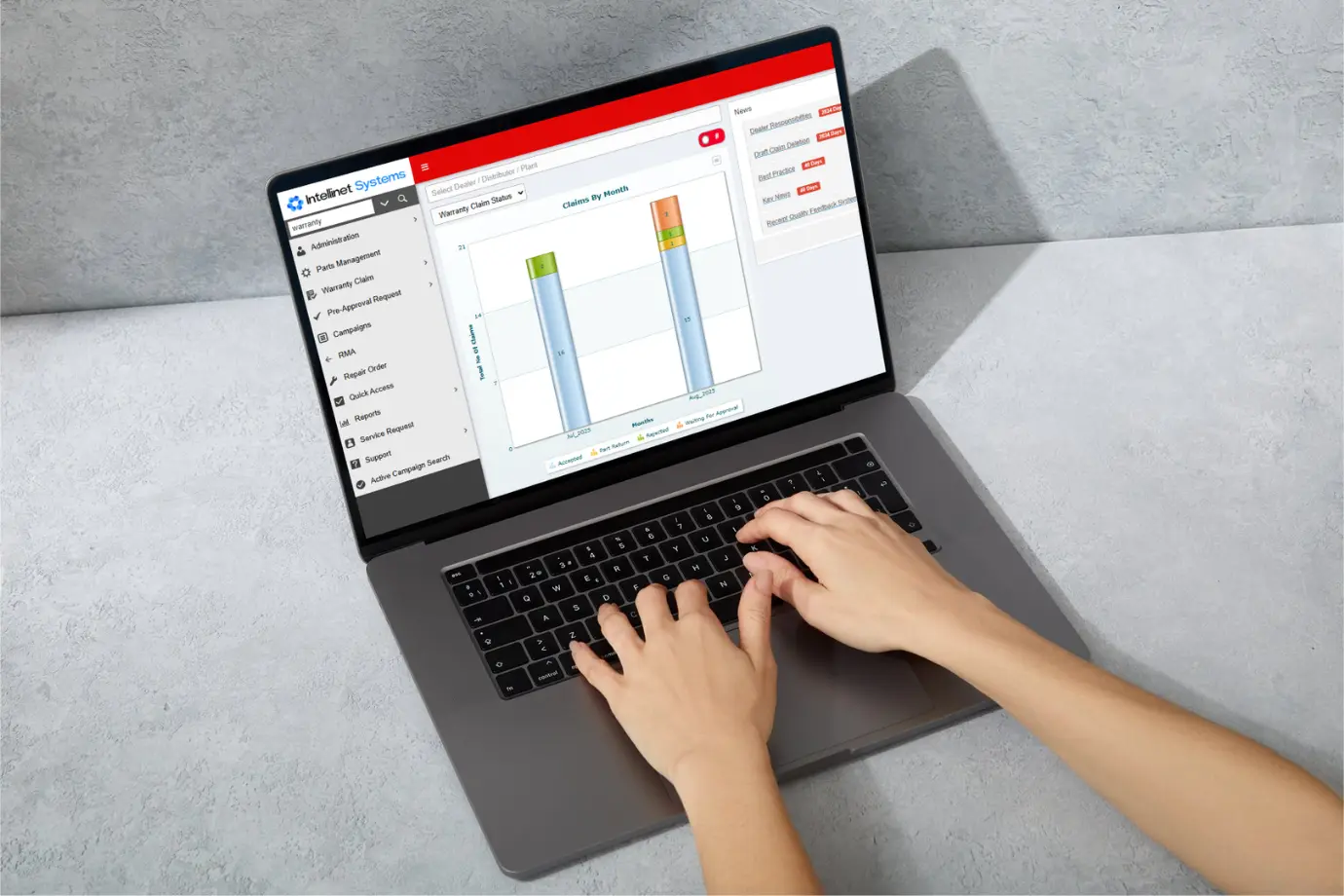
Industry data from Warranty Weeks shows that warranty costs represent 1.5 to 3% of total revenue for most manufacturers. Intelli Warranty, a trusted warranty management software, automates claim validation against policy rules, flags anomalies using machine learning, and tracks supplier recovery workflow to reduce operational costs for OEMs.
Automation in warranty management covers:
- Supports a variety of dynamic claim types
- Policy-based claim validation without manual review queues
- Anomaly scoring to identify patterns of fraud across dealer networks
- Automated supplier recovery workflows that reduce unclaimed credits
4. Predictive Analytics for Spare Parts Is Replacing Reactive Ordering
Stockouts cause OEMs to stop or hinder repairs, resulting in lost sales and damaged reputation. Overstocking impacts operational efficiency, limits cash flow, and slows down productivity in the warehouse, leading to lower profits and dissatisfied customers. Both of these problems share the same root cause: reactive and backward-looking planning
Gartner research shows that supply chains using predictive analytics reduce inventory carrying costs by 20 to 30%. Intelli Catalog uses predictive analytics for spare parts by combining historical dealer demand data, equipment lifecycle inputs, and seasonal demand to identify noticeable replenishment signals in the same.
Data inputs that drive accurate forecasting:
- Dealer order history segmented by part category and geography
- Equipment age and usage data to predict failure-driven demand
- Seasonal demand patterns tied to regional service schedules
5. Distributor Management Systems Fixes Channel Discipline Problems
OEM distributor network loses revenue when distributors operate outside the defined boundaries, when part pricing lacks controls, and when order data is fragmented across spreadsheets and email threads. A modern distributor management system like Intelli Commerce bridges this gap.
This AI-powered tool gives OEMs real-time visibility into distributor inventory levels, order activity, and retailer mapping, preventing revenue leakage to unauthorized channels and improving the accuracy of field demand signals flowing back to the OEM.
Distributor management system capabilities that OEMs prioritize:
- Digital ordering portals for distributors and their retail partners
- Controlled distributor-retailer mapping
- Real-time sales and inventory reporting across the distribution tier
- Integrated cart and seamless checkout process
- Track the field team location and attendance with geo-tracking
6. Real-Time Inventory Visibility Across Dealer Networks
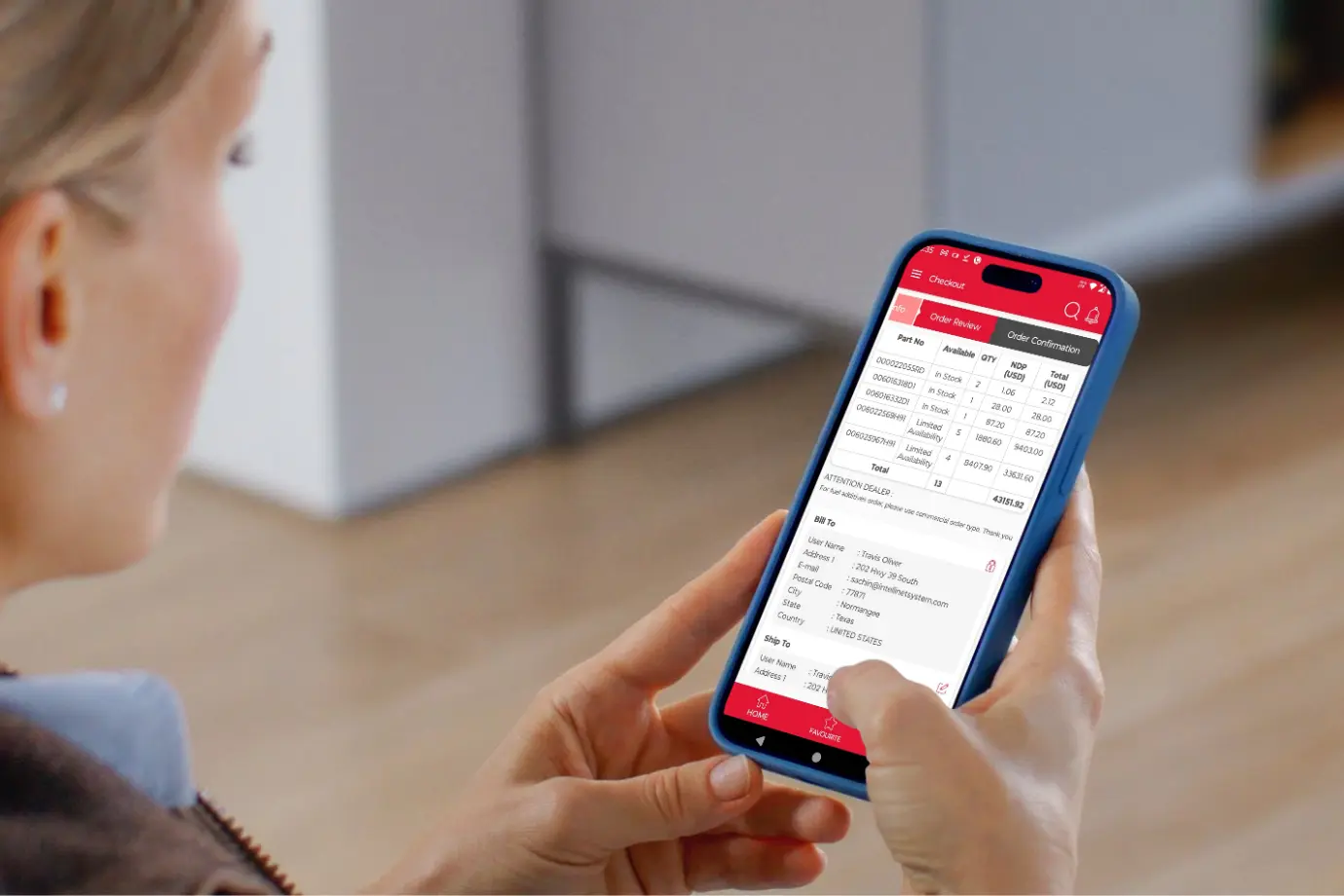
OEMs tracking only central warehouse stocks are operating blind, as dealers hold significant parts inventory. Without inventory visibility across the dealer network leads to operational, financial, and customer service issues, including fulfilment delay, missed sales, and duplicate orders.
Integration of Intelli Catalog with Intelli DMS, an efficient dealer management system, provides dealer-level inventory visibility that feeds directly into order management and demand forecasting. Low-stock alerts trigger replenishment actions before service disruptions occur, and demand signals from the field inform OEM production and procurement decisions.
- Dealer-level stock visibility updated in real time
- Automated low-stock alerts tied to replenishment workflows
- Field demand signals that improve OEM inventory planning accuracy
7. Mobile-First Applications for Dealers and Field Technicians
Service technicians do not work at desks; they work in service bays, and in the field. Mobile access to parts identification, digital inspection forms, and order placement tools directly reduces the time between diagnosis and repair completion.
Intelli Catalog, a cloud-based web and mobile application, gives dealer technicians access to the full electronic parts catalog, service documentation, and order workflows from any device. This removes the back-and-forth between technicians and parts counter staff that slows down every service order.
8. Digital Inspection Systems Reduce Pre-Warranty Quality Escapes
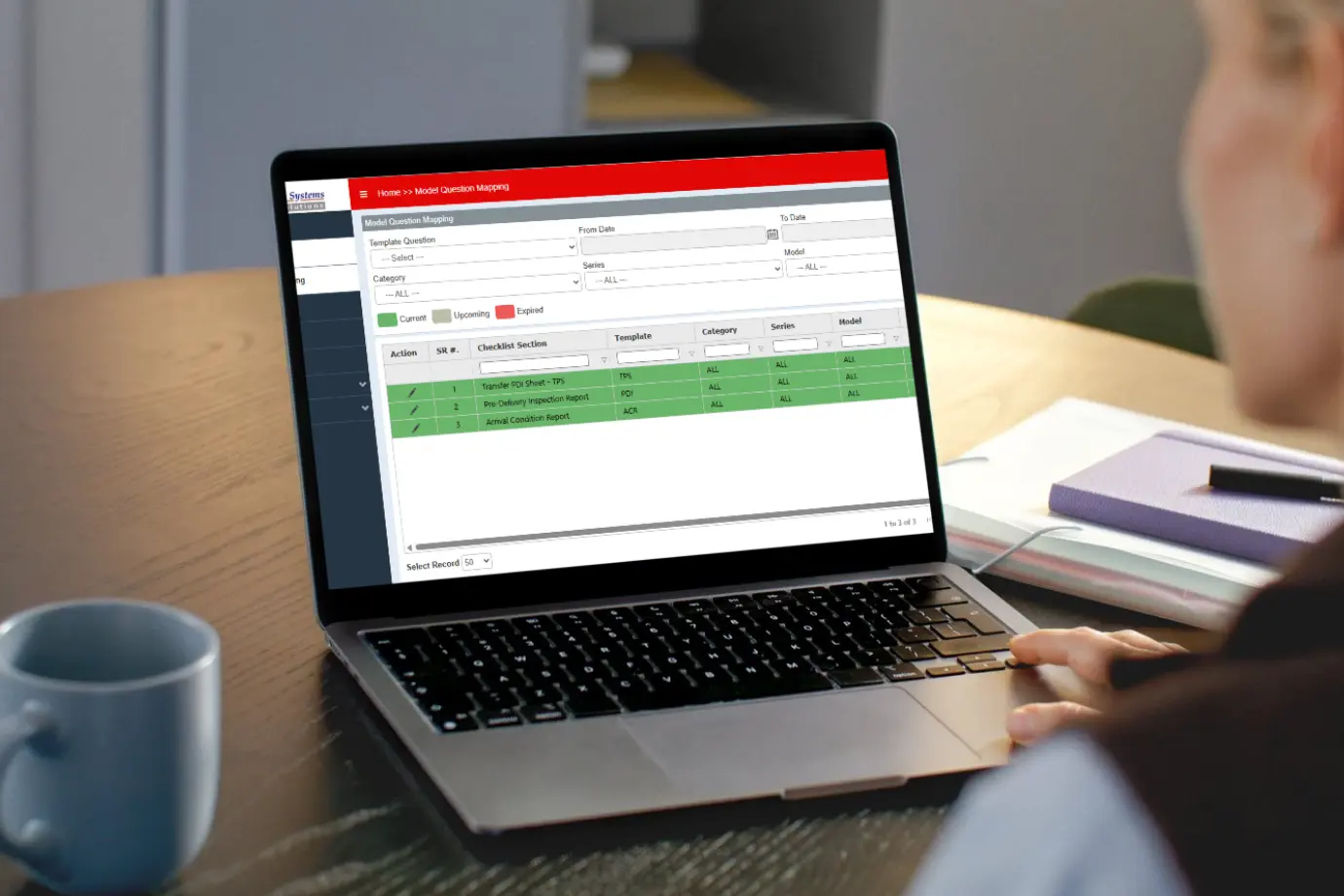
Paper inspection checklists at plant end-of-line, port and logistic, or during customer handover create documentation gaps that show up later as warranty claims with insufficient evidence. A mobile-based digital inspection software, Intelli PDI closes this gap.
Intelli PDI standardizes checklists across all dealer locations, captures photo or video evidence tied to each line item, with timestamps, annotationans and geotagging. This generates defensible reports at the moment of inspection tied directly to VIN/serial number, helping OEMs resolve disputes faster and avoid invalid damage claims.
9. AI-Powered Visual Search Makes Parts Identification Accessible
New technicians slow down service operations as they lack the part number knowledge that experienced staff carry. Visual and natural language search removes this knowledge barrier by introducing AI in spare parts catalog software.
Intelli Catalog AI-powered visual search allows technicians to photograph a part and return accurate identification results, linked directly to the parts catalog and ordering workflow. This reduces onboarding time for new dealer staff and eliminates misidentification errors that drive return orders.
Moreover, technician can either type or simply speak the command, and the system display the right SKU within few seconds. This functionality helps cut search times in half by quickly identify the right part.
10. Dynamic Pricing Systems Support Multi-Region OEM Operations
A single static price list cannot account for regional tax rates, tariffs, import duties, currency fluctuations, or dealer tier pricing structures. OEMs operating across multiple markets need dynamic pricing logic that applies the right price automatically based on context.
Intelli Catalog dynamic pricing engine applies dealer-specific and region-specific pricing rules across the global spare parts ordering system. This eliminates manual price table maintenance, reduces pricing disputes, and protects aftermarket margins across geographies.
Read More : Handling Global Spare Parts Pricing with Intelli Catalog
11. ERP and Dealer Management System Integration Eliminates Data Silos
Aftermarket operations that run on disconnected systems require manual data entry, produce reconciliation errors, and slow down every cross-functional workflow. Integration between OEM aftermarket platforms, ERP systems, and dealer management systems is now a baseline requirement.
Intelli Catalog, Intelli Commerce, Intelli Warranty and other Intellinet System software’s are built with open API architecture, enabling direct integration with major ERP platforms and dealer management systems. Order data, inventory levels, warranty records, and financial transactions flow without manual intervention, reducing errors and improving decision speed across the OEM service network.
12. Data-Driven Decision Making Across OEM Aftermarket Operations
OEM aftermarket decisions made without data are slow and inconsistent. Dealer performance varies, warranty trends go undetected, spare parts demand shifts without visibility; however, real-time dashboards and reporting change this.
Intellinet Systems various software gives OEM aftermarket teams access to performance dashboards covering dealer order activity, warranty claim trends, inventory health, and distributor compliance. These insights help identify gaps before they become revenue problems and track improvement over time.
- Dealer performance scoring tied to parts sales and service throughput
- Warranty trend analysis to identify repeat failure patterns and reduce future claims
- Inventory and demand reports that helps OEM in stock decisions
Learn More
The aftermarket technology trends for OEMs in 2026 will not be defined by adding tools for the sake of modernization, but by fixing specific operational gaps. From reducing revenue leakage and controlling rising warranty costs to eliminating friction across dealer and distributor networks, success will depend on clear operational and financial value, along with better inventory foresight.
OEMs that invest in connected aftermarket systems, including electronic parts catalog software, warranty management software, digital inspection software, and distributor management systems, gain measurable advantages in cost control, service speed, and parts revenue.
To see how these aftermarket technology trends apply to your OEM operations, speak to our expert.
FAQ
What are the most important aftermarket technology trends for OEMs in 2026?
The most important aftermarket technology trends for OEMs in 2026 include predictive analytics for spare parts,real-time inventory visibility across dealer networks, AI powered visual search makes part identification accessible, and digital inspection systems reduce pre-warranty quality escapes etc.
Why do aftermarket technology trends matter for OEMs in 2026?
Aftermarket technology trends help OEMs increase channel revenue, improve warranty cost control and parts order accuracy. In 2026, OEMs must focus on aftermarket solutions that fixex operational gaps, enabling better inventory visibility, and improving dealer network efficiency.
Which OEMs are most affected by aftermarket technology trends in 2026?
Automotive, electric vehicles, aerospace, industrial, construction and mining, agriculture and farm equipments are among the industries most impacted.


Explore More Insights







.webp)


About the Author


Chandra Shekhar
Chandra Shekhar is the Senior Manager, Strategy & Business Development at Intellinet Systems. With over a decade of experience in the automotive industry, Chandra Shekhar has led digital transformation and aftersales strategy initiatives for OEMs across multiple markets. His background combines deep industry knowledge with a practical understanding of how technology can solve real operational challenges. He focuses on making complex ideas clear and relevant for automotive and aftermarket professionals navigating ongoing change.


