

Overview: The future of technical manuals in OEM service operations is AI-powered, interactive documentation that replaces static PDFs with real-time, context-aware systems. An interactive technical manual responds to technician queries by fault code, VIN, or symptom and delivers configuration-specificrepair procedures, embedded parts references, and integrated TSB updates instantly. OEMs using these platforms see measurable improvements in technician efficiency (documentation search time reduced by up to 50%), first-time fix rates, and warranty cost control. The shift requires consolidating fragmented documentation into a centralized platform, designing content for technician workflow rather than publication hierarchy, and layering AI search on a coherent content foundation.
The future of technical manuals in OEM service operations isno longer a question of format; it is a question of function. For decades,service documentation was treated as a publishing problem: produce a manual, distribute it to dealers, and update it annually. That model worked when equipment was mechanically simple, and technicians worked from a stable, limited set of procedures.
Modern connected vehicles and industrial equipment run hundreds of electronic controls and thousands of diagnostic fault codes simultaneously. An OEM dealer network spanning multiple continents may rely on dozens of technical publication versions, none of which are perfectly synchronized. Static PDFs and printed manuals slow technicians down and introduce risk at every repair order.
The shift toward AI in technical manuals and interactive documentation is a direct response tothis operational pressure. This article explains why it matters for aftermarket performance and what it looks like in practice across OEM dealer networks.
Why Do Static Technical Manuals Fail Modern OEM Service Teams?
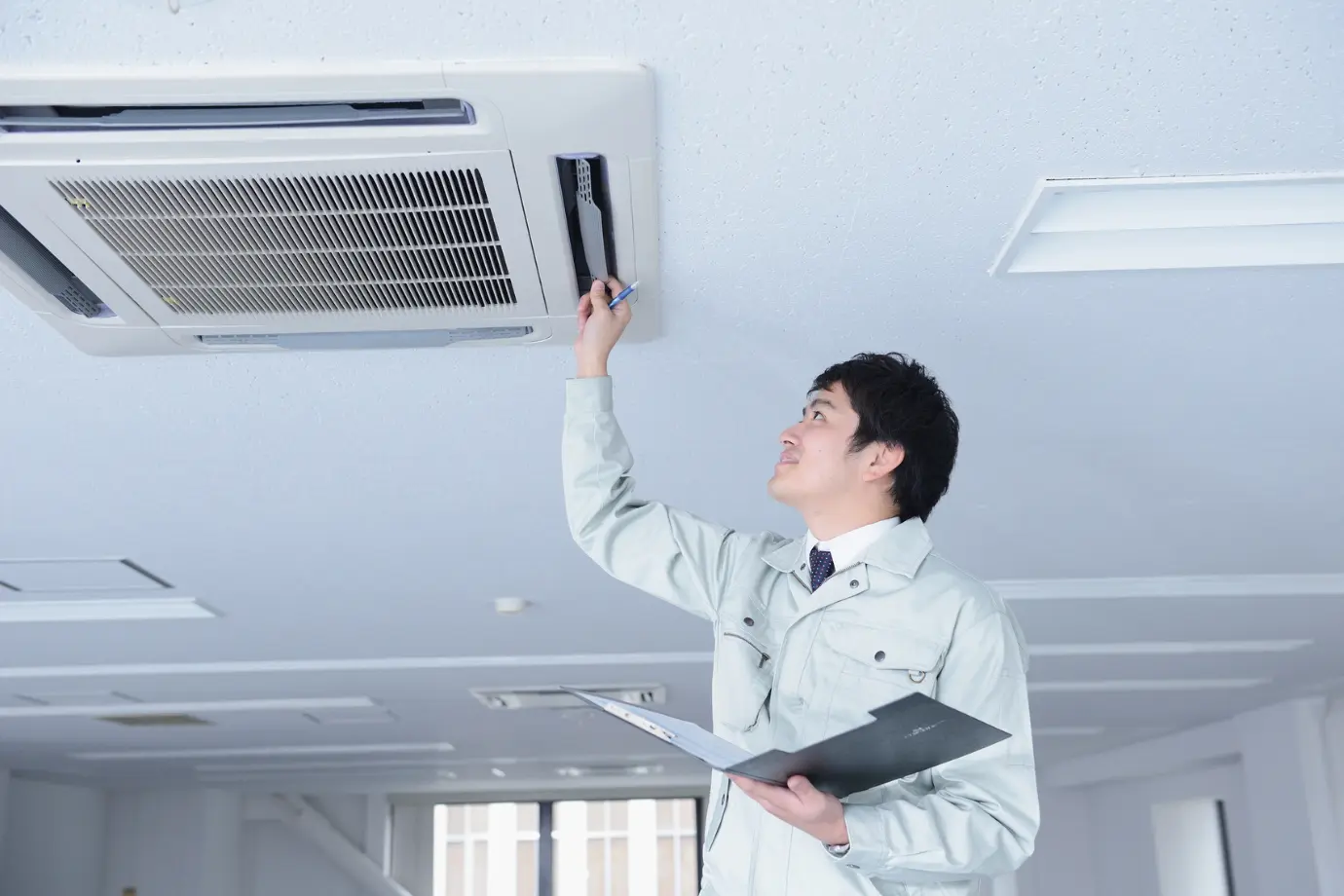
Static technical manuals fail modern OEM service teams because they are organized for publication logic, not technician workflow logic. Keyword-based PDF search returns text matches rather than contextually relevant procedures, version control across large dealer networks is difficult to enforce, and limited mobile access forces technicians to leave the work area to find documentation, adding 30 minutes to two hours of search time to each technician's day.
A technician working on a complex repair does not have time to navigate an 800-page PDF, nor to search for a diagnostic fault code that requires specific, contextual guidance. Research from Fluid Topics (2022) found that over 80% of service technicians spend between 30 minutes and two hours perday searching for the right information to complete their tasks, with 10% spending more than two hours on documentation searches alone.
That time has a direct cost. In a dealer service bay, everyhour a technician spends searching for documentation is an hour not spent on billable repair work. Multiplied across a network of hundreds of dealers, the cumulative impact on first-time fix rates, service through put, and customersatisfaction is significant.
The structural friction points in traditional OEM service documentation:
- Search functions in static PDFs return keyword matches, not contextually relevant procedures
- Documentation is organized for publication hierarchy, not for the technician's repair workflow
- Version control across large dealer networks is difficult to enforce, leaving some technicians working from outdated specifications
- Diagrams and repair procedures are disconnected from parts information and diagnostic data
- Mobile access is limited, requiring technicians to leave the work area to consult documentation
Each of these friction points compounds across every repair order in the network. Individually, they are inconveniences. At scale, there are measurable losses in service through put and warranty cost.
What Does an Interactive Technical Manual Actually Do Differently?
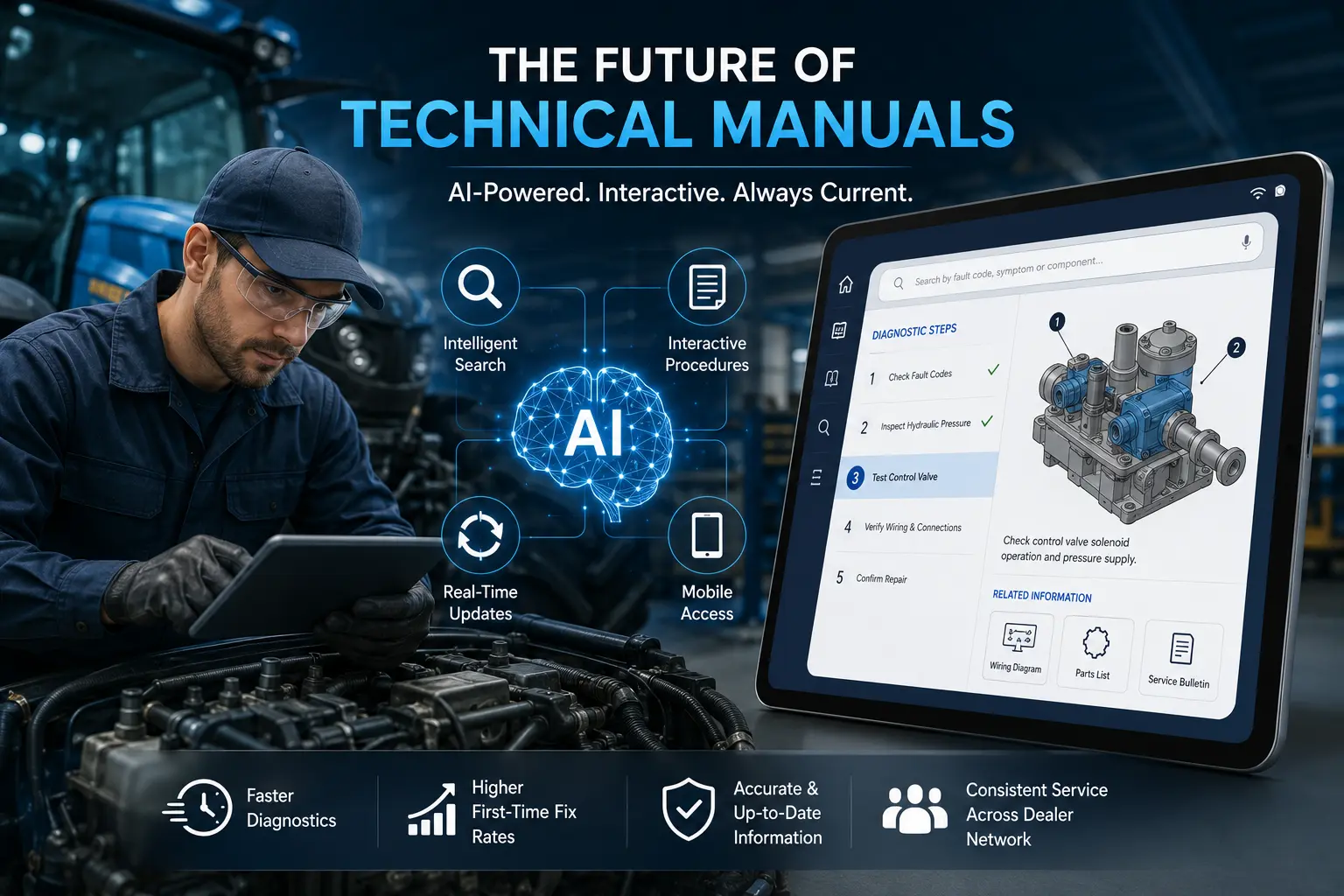
An interactive technical manual is not adigitized PDF. It is a structured information system that responds to the technician's specific context. A technician enters a fault code, VIN, or symptom description and receives a guided troubleshooting path with diagnostic steps presented sequentially, parts references embedded, and torque specifications at the point of use rather than buried in a separate technical data section.
Interactive repair manuals built on this model change the nature of the technician's job. Instead of locating information, they follow contextual service guidance. The system understands the equipment configuration, the service history, and the applicable repair procedures fort hat specific unit.
Platforms like Intelli Manual are built on this model, giving OEM dealer networks a centralized,structured documentation platform where technicians access configuration-specific service procedures rather than searching through generalized manuals.
Real-Time Documentation Updates Across the Dealer Network
When an OEM issues a technical service bulletin, revises a repair procedure, or introduces a parts supersession, the update is pushed immediately to every technician in the network rather than requiring a document republication cycle. A technician working from a six-month-old procedure document may be performing steps that no longer reflect the correct diagnostic sequence for the current software version. In automotive, EV, construction, and heavy equipment aftermarkets, where software-related service procedures change frequently, this distribution lag creates direct risk to repair quality and warranty cost.
How Does AI in Technical Manuals Improve Service Execution?
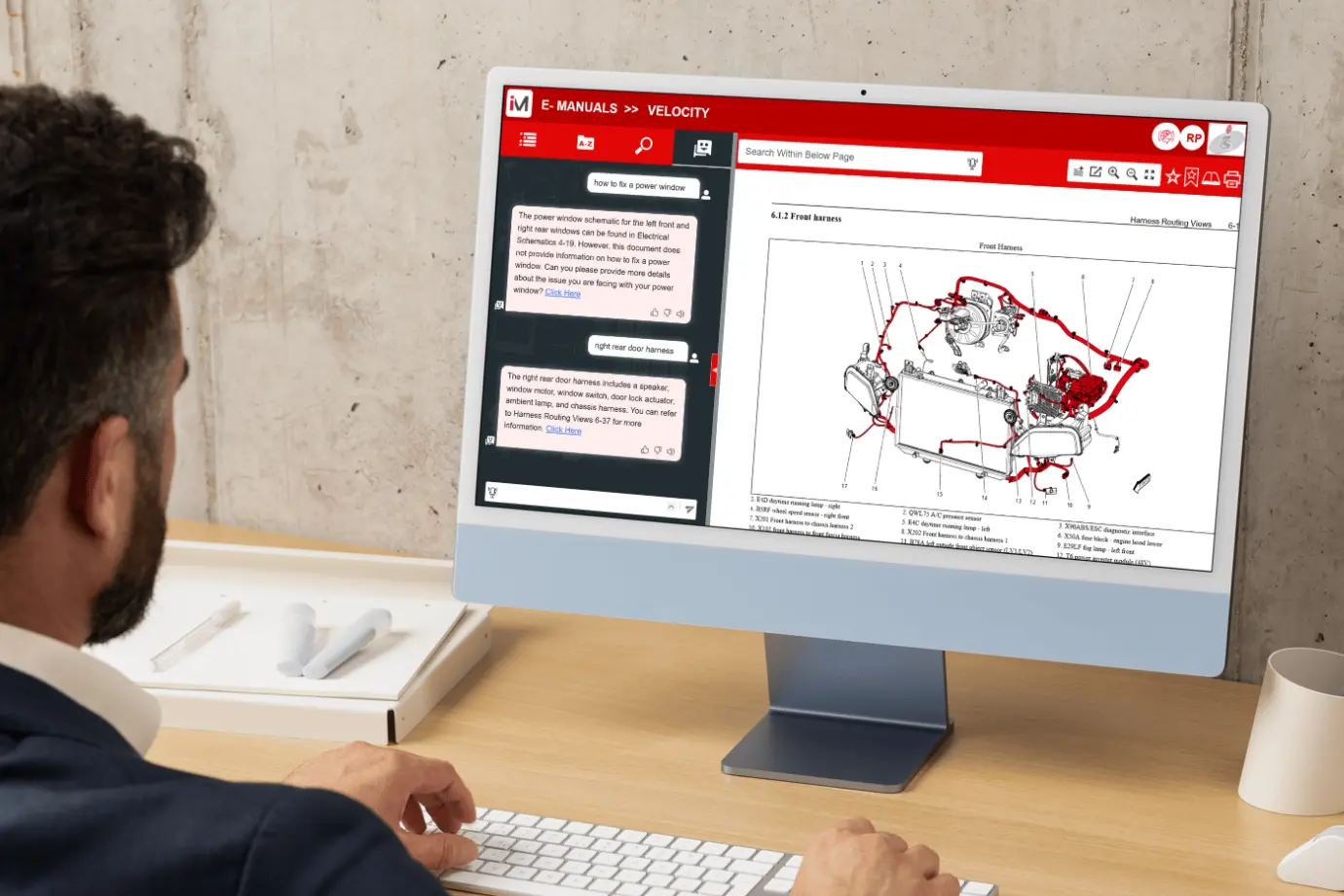
AI in technical manuals improves service execution by making documentation more useful at the point of repair. AI-powered systems understand technician intent rather than matching keywords, surface related fault codes and replacement parts proactively, and integrate with telematics data so technicians arrive at a repair with pre-populated context reducing diagnostic guesswork and improving first-time fix rates directly.
AI-powered documentation systems like Intelli Manual improve technician workflows in several specific ways:
Intelligent Search and Contextual Recommendations
Traditional keyword search in documentation returns results based on text matching. AI-assisted search understands intent. As a technician works through a diagnostic sequence, the system surfaces related information proactively: commonly associated fault codes, parts that are typically replaced together, and updated procedures that supersede earlier guidance. This reduces diagnostic time and improves the accuracy of the first repair attempt.
Connected Service and Predictive Maintenance Integration
As OEM aftermarket ecosystems incorporate telematics and connected service data, documentation systems now integrate with asset health information. Rather than waiting for a fault event, an AI-powered documentation platform surfaces relevant service procedures when a connected vehicle begins showing patterns associated with known failure modes.
When documentation is integrated into this service knowledge loop, technicians arrive at a repair with pre-populated context: what the assethas reported, what procedures are applicable, and what parts are likely needed.The reduction in diagnostic guesswork directly improves first-time fix rates and reduces unplanned downtime for end customers.
How Can OEMs Manage Documentation Complexity Across Growing Dealer Networks?
OEMs manage documentation complexity atscale by consolidating content into a centralized, modular platform where achange to a shared specification, a torque value, a common assembly procedure propagates automatically across all procedures that reference it. This replaces manual editorial overhead with intelligent content structuring, reducing bothupdate lag and version inconsistency across the dealer network.
A global automotive OEM manages tens of thousands of technical documents across multiple vehicle platforms, model years, regional specifications, and language variants. Under a traditional documentation model,maintaining accuracy across that content library requires enormous editorial overhead. Any change to a shared specification requires updates in multiple places.
AI-powered documentation platforms like Intelli Manual address this through intelligent content structuring. These systems store modular content components that are assembled dynamically for the relevant equipment configuration. A change to a shared torque specification propagates automatically across all procedures that reference it.
McKinsey's 2022 research on digital transformation in manufacturing found that companies implementing digital operations tools see 15 to 30 percent improvements inlabor productivity. For service operations, this gain comes from reducing thetime technicians spend navigating fragmented documentation and from reducing the overhead technical publication teams spend on manual update processes.
Why Does Mobile-First Documentation Matter for the Modern Service Bay?
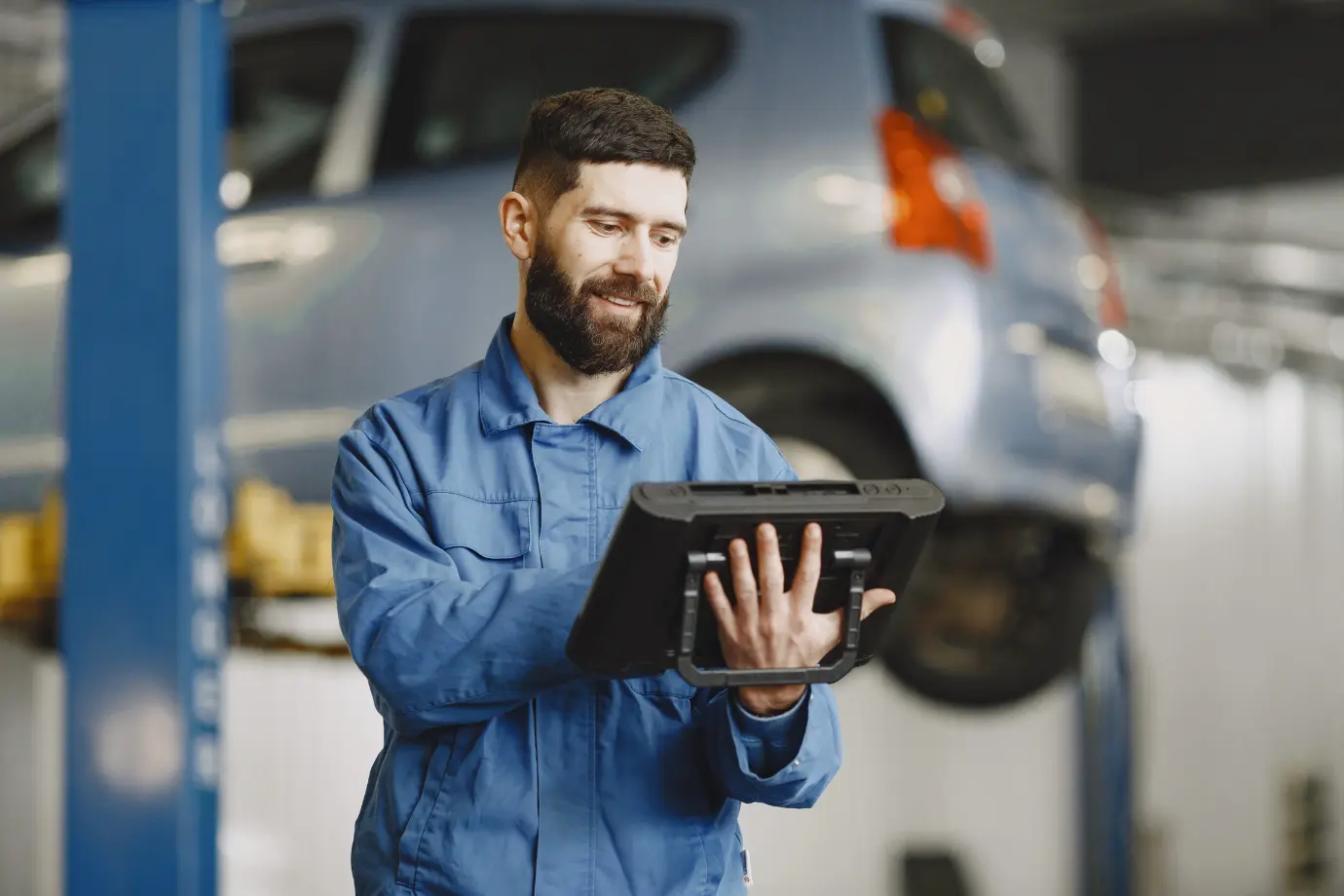
Mobile-first documentation matters because technician productivity is shaped by how documentation is accessed atthe work point. A repair procedure that requires a technician to leave thevehicle, walk to a workstation, and navigate a desktop interface interrupts workflow in ways that accumulate over a full workday and in field service environments, a desktop workstation may not be available at all.
Modern interactive digital manuals are designed formobile-first access. A technician accesses configuration-specific repair procedures on a tablet or smartphone while positioned at the machine. Diagram scan be zoomed and annotated, video content illustrates complex assembly sequences, and parts lookups are completed without leaving the service bay.
In automotive and heavy equipment service environments, especially where the equipment being serviced is at a field location or remote workshop, mobile-accessible digital service manuals are the practical alternative to paper documentation that may be incomplete, outdated, or unavailable on site.
How Does Interactive Documentation Improve Dealer Consistency and Service Quality?
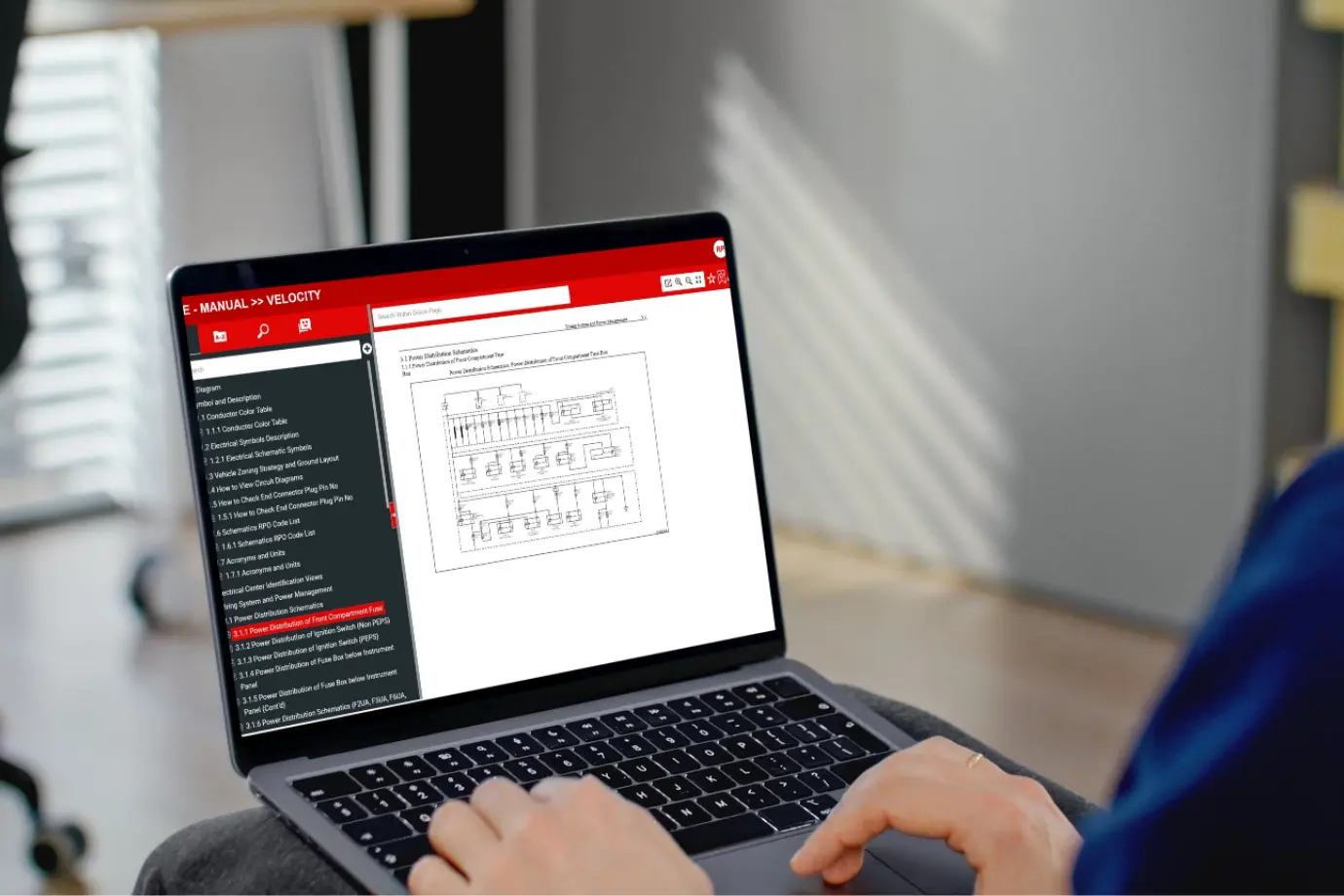
Interactive documentation improves dealer consistency by giving every technician, regardless of location or experience level, the same guided, intelligent trouble shooting workflow. A junior technician at a regional dealer follows the same step-by-step diagnostic logic that an experienced master technician would apply intuitively, reducing the service quality gap that exists across any large dealer network.
One of the most persistent challenges for OEMs is maintaining service quality consistency across dealer networks of varying size,maturity, and technical capability. A large urban dealer with experienced master technicians performs at a different level than a smaller regional dealer with less tenured staff.
Centralized interactive documentation systems reduce this variability. When all technicians access the same guided, intelligent troubleshooting workflows through Intelli Manual, service quality becomes more consistent across the network. The guided diagnostic path surfaces the same repair logic for a junior technician in a regional dealer that a master technician would apply from experience.
Where Should OEM Service Operations Teams Start?
OEMs evaluating the move from static to interactive service documentation should start by auditing how technicians currently access information, identifying where search failures occur mostoften, and consolidating fragmented documentation into a single structured platform before layering on AI capabilities.
Audit Current Documentation Access Patterns
Understand how technicians currently access service information, where search failures occur, and which documentation gaps are most frequently associated with warranty re-entries or extended repair times. This identifies where intelligent digital documentation delivers the most immediate impact.
Prioritize Centralization Before Sophistication
Many OEM documentation environments suffer from fragmentation: service procedures in one system, parts catalogs in another, technical service bulletins in a third. The first step toward an interactive documentation environment is consolidating all service documentation into a single, structured, centrally managed platform. Advanced AI capabilities can then be layered on a coherent foundation.
Design for the Technician's Workflow, Not the Publisher's Structure
Interactive documentation should be organized around repair tasks and diagnostic paths, not around the content hierarchy that makes sense for a technical writer. A technician troubleshooting a hydraulic fault on apiece of heavy equipment needs a workflow, not a chapter structure.
What Is the Future of Technical Manuals for OEM Service Operations?
The future of technical manuals for OEMs is documentation that functions as a living component of a connected service operation integrated with telematics data, parts availability, warranty systems, and technician training records rather than a static reference library that happens to be digital.
When documentation is treated as a connected service tool rather than a static reference, it becomes a driver of service outcomes across the entire dealer network. That is the practical value of AI-powered, interactive OEM documentation, and it is the direction leading aftermarket operations are already moving toward.
In our work with OEM aftermarket networks, the most common failure point is not technology adoption it is documentation fragmentation. Dealers are often navigating three different systems before a technician opens a repair order. The operational cost of that fragmentation accumulates silently across thousands of repair orders before it surfaces in warranty data.
Book a Demo now to understand how our software can help you upgrade your traditional technical manual.
FAQ
What are the main challenges with traditional technical manuals?
Traditional paper or PDF-based technical manuals fail OEM service teams because they are built for publication, not for how technicians actually work. Static PDFs require sequential navigation that takes 5 to 15 minutes per lookup. Revision cycles mean documentation is frequently outdated by the time it reaches a dealer. When technicians apply an outdated or incorrect procedure, repair cycle times increase, error rates rise, and warranty re-entry costs follow. Compliance and liability exposure also increases when technicians cannot confirm they are using the current approved procedure.
What is AI in technical manuals, and how does it work?
AI in technical manuals means the documentation system understands technician intent rather than matching keywords. A technician can input a fault code, symptom, or natural language description and receive the relevant repair procedure directly, not a list of document pages to navigate. AI also enables contextual recommendations surfacing related fault codes, commonly replaced parts, and updated procedures proactively as the technician works through a diagnostic sequence. Some platforms include speech-to-text input for hands-free operation, AI-generated procedure summaries, and suggested FAQs tailored to the active repair context.
What are the benefits of using Intelli Manual as an AI-powered technicalmanual?
Intelli Manual improves OEM service operations in four measurable ways. It enhances dealer technician efficiency by reducing documentation search time from minutes to seconds through AI-powered, intent-based search. It improves first-time fix rates by delivering configuration-specific, guided diagnostic paths rather than generalized procedures. It controls warranty cost by ensuring technicians always work from the current approved procedure, reducing re-entries caused by outdated documentation. And it streamlines OEM collaboration by giving technical publication teams a centralized platform where updates propagate automatically across all dealer access points rather than requiring manual redistribution.
How does an interactive digital manual differ from a standard PDF servicemanual?
A PDF service manual is a static document that must be navigated sequentially. An interactive digital manual is a structured information system that responds to the specific context of each repair. The technician queries it by fault code, VIN, or symptom and receives the exact procedure for their specific equipment configuration with parts references embedded, TSBs integrated, and diagnostic steps sequenced. The practical difference is that technicians find the right information in under 30 seconds rather than navigating for 5 to 15 minutes, and the information is filtered to their specific unit rather than requiring manual variant selection.


Explore More Insights



.webp)


About the Author


Chandra Shekhar
Chandra Shekhar is the Senior Manager, Strategy & Business Development at Intellinet Systems. With over a decade of experience in the automotive industry, Chandra Shekhar has led digital transformation and aftersales strategy initiatives for OEMs across multiple markets. His background combines deep industry knowledge with a practical understanding of how technology can solve real operational challenges. He focuses on making complex ideas clear and relevant for automotive and aftermarket professionals navigating ongoing change.


