


Managing warranty operations across a large dealer network is challenging when done manually because claims sit in the wrong queue, approvals get delayed, and dealers wait weeks for reimbursement they are entitled to receive within a few days.
A Programmable Work Queue Parameter changes how OEMs handle this operational challenge. Instead of routing claims manually, the system sets predefined business rules to automatically direct every claim to the right team, reviewer, or approval queue, as and when it is submitted.
Intelli Warranty, a trusted warranty management system, gives OEM administrators full control over how warranty transactions move through the organization, thereby reducing delays and improving reimbursement accuracy.
Why Manual Warranty Queue Management Creates Problems
Most OEMs rely on email chains, spreadsheets, and phone calls to manage warranty claim workflows. The problem with this approach is that it will work at low volumes, but will break down as the dealer network grows.
Common problems in manual warranty queue management include:
- Delayed claim approvals because claims are forwarded to the wrong reviewer
- Claim backlogs are building up when no one tracks the queue workload
- Inconsistent approval decisions across different reviewers and regions
- Dealers make repeated follow-up calls to check claim status
- High administrative workload on warranty teams
- No visibility into where the claim stands at any point in the process
- Reimbursement disputes caused by missing documentation or unstructured submissions.
For dealers, these inefficiencies impact cash flow. A dealer may complete a repair, replace failed components, and arrange emergency towing for a customer, but reimbursement takes weeks if the claim lands in the wrong place.
What is a Programmable Work Queue Parameter?
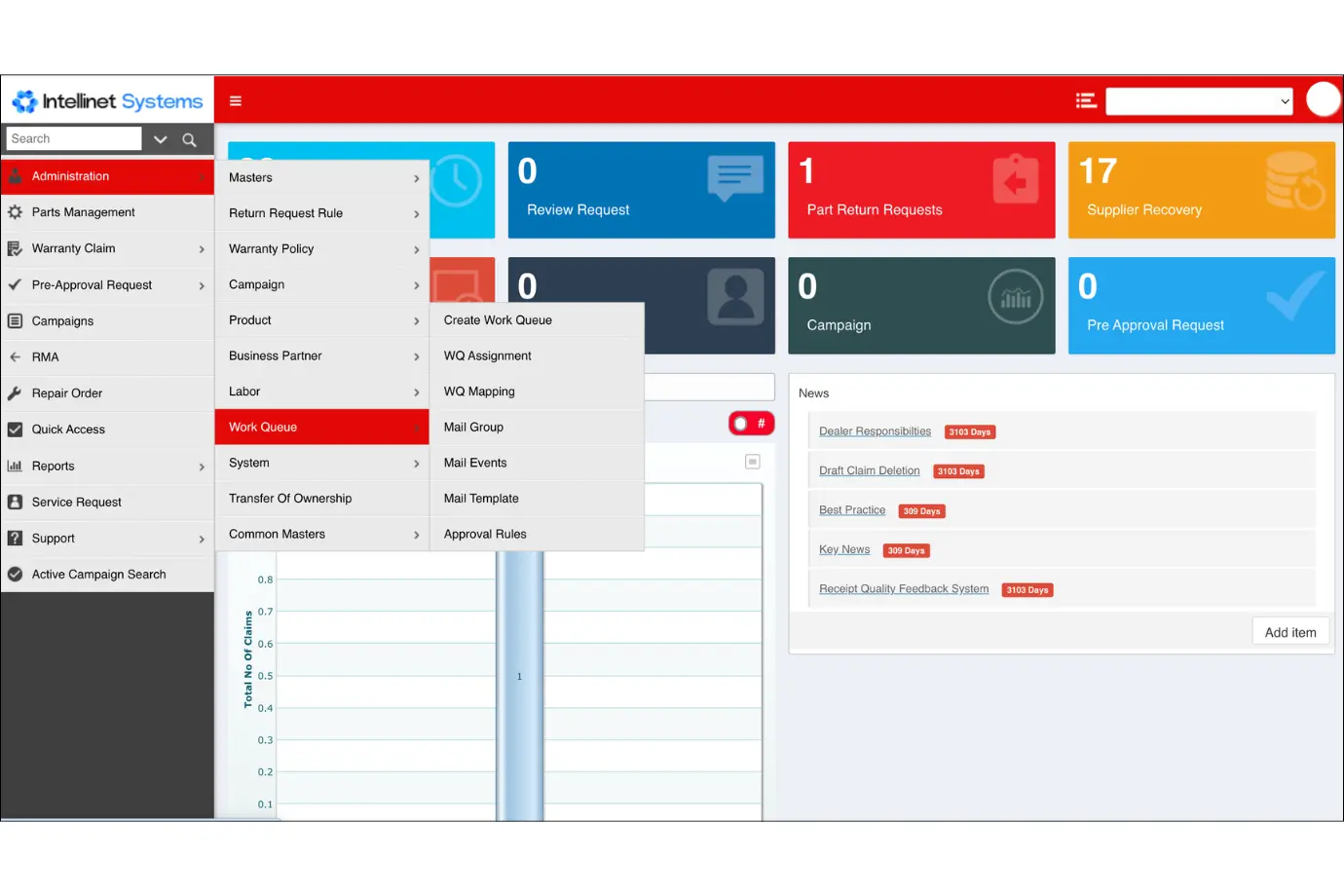
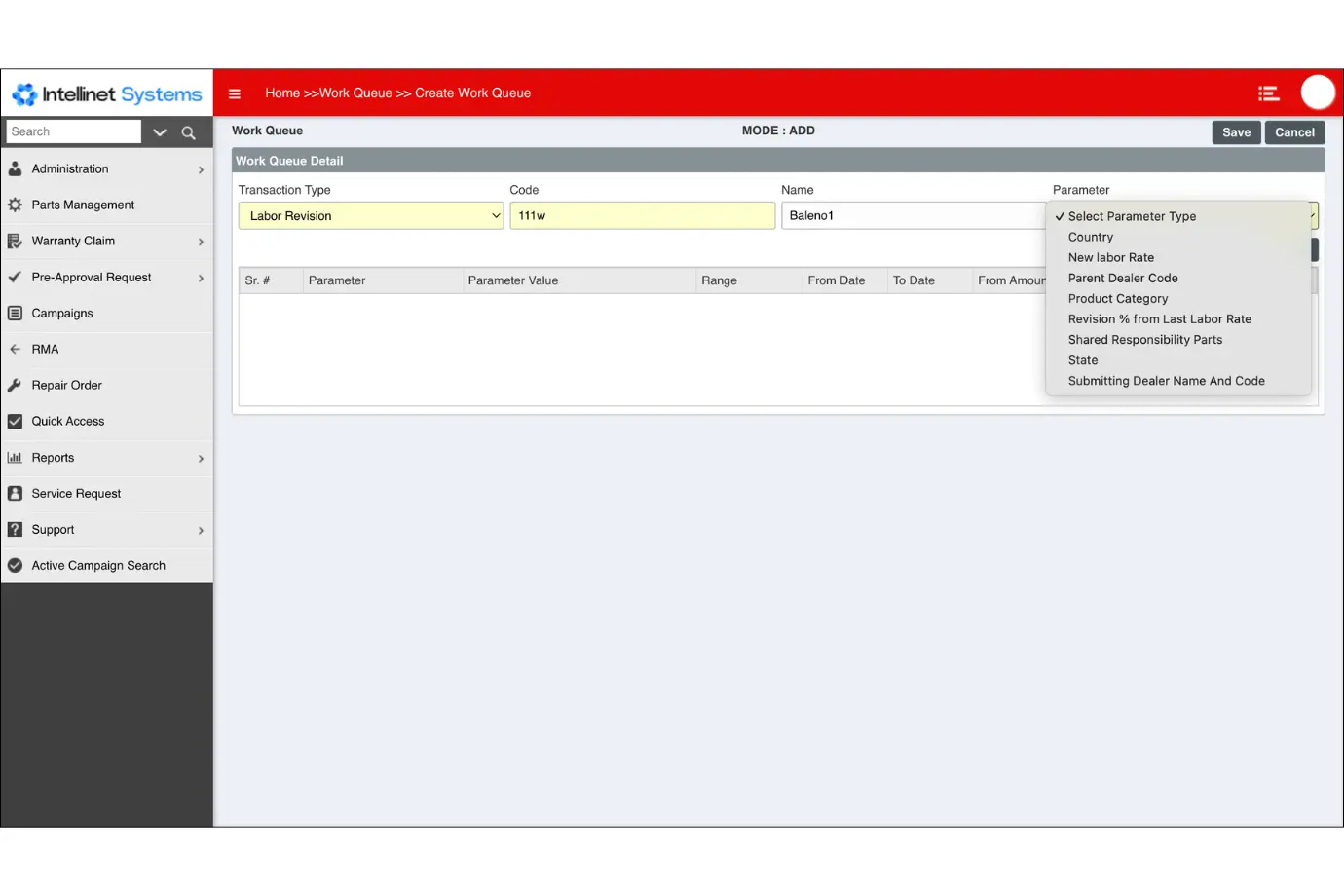
A Programmable Work Queue Parameter is a configurable workflow engine inside a warranty management system, which evaluates claim attributes at the time of submission and automatically routes each claim to the appropriate queue based on rules defined by the OEM administrator.
Intelli Warranty supports dynamic work queue assignment using configurable parameters. Some of these parameters include:
- Claim amount and transaction type
- Warranty type and approval workflow
- Labor costs and miscellaneous expenses
- Towing charges and emergency repair costs
- Approval hierarchy and authorization level
OEM administrators can build routing logic that reflects the actual structure of the business, and which, when configured, will automatically send claims to the right place.
How the Programmable Work Queue System for OEMs Works
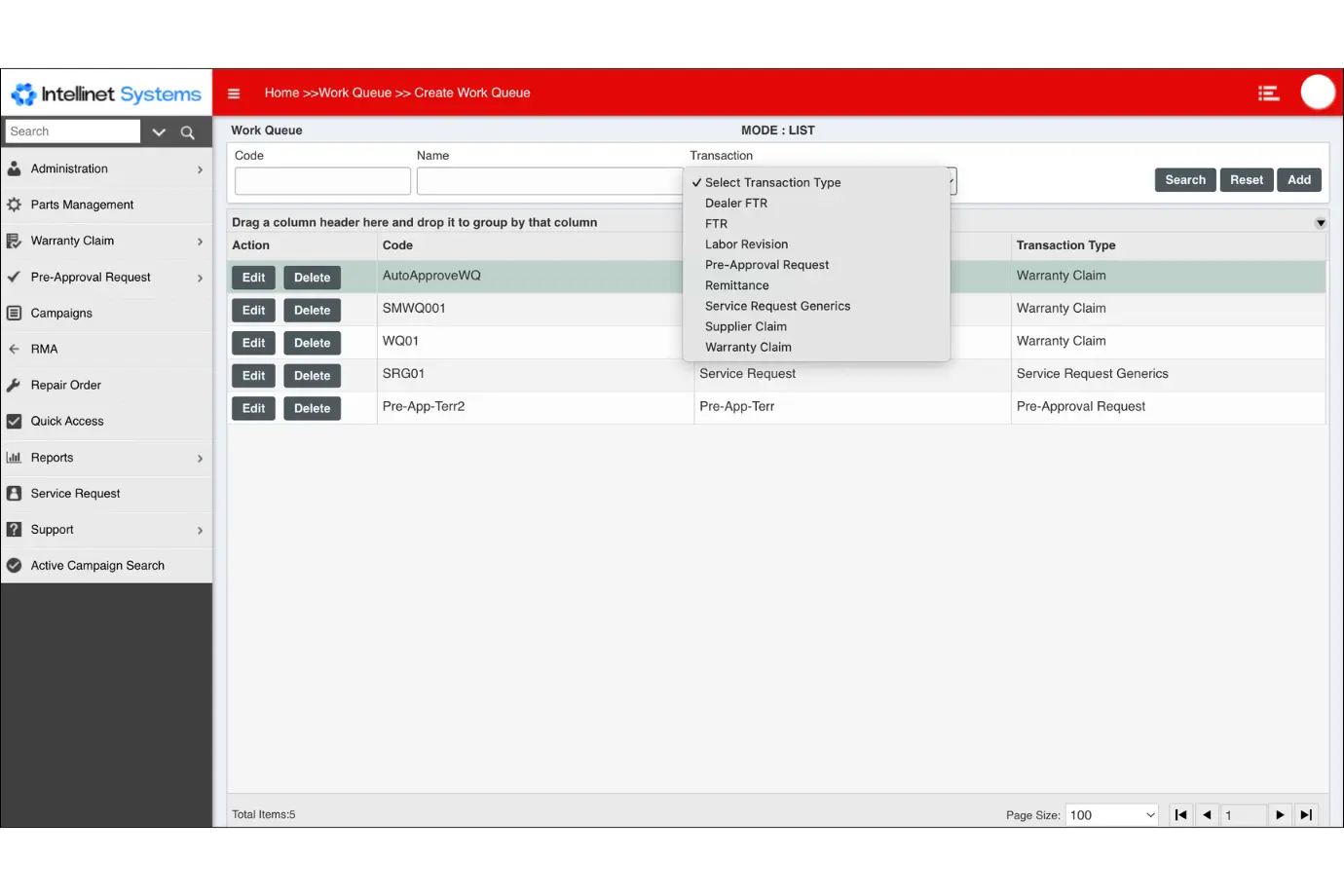
Inside Intelli Warranty, OEM administrators can create multiple work queues designed for different types of warranty transactions. These queues are not fixed but are defined entirely by the OEM based on its operational requirements.
Queue types typically include:
- Dealer warranty claim review queues
- Pre-approval request queues
- Service request processing queues
- Supplier recovery workflows
- Auto approval queues for low-risk claims
- Technical inspection queues for complex failures
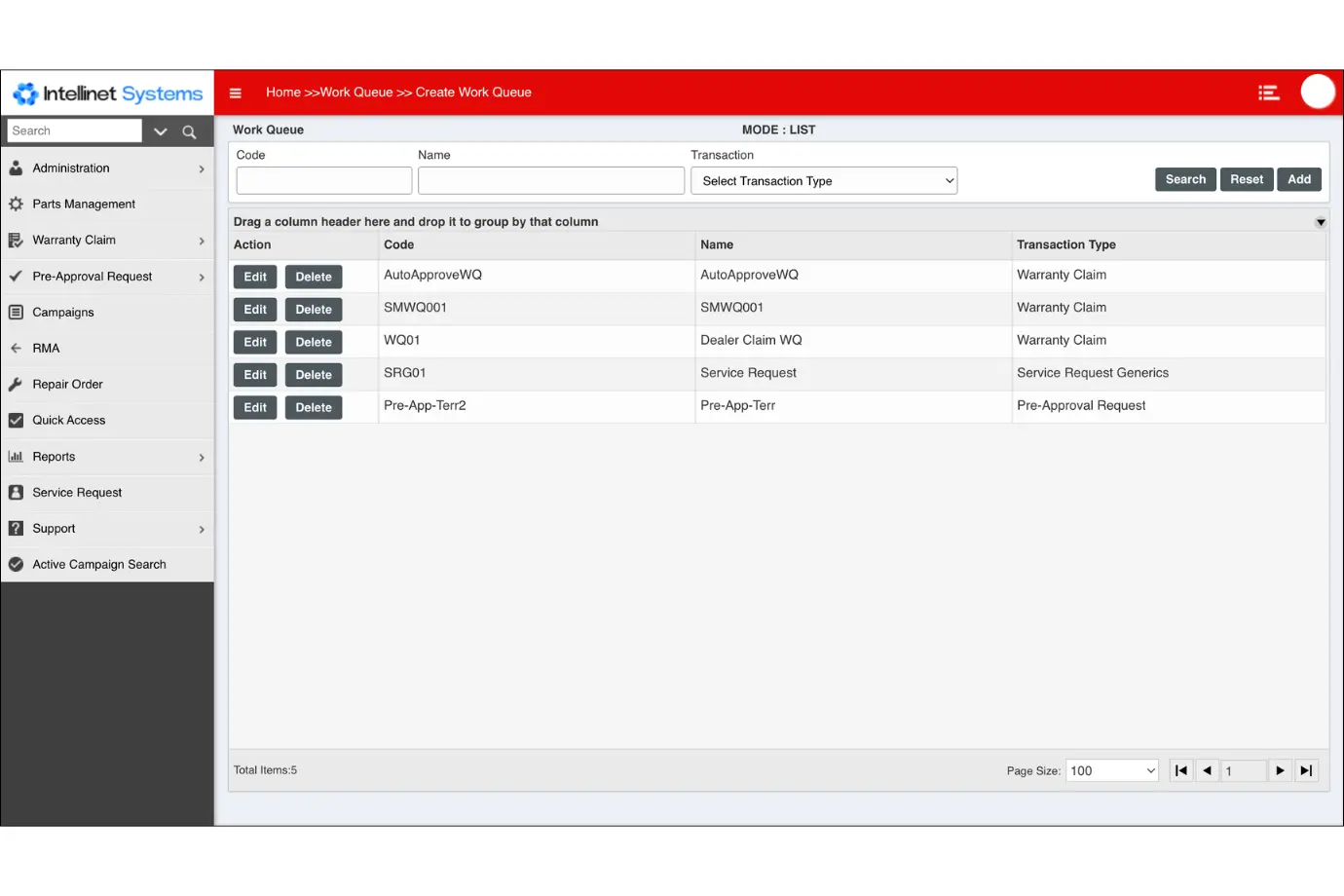
Let's see a practical workflow example, where an OEM configures the following rules:
- Warranty claims below a defined cost threshold automatically get into the auto approval queue
- Engine-related claims are routed to senior technical reviewers
- Claims that include towing charges are sent to a specialized reimbursement validation queue
- Pre-approval requests are forwarded to the technical inspection queue before work begins
When a dealer submits a claim, the programmable work queue system for OEMs in Intelli Warranty evaluates all defined rules and routes the transaction to the correct queue automatically.
Automation in Claim Processing and Reimbursement Issues
Reimbursement issues are the most common cause of disputes between the dealer and OEM relationship. These disputes start mainly because of the inconsistency in how claims are submitted, reviewed, and approved.
Consider a real scenario: a customer's vehicle broke down in a remote location. The dealer arranges towing, brings the vehicle in, diagnoses a failed component, replaces the part, and completes the repair. The warranty claims need to include labor charges, replacement parts costing, towing expenses, and supporting documentation, but with the manual system, these miscellaneous expenses are handled inconsistently. It means one reviewer may approve towing costs, another may reject them because the submission format was unclear, creating reimbursement delays.
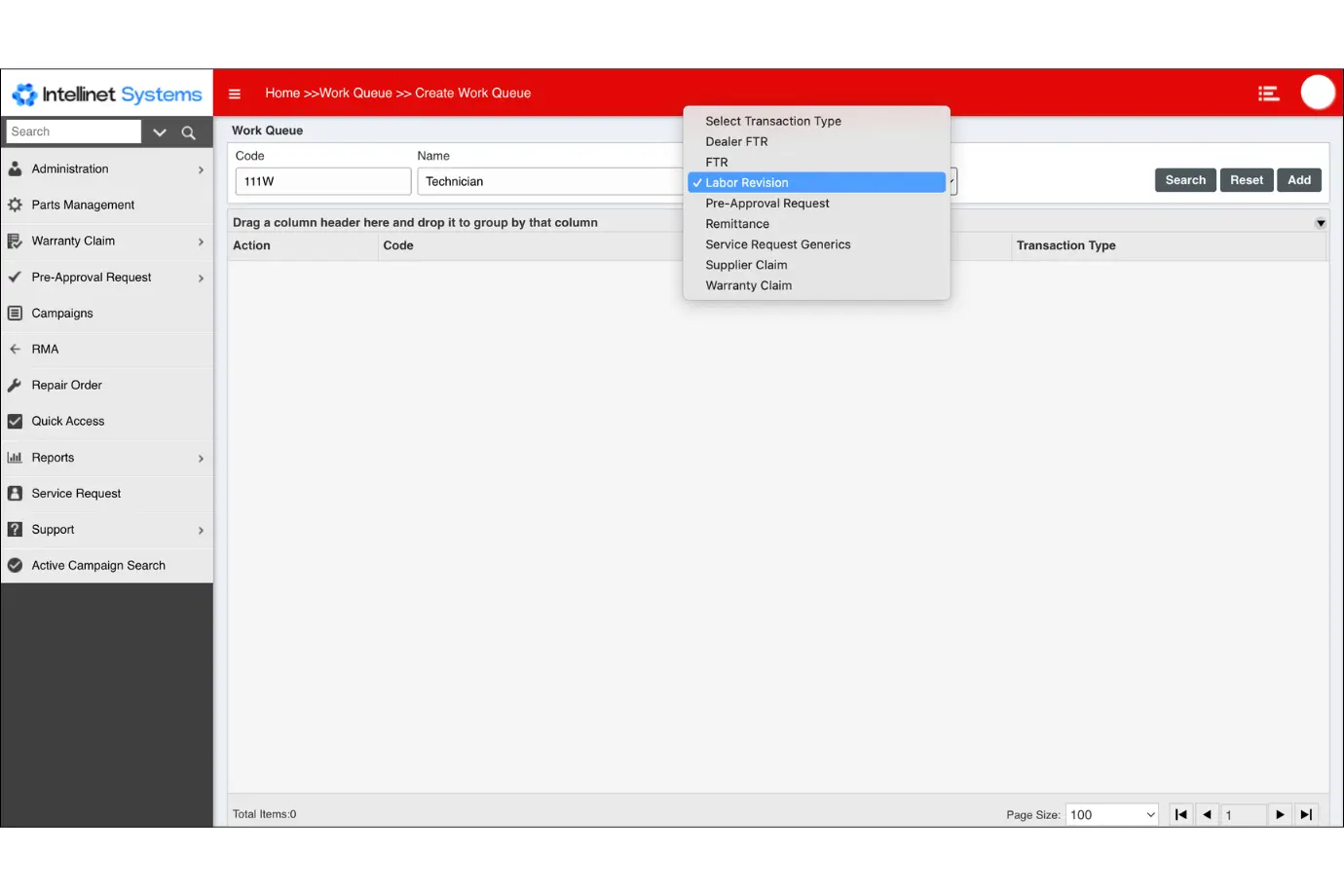
AI-powered automation in Intelli Warranty helps remove inconsistency in claim processing and reimbursement issues. This software allows dealers to digitally submit all claim components in a structured format, including:
- Replaced parts and part numbers
- Labor hours and labor cost
- Warranty entitlement details
- Towing and transportation expenses
- Supporting documents and service records
- Miscellaneous repair expenses
The work queue system then validates the submission against pre-defined rules and directs it to the appropriate queue. This removes ambiguity about which team reviews the claim or what documentation is required, thereby improving reimbursement accuracy, reducing disputes, and eliminating the administrative back-and -forth.
How Automation Improves Dealer Satisfaction
Dealer satisfaction in warranty claim operations is directly linked to speed, consistency, and transparency. When dealers face long approval timelines, unclear claim status, or repeated requests for additional documentation, their confidence in the OEM warranty process declines.
A programmable work queue system improves dealer experience by:
- Accelerating claim routing so claims reach the right reviewer immediately
- Enabling faster approvals for low-value and low-risk claims through auto approval queues
- Providing real-time claim status visibility so dealers do not need to follow up by phone
- Standardizing submission requirements so dealers know exactly what to include
- Reducing administrative effort on both the dealer and OEM side
- Improving reimbursement predictability and reducing disputes
For example, when an OEM configures auto approval rules for routine low-cost repairs, dealers receive reimbursements faster without waiting for manual review, which improves dealer cash flow and strengthens the OEM-dealer relationship.
Dealers that experience consistent, fast, and transparent warranty processing are more likely to maintain strong relationships with OEMs and prioritize their products in the market.
How OEMs Benefit from Work Queue Automation
For OEMs, automation in OEM application management means full operational control over how warranty workflows run across the entire dealer network.
Key benefits for OEM operations include:
- Reduced administrative workload by eliminating manual claim forwarding
- Standardized approval logic applied consistently across all regions and dealer locations
- Lower claim handling costs through automated processing that reduces manual review time
- Improved SLA compliance with defined routing rules and processing timelines
- Faster claim settlement because claims move through queues without manual intervention
- Complete audit visibility with a traceable record of every claim routing and approval decision
- Stronger policy enforcement because routing rules apply uniformly to all claim types
For global OEMs managing multi-region dealer networks with high claim volumes and multiple product categories, dynamic work queue assignment is not optional, but a requirement for maintaining operational efficiency at scale.
Intelligent Auto Approval Workflows
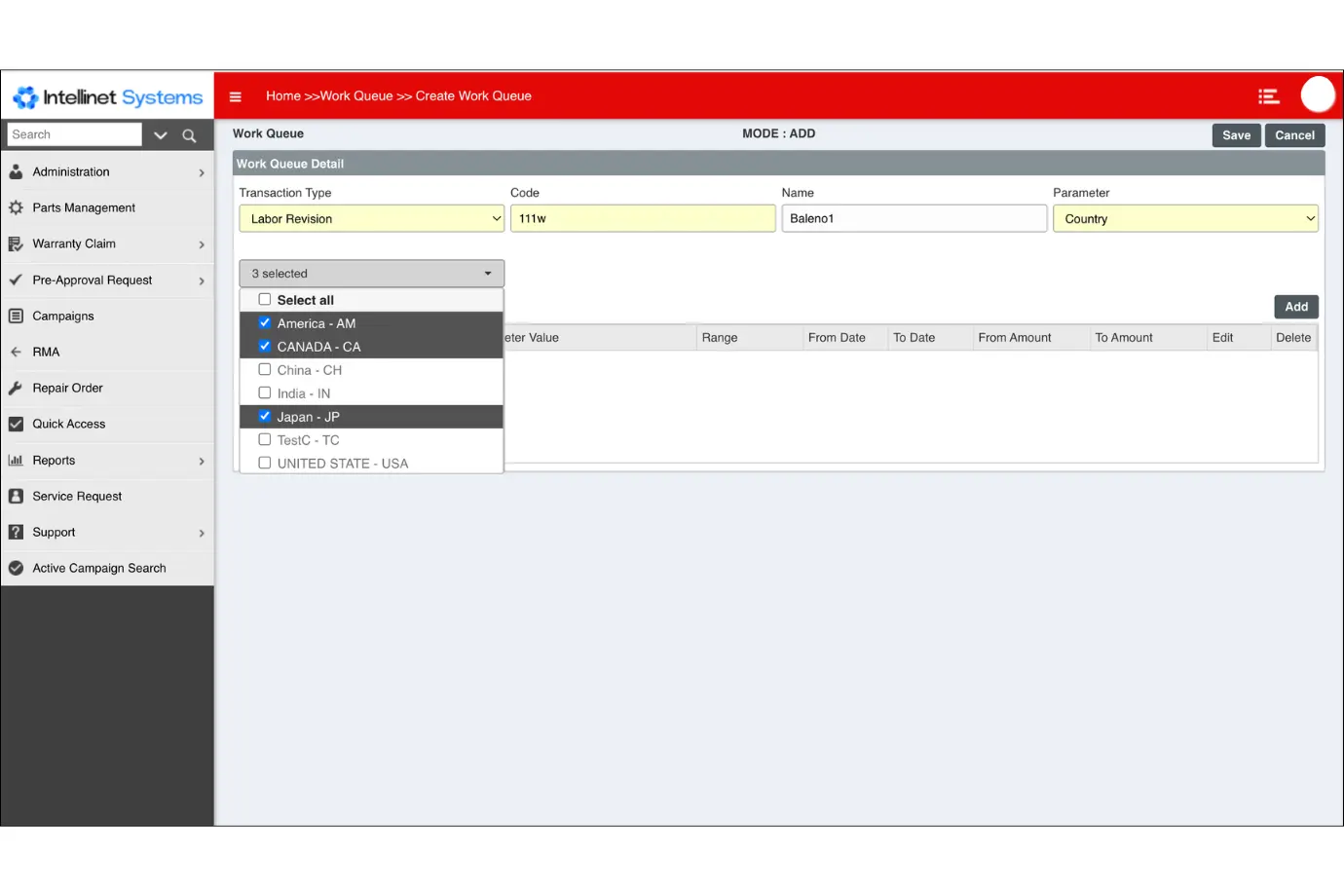
One of the most impactful capabilities within the Intelli Warranty platform is intelligent auto claim processing. OEMs can configure rules that allow certain claims to move through the system entirely without manual review.
Claims that qualify for automatic processing typically include:
- Low-value claims that fall below a defined cost threshold
- Routine repairs that fall within standard warranty coverage
- Repetitive claim types with a clean approval history
- Claims submitted with complete documentation and no validation exceptions
OEMs can also configure automatic rejection or escalation paths. Claims that trigger defined risk conditions can be automatically flagged and sent to senior reviewers or fraud analysis teams.
This structure reduces queue congestion and lets warranty teams focus their attention on high-value claims, supplier recovery cases, and technical investigations that require judgment. Routine work gets processed automatically. Complex work gets the human attention it needs.
Better Visibility Across Warranty Operations
Operational visibility is often missing in manual warranty systems. Without a centralized queue management platform, it is difficult to know how many claims are pending, which queues are congested, or how long specific claim types take to process.
With Intelli Warranty, OEM management teams can track:
- Pending approvals across all queues and departments
- Processing bottlenecks and queue workload distribution
- Dealer activity and claim submission patterns
- Reimbursement status and settlement timelines
- SLA performance by claim type, region, and dealer
- Individual and team productivity metrics
For dealers, real-time warranty claim tracking removes the need for follow-up calls, as it enables them to check claim status directly within the platform. This level of transparency improves trust between OEMs and dealers and creates a more professional, accountable warranty process on both sides.
Conclusion
Using a programmable work queue parameter not only benefits the dealers but also the OEMs and employees themselves. By facilitating an easier and faster retrieval of the request, including the claim processing and reimbursement issues, OEMs are empowered to deliver superior customer service and leave a positive impact on customers. Programmable work queue parameter also results in greater productivity, due to less time wastage and lower stress levels for employees in warranty departments.
If you are managing high claim volumes, multi-region dealer networks, or complex approval workflows, schedule a demo with the Intelli Warranty team to see how they can help automate the process.
FAQs
1. What is a programmable work queue in warranty management software?
A programmable work queue is a feature in warranty management software that automatically assigns, prioritizes, and organizes tasks based on predefined rules such as claim type, vehicle status, urgency, dealer location, or approval stage. It helps OEMs and dealers streamline warranty operations and reduce manual workload.
2. How does a programmable work queue improve satisfaction for OEMs and dealers?
Programmable work queues improve satisfaction by reducing delays, minimizing claim handling errors, and ensuring tasks are routed to the right teams quickly. OEMs gain better visibility and control over warranty processes, while dealers benefit from faster approvals, improved communication, and quicker claim resolutions.
3. Why is automation important in OEM warranty workflow management?
Automation helps OEMs and dealers manage high volumes of warranty claims more efficiently. Automated workflows reduce manual intervention, improve turnaround times, enhance process transparency, and ensure consistent handling of claims, leading to better operational efficiency and stronger dealer relationships.


Explore More Insights






.webp)


About the Author


Chandra Shekhar
Chandra Shekhar is the Senior Manager, Strategy & Business Development at Intellinet Systems. With over a decade of experience in the automotive industry, Chandra Shekhar has led digital transformation and aftersales strategy initiatives for OEMs across multiple markets. His background combines deep industry knowledge with a practical understanding of how technology can solve real operational challenges. He focuses on making complex ideas clear and relevant for automotive and aftermarket professionals navigating ongoing change.


