


Why This Guide Exists
The aftermarket is no longer a secondary business line. According to McKinsey, aftermarket services generate an average EBIT margin of 25%, compared to just 10% for new equipment sales. Parts sales alone consistently deliver gross margins above 30%. For most US OEMs, the aftermarket is the highest-margin revenue stream in the business.
Yet most OEMs are running this high-margin business on infrastructure that was not built for it. Printed catalogs, disconnected ERP systems, static price lists, and manual order workflows are the norm rather than the exception. This results in wrong parts identification and misordering, dealer frustration, parts revenue leaking to third-party suppliers, and the non-availability of equipment that damages customer relationships.
As per Mordor Intelligence, the global automotive aftermarket was valued at USD 464.83 billion in 2025 and is projected to reach USD 555.82 billion by 2030 (Mordor Intelligence). Capturing that growth requires purpose-built spare parts management software. This guide explains what to look for, what questions to ask, and how to avoid the most common buying mistakes.
What Is Spare Parts Management Software?

Spare parts management software enables OEMs to manage the full lifecycle of spare parts from catalog publishing and part identification through VIN/serial search, model search, etc., to ordering, inventory visibility, demand forecasting, and dealer commerce. This helps reduce unplanned downtime, prevent inventory imbalance, and improve maintenance efficiency across locations.
For OEMs specifically, spare parts management software serves two distinct but connected functions:
- Dealer-facing functions: helping dealers and technicians identify the right part quickly to place accurate orders, and manage returns without calling the OEM support line
- OEM-facing functions: giving manufacturers control over parts data governance and pricing, dealer inventory visibility, demand forecasting, and multi-channel revenue
A spare part management system that handles only one of these functions is not a complete solution.
What Poor Parts Management Actually Costs US OEMS?
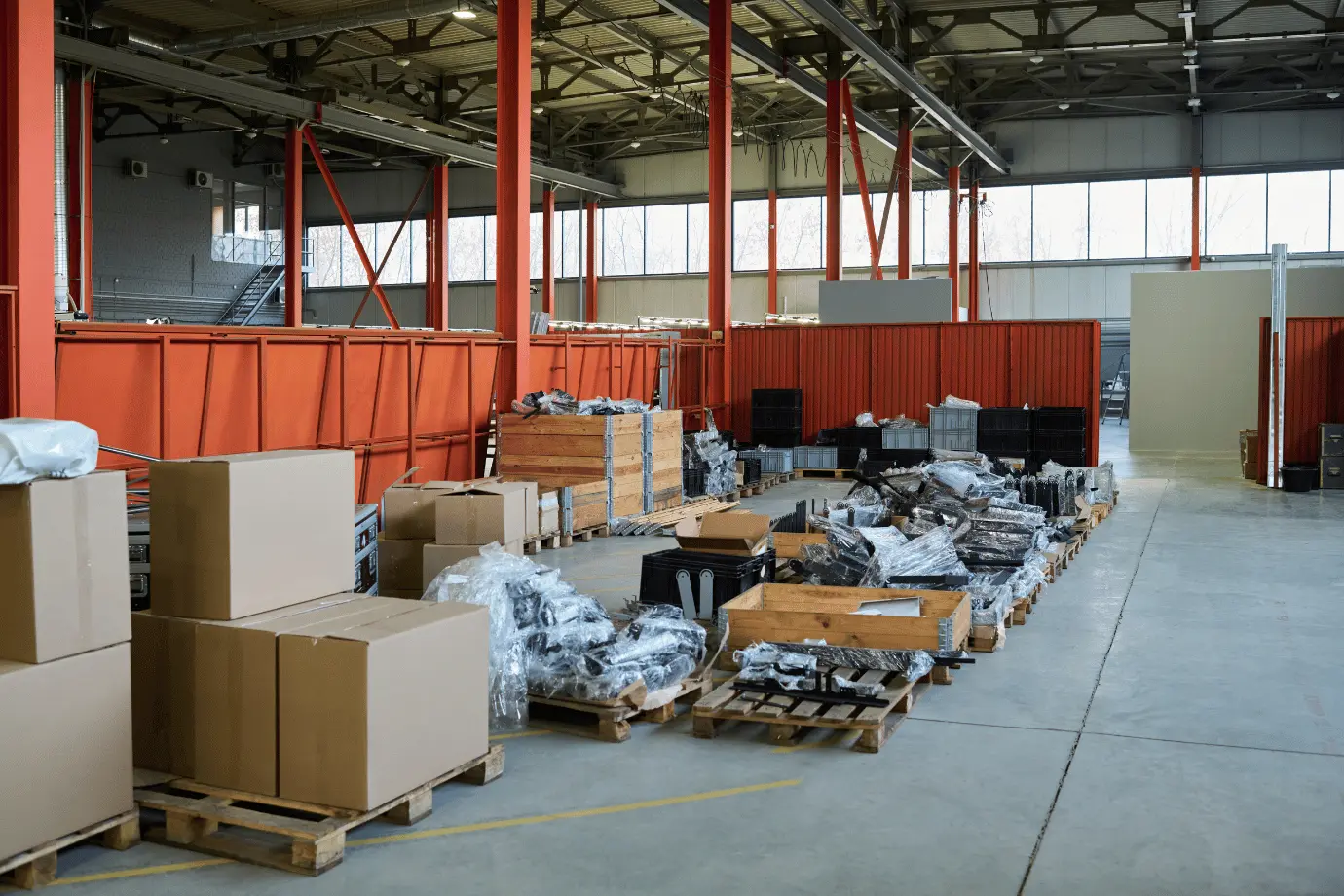
Before evaluating software, it helps to understand what the current situation of spare part management is costing US OEMs.
Downtime Cost
Unplanned downtime costs Fortune Global 500 industrial companies nearly USD 1.5 trillion annually, equivalent to 11% of their combined revenues (Senseye/Siemens, True Cost of Downtime 2022). In the automotive sector specifically, one hour of unplanned downtime now costs USD 2.3 million per facility.
A significant share of that cost is not a machine problem or a logistics problem. It is a catalog problem. The chain is straightforward: equipment fails, a technician cannot identify the correct part quickly, orders the wrong one because a supersession chain is outdated, or loses time because the catalog and ordering system are disconnected.
Revenue Leakage
When finding the right part through the OEM channel, if it takes too long or feels unreliable, dealers stop trying. They call a third-party distributor who picks up on the first ring. They order from an online marketplace where the part is searchable in seconds. Over time, this becomes a habit. The dealer has a new supplier relationship, the OEM has lost the order, and recovering that revenue means competing against a supplier the dealer now trusts more than the official channel.
Wrong Order Cost
A wrong spare part order does not just mean sending it back; the return has to be arranged and collected, the technician is forced to stop work, and waits for the correct part to be found and re-ordered. By the time the repair is done, the OEM has absorbed the reverse logistics cost, the dealer has lost billable hours, and the customer's equipment has been down longer than it should have been.
The bigger problem is what happens next. A dealer who orders the wrong part twice does not re-order through the OEM channel. They find the correct part somewhere else, faster, and that becomes their new default. A single incorrect order is a transaction issue. A pattern of wrong orders is a revenue problem.
Dealer Relationship Cost
The catalog is the primary touchpoint between the OEM and its dealer network. Dealers who cannot trust the OEM catalog stop using it. By the time the OEM notices the drop in ordering volume, the dealer has already established an alternative relationship for ordering spare parts, which is faster and more reliable. No discount program, loyalty scheme, or price incentives work on a dealer who has stopped trusting the channel.
Must-Have Features for US OEM Spare Parts Management Software

When selecting spare parts management software, US OEMs should focus on the capabilities that directly protect aftermarket revenue, reduce wrong orders, and keep dealer networks running efficiently.
1. Multi-Search Part Identification
Dealers and technicians need to reach the correct part through multiple entry points, not just part number search. A complete identification layer includes VIN or serial number search, model-based navigation, figure and diagram search, and free-text description search. Each search type serves a different scenario: a technician with the VIN uses one route, a technician with a worn part and no number uses another.
Intelli Catalog supports all major search methods, including VIN/serial number lookup, model-based navigation, part number search, and interactive figure search. Interactive 2D and 3D part illustrations with hotspotting allow technicians to click directly on the component they are looking at, eliminating the need to know a part number at all.
2. AI-Powered Visual and Voice Search
The most significant recent advancement in parts identification is AI visual search. A technician photographs a component with a smartphone, and the system returns the matching catalog entry instantly. This eliminates look-alike misidentification, which is among the most common and costly identification errors in workshop environments. It also works when part markings are worn, illegible, or missing entirely.
Voice search in the technician's native language removes the barrier of navigating complex menus or recalling part number formats. For US OEM dealers or other countries' dealers, voice and AI search capabilities directly reduce identification errors and onboarding time.
Intelli Catalog's AI Visual Search works from standard smartphone cameras without controlled lighting or specialized hardware. AI Voice Search accepts spoken queries in the technician's native language, interpreting intent across language variants. MagicPic uses AI to convert warehouse photographs into studio-quality catalog images, improving visual identification accuracy across the entire parts database without professional photography costs.
3. Part Supersession and Applicability Management
Part supersession is one of the most common sources of wrong orders in OEM environments. Manufacturers constantly improve their products. When a bolt gets redesigned or a seal gets upgraded, the old part number gets retired, and a new one takes its place. This is called supersession. If the catalog does not track this design or engineering change automatically, dealers will order obsolete parts that are no longer in production or that will fail prematurely.
The catalog needs to automatically know that Part A has been replaced by Part B and show the dealer the correct current part every single time, without the dealer having to know a change has even happened.
Part Applicability: Not every part fits every version of the same product. A Land Rover Defender built in 2019 for the UK market has different components than one built in 2022 for the US market. Part applicability is the mapping that knows which parts belong to which exact vehicle or equipment variants, model year, and regional configuration. Without this mapping being maintained centrally and updated in real time, BOM complexity produces fitment errors that can turn into warranty claims, returns, and equipment failures in the field.
Intelli Catalog manages supersession chains centrally, pushing updates to every dealer the moment an engineering change is processed. Part applicability is maintained at the central admin level, ensuring dealers always see only the parts relevant to their specific equipment without manual filtering.
4. Integrated Order Management
A catalog that stops at part identification and hands the dealer off to a separate ERP or ordering system to complete the transaction is only half a solution. Every system handoff introduces transcription errors: a wrong part number, a misread quantity, a wrong variant. OEMs that have eliminated system-switching between catalog and ordering typically see order accuracy improvements within the first 60 days of deployment.
The order management module should handle the full transaction lifecycle: order placement, fulfillment tracking, returns processing, and order history - all within the same interface where the part was identified. Intelli Catalog's Order Management and Tracking Module provides this end-to-end workflow without requiring dealers to leave the catalog environment. Moreover, Intelli Catalog can be integrated with your existing ERP, CRM, and business tools.
5. Dynamic Pricing Engine
Static price lists are structurally inadequate for multi-market OEM operations. A UK dealer pays post-Brexit import duty that a US dealer does not. A dealer in California pays a different state tax than one in Texas. Exchange rates shift week to week. A platinum-tier dealer has a different price than a standard one. Maintaining all of this manually across a multi-market dealer network produces errors constantly, and every pricing error either generates a support call to OEM support line or sends the dealer to a third-party supplier who can give them the correct price on the spot.
A dynamic pricing engine calculates the correct price at the point of transaction, incorporating current exchange rates, regional tax schedules, import duties, and dealer-tier discount structures automatically. Intelli Catalog's geo-specific pricing engine applies all of this at the transaction level based on dealer location and account type, eliminating price disputes and manual override workflows.
6. Demand Forecasting and Inventory Visibility
Spare parts demand is intermittent. A component may go years without a replacement order and then require multiple units from multiple dealers in a short window. Standard forecasting models built for regular demand patterns fail under these conditions and produce systematic errors in both directions: High-demand parts stock out, and slow-moving parts pile up in the inventory.
Effective demand forecasting for spare parts combines historical ordering data by dealer and region, real-time ordering signals as early indicators of emerging demand, equipment lifecycle stage data as fleets age, seasonal fluctuation profiles, and IoT or telematics inputs where available.
Intelli Catalog's Intelli Forecast module gives US OEM administrators a live visibility into every dealer’s inventory across the entire network, with configurable automated restocking alerts when stock falls below defined thresholds.
Read More: Spare Parts Planning: Inventory Prediction and Demand Forecasting
7. Multi-Channel Commerce Capabilities
The OEM aftermarket revenue opportunity extends well beyond primary dealer ordering. Three additional channels represent significant incremental revenue that most US OEMs are not fully capturing:
- Direct-to-customer: Branded dealer storefronts give end customers a way to find their nearest authorized dealer online and order directly, capturing sales that currently go to third-party e-commerce platforms.
- Secondary channels: Distributors and retailers need structured catalog access with local inventory management. Without this, they source parts wherever is most convenient, which is often not the OEM channel.
- Accessory cross-sell: When a dealer selects a primary replacement part, automatically surfacing compatible accessories at the point of selection increases average order value with no additional effort from the dealer.
Intelli Catalog's Dealer Online Storefronts, Intelli Commerce secondary channel module, and cross-sell capabilities address all three of these revenue streams within the same platform.
8. Global Scalability: Multilingual, Multi-BOM, Multi-Market
For OEMs with dealer networks spanning multiple countries, global scalability must be a core platform capability, not an add-on. The three dimensions of global scalability that matter most for spare parts operations are:
- Multilingual support: One part of the dataset served in each dealer's language, with translations validated by technical domain experts rather than generic translation tools. A mistranslated technical attribute leads directly to the wrong part order.
- Regional BOM Management: BOM management means the spare parts catalog automatically shows only the parts that apply to that specific machine, in that specific market, built in that specific date range. When engineering makes a change, BOM version updates everywhere at once from one central action, not market by market.
- Geo-specific pricing: Real-time price calculation per transaction, incorporating exchange rates, regional tax schedules, import duties, and dealer-tier structures - not static price lists maintained per market.
Conclusion: The Catalog Is the Revenue Infrastructure
According to McKinsey, aftermarket services generate 25% EBIT (Earnings Before Interest and Taxes) margins compared to just 10% for new equipment sales. The global aftermarket is growing toward USD 555.82 billion by 2030. This is the highest-margin revenue stream in the business, and for most OEMs, it runs on catalog infrastructure that has not kept pace with the network it is supposed to serve.
Spare parts management is not a back-office function. It is where aftermarket revenue is won or lost, where dealer trust is built or broken, and where your brand's reliability is tested every single time a technician needs a part.
The right software does not just reduce wrong orders. It recovers revenue leaking to third parties, reduces dealer support costs, opens direct-to-customer and secondary channel revenue, and gives the OEM real-time visibility across its entire dealer network for the first time.
Intelli Catalog is built specifically for OEMs managing complex, multi-market dealer networks. From AI-powered part identification and integrated order management to demand forecasting and geo-specific pricing, it covers the full aftermarket workflow in one platform. Intelli Catalog is deployed across 70-plus countries, serving OEMs including Mahindra, MG Motor, Honda, Maruti Suzuki, Perodua, Ather Energy, and Escorts Kubota.
If your current catalog is costing you orders, dealer confidence, or aftermarket revenue, then get in touch with our experts to request a free demo today.
FAQ
Q1. What is spare parts management software?
A parts management software for OEMS that manages the full spare parts lifecycle: catalog publishing, part identification, ordering, inventory visibility, and demand forecasting.
Q2. What causes most wrong part orders in dealer networks?
Three things cause most wrong part orders in dealer networks:
- poor identification
- unmanaged supersession chains (dealers ordering obsolete part numbers),
- and disconnected systems (errors introduced when switching between the catalog and ordering systems to complete one transaction).
Q3. How does AI visual search work?
A technician photographs a component with their smartphone. The AI matches it against the catalog and returns the correct part instantly, no part number needed, and it works even when markings are worn or missing.
Q4. Can Intelli Catalog spare part management software integrate with OEM’s existing ERP?
Yes, Intelli Catalog software can be integrated with the existing ERP system used by the OEMs.
Q5. What is part supersession, and why does it matter?
Supersession is when a manufacturer replaces one part number with an updated version due to a design or engineering change. If the catalog does not track this automatically, dealers order the old part, one that may no longer be in production or that fails prematurely. Every unmanaged supersession chain is a wrong order waiting to happen.


Explore More Insights






.webp)


About the Author


Chandra Shekhar
Chandra Shekhar is the Senior Manager, Strategy & Business Development at Intellinet Systems. With over a decade of experience in the automotive industry, Chandra Shekhar has led digital transformation and aftersales strategy initiatives for OEMs across multiple markets. His background combines deep industry knowledge with a practical understanding of how technology can solve real operational challenges. He focuses on making complex ideas clear and relevant for automotive and aftermarket professionals navigating ongoing change.


