


Pre-delivery inspection is the last quality checkpoint before a product leaves OEM or dealer custody and reaches the customer. Whether the product is a tractor, a construction machine, an industrial appliance, a two-wheeler, or any other manufactured unit, the principle is the same: defects caught at inspection are contained costs. Defects that reach customers become warranty claims, service visits, product returns, and in the worst cases, safety incidents or regulatory action.
For OEMs managing complex product lines across multiple models and multiple delivery locations, the way this inspection is conducted matters significantly. A structured, documented OEM pre-delivery inspection process consistently surfaces defects that informal inspection misses. According to SafetyCulture, organisations that implement a digital inspection process see a 67% reduction in time spent on manual inspection and a marked improvement in defect detection consistency.
This article provides a direct comparison of digital vs manual pre-delivery inspection across every dimension that matters to OEM operations teams, and explains where the gap between the two translates into measurable cost and quality risk.
What Manual Pre-Delivery Inspection Actually Looks Like in Practice
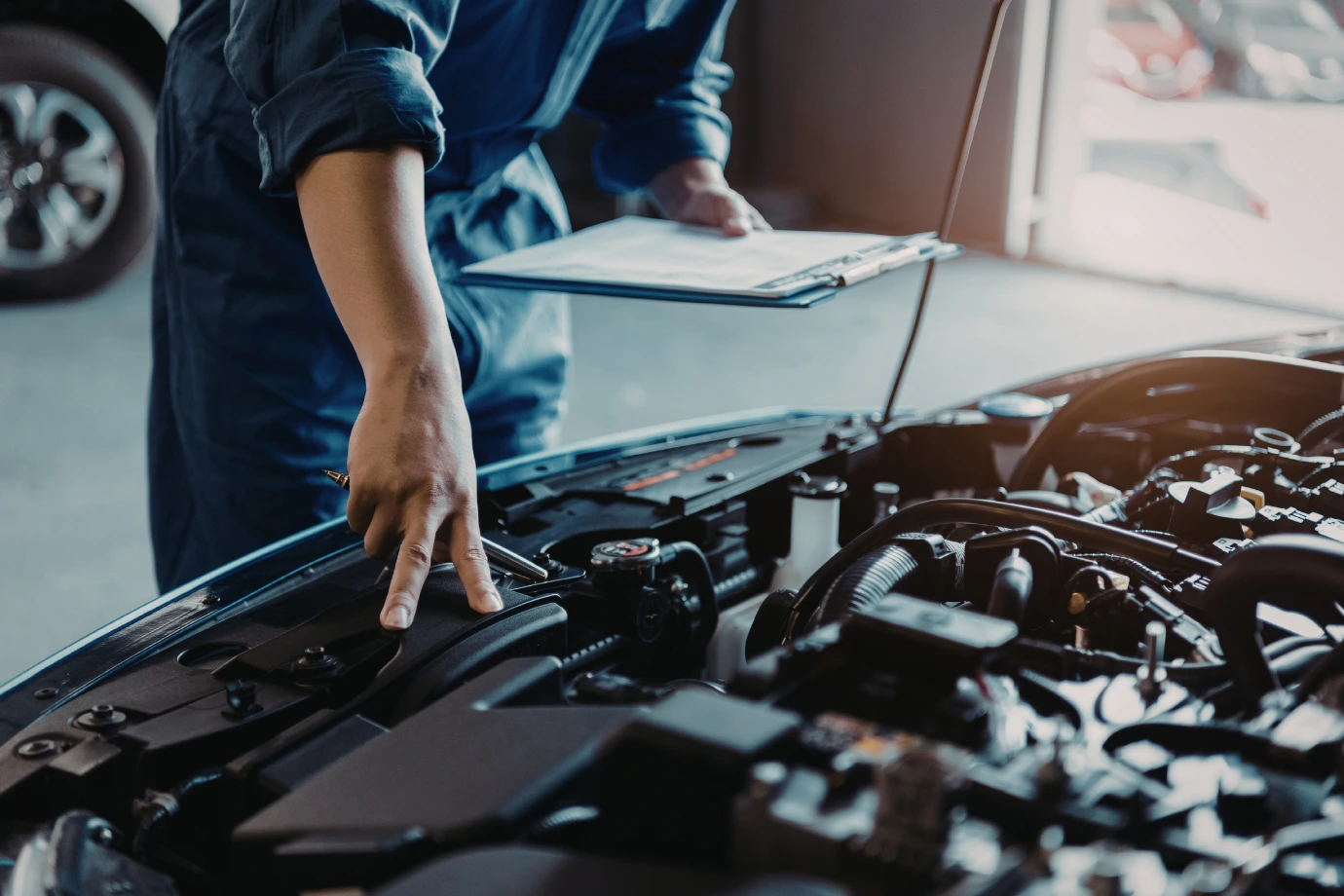
Manual PDI relies on paper-based or spreadsheet-based checklists that inspectors complete by hand, photographs taken on personal devices and shared informally, verbal or written defect reporting, and supervisor sign-off through physical signatures or email confirmation. Reports are stored in physical files or locally on individual devices, making centralised access and historical analysis difficult or impossible at scale.
This approach creates six specific operational problems for OEMs.
- Managing paper checklists separately for each product model is tedious and time-consuming.
- The risk of error increases as the number of models grows because each requires a different checklist, and inspectors may use the wrong version.
- Without a centralised system for storing inspection data, OEMs cannot access historical records when they need them.
- Sharing reports manually causes delays that push back delivery timelines.
- Limited data makes it difficult to identify patterns and drive product improvement.
- And when issues are missed or repeatedly ignored, there is no way to determine who conducted the inspection and hold them accountable.
This legacy process costs time, introduces errors, and makes it harder for OEMs to manage inspection at scale.
The rise of digital pre-delivery inspection solutions like Intelli PDI offers a better option. This tool fixes six specific operational problems that manual PDI creates for OEMs by speeding up the inspections, boosting accuracy, and giving operations real-time visibility and automated follow-up.
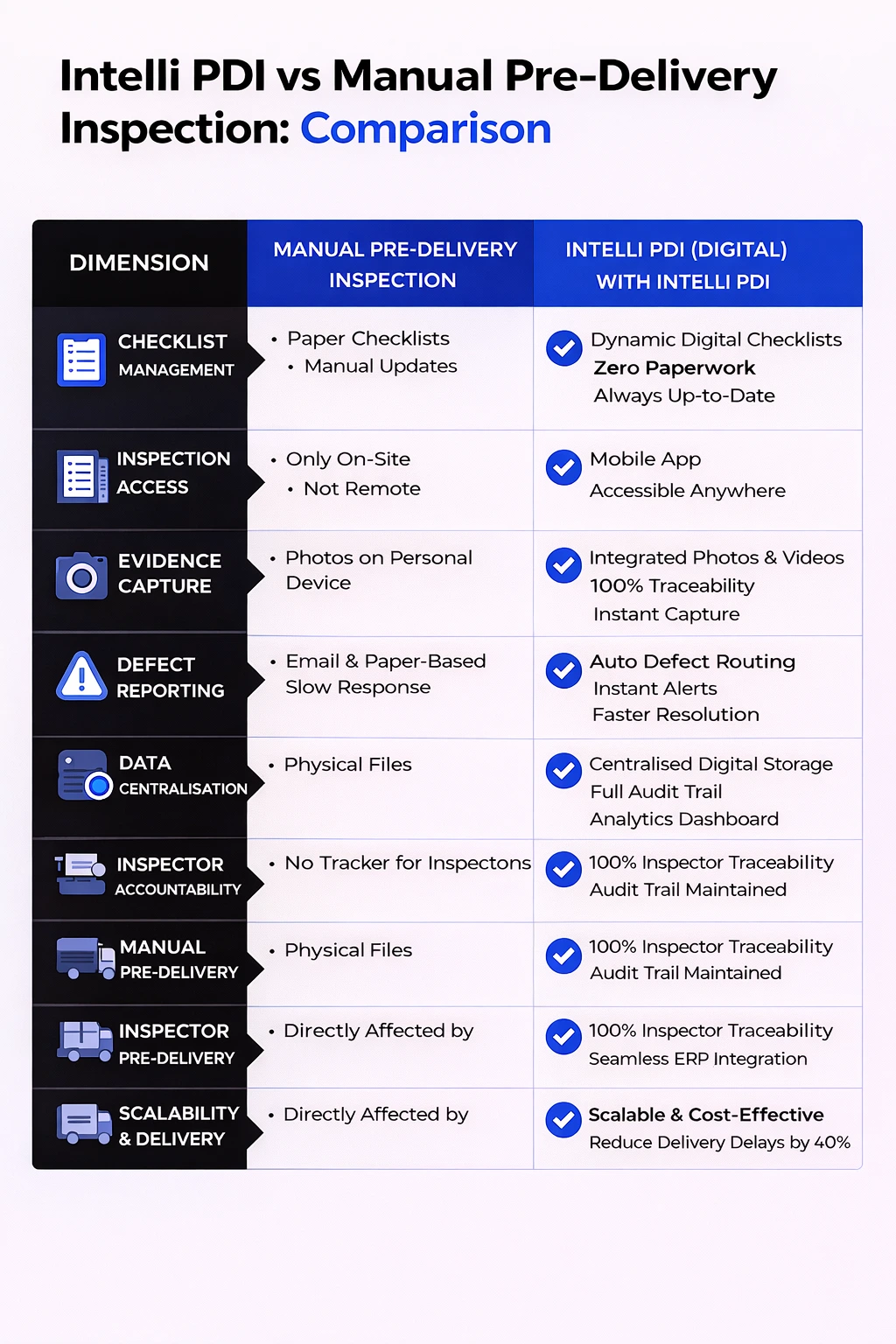
The Full Side-by-Side Comparison
The table below compares manual and digital PDI across the dimensions that directly affect OEM operations, quality outcomes, and downstream cost.
Where Manual PDI Creates the Most Risk for OEM Operations Teams
1. Inconsistent checklists across products and locations
OEMs manufacturing diverse product lines face a specific challenge with manual PDI: ensuring every inspector at every location uses the correct, current checklist for the product in front of them. A product update, a component change, or a new regulatory requirement may mean the checklist needs to be revised. In a manual process, that revision must be printed, distributed, and confirmed as received at every inspection point. Outdated checklists remain in use, and inspectors work from whichever version they have available.
Intelli PDI's dynamic checklist creation allows OEM administrators to update templates centrally and deploy them instantly across all inspection locations. Inspectors access the correct checklist by entering the product's serial number, and the system returns the model-specific template automatically. Version inconsistency of the product is eliminated at the system level, regardless of how many product types or locations are in scope.
2. No accountability when defects are missed
When a defect reaches a customer that should have been caught at PDI, the OEM needs to understand what happened. In a manual process, the inspection record is a completed paper form. If it is unsigned, incomplete, or missing entirely, there is no way to determine whether the inspection was conducted, who did it, or what was checked. Recurring issues cannot be traced back to specific inspectors, locations, or process gaps.
Intelli PDI links every inspection to the inspector's login credentials and timestamps every submission. If a question is left unanswered, the system prevents submission until it is completed. The result is a complete, attributed, time-stamped inspection record for every product that passes through the process, across every location, accessible to administrators at any time.
3. Defect reporting delays that affect delivery targets
In a manual pre-delivery inspection process, a defect found during inspection must be written up, passed to a supervisor, reviewed, and then routed to the relevant repair or quality team. Each handoff introduces delay. In high-volume operations, where hundreds of units may be inspected daily across port or distribution locations, those delays compound into delivery schedule slippage that directly impacts OEM delivery commitments to distributors and end customers.
Intelli PDI routes defect reports to the responsible team as and when an inspector flags a discrepancy in the product. The team receives a real-time notification with the full defect report, attached images or videos, and the product’s serial number, so that resolution begins immediately. This reduces the time between defect detection in the product and its subsequent repair.
4. No data for product improvement across the range
One of the most commercially significant losses from a manual PDI process is the failure to capture inspection data as a structured input for product improvement. An OEM that records every defect digitally, by product type, component, location, and frequency, gives engineering and quality teams the information they need to identify recurring failure patterns and trace them to manufacturing or supply chain root causes.
According to Hicron Software, organisations that use digital quality inspection software report significantly faster defect identification and resolution cycles compared to paper-based manual processes, with structured data enabling root cause analysis that manual records cannot support. Intelli PDI's analytics dashboard surfaces defect frequency by product, component, and location, giving operations and engineering teams the visibility needed to act on quality issues systematically rather than reactively.
The Real Cost of a Defect That Reaches the Customer

Catching a defect during pre-delivery inspection costs OEMs far less than dealing with it after the product has been delivered. At the inspection stage, a defect means a repair or adjustment before the product leaves, which is a controlled, contained cost.
However, once a defective product is delivered to a customer, the cost structure changes entirely. As the customer raises a complaint, the product is returned, or a technician is sent to the customer’s location, a diagnosis is made, parts are ordered, labour is billed, and the OEM reimburses a warranty claim. If the same defect appears across multiple units, the OEM may need to issue a product recall or safety notice, coordinate repairs across its distributor and service network, and, in regulated industries, report to the relevant compliance authority.
A global quality management study found that the cost of poor quality product, including defect-related rework, warranty claims, and customer returns, typically represents between 5% and 30% of a manufacturer's annual revenue, with organisations that invest in structured quality systems consistently reporting costs at the lower end of that range. A structured paperless inspection system, such as Intelli PDI, documents every inspection, photo-documents every piece of evidence, and automatically flags any issue before dispatch, is one of the most cost-effective quality investments an OEM can make, because it shifts defect detection from the customer to the inspection stage, where resolution costs just a little of what it costs after dispatch.
How Intelli PDI Supports the Full OEM Inspection Workflow
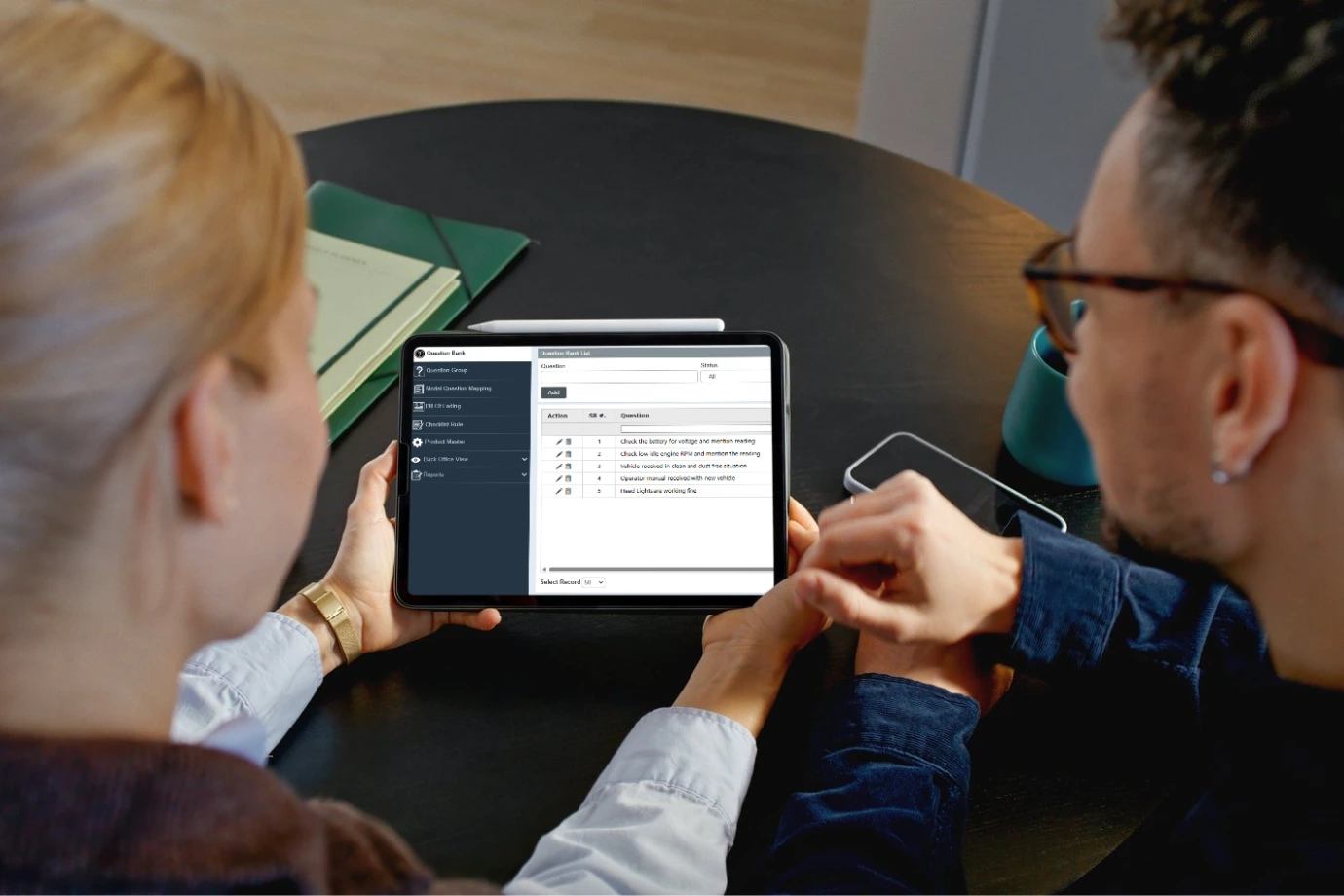
Intelli PDI is built for any OEM conducting pre-delivery inspections across any product category. Whether the product is a commercial vehicle, a two-wheeler, a tractor, a construction machine, an industrial appliance, or any other manufactured unit, the platform adapts to the product and the inspection type through configurable templates rather than product-specific customisation.
The workflow follows a structured sequence.
- The OEM creates inspection templates through the admin interface, mapping questions to specific product models or operations.
- Inspectors access the relevant checklist on their mobile device by entering the product's serial number.
- Each question is answered with a simple yes or no response.
- Where a non-conformance is identified, the inspector attaches photographic or video evidence directly within the app and submits.
- The defect report is routed automatically to the relevant team for resolution.
- All data is available to administrators in real time through the reporting module.
Intelli PDI supports three distinct inspection types within the same platform: logistic port inspections for products arriving from manufacturers, internal plant inspections during production, and pre-delivery inspections at the dealer or distributor level. For OEMs managing inspection across all three stages, a single paperless inspection system that covers the full product journey from plant to customer is significantly more efficient than managing separate tools for each inspection type.
OEMs using Intelli PDI organisations across automotive, electric vehicles, and farm equipment that recognised the operational and quality cost of manual OEM pre-delivery inspection processes and moved to a structured digital alternative.
Ready to replace paper-based inspection with a structured, accountable digital process?
Book a demo to see how Intelli PDI maps to your inspection workflow across any product category, any inspection type, and any location.
FAQ
Does Intelli PDI integrate with our existing inventory management system (IMS)?
Yes, Intelli PDI integrates easily with major IMS systems.
Can Intelli PDI capture visual documentation of inspection findings for future reference?
Yes, Intelli ODI allows inspectors to capture high-resolution photos and videos of any identified issues with the product.
Is Intelli PDI only for automotive OEMs, or can it be used across other product categories?
Intelli PDI is designed for any OEM conducting pre-delivery inspections, regardless of product category. The platform uses configurable inspection templates that can be set up for any product type, from construction equipment and agricultural machinery to industrial appliances and consumer electronics.


Explore More Insights







.webp)


About the Author


Chandra Shekhar
Chandra Shekhar is the Senior Manager, Strategy & Business Development at Intellinet Systems. With over a decade of experience in the automotive industry, Chandra Shekhar has led digital transformation and aftersales strategy initiatives for OEMs across multiple markets. His background combines deep industry knowledge with a practical understanding of how technology can solve real operational challenges. He focuses on making complex ideas clear and relevant for automotive and aftermarket professionals navigating ongoing change.


