

Running EV OEM aftermarket operations at scale is nothing like managing a conventional internal combustion engine service network. The architecture of electric vehicles includes high-voltage battery packs, software-defined drivetrains, etc., which introduces a technical complexity that most OEM service systems were not designed to handle.
According to McKinsey & Company, EV-related service costs are projected to diverge significantly from those of ICE vehicles, with battery warranty exposure alone representing a substantial risk for OEMs lacking structured digital management workflows.
US EV OEMs, electric commercial vehicle manufacturers, and EV dealer networks all feel the strain of service backlogs, claim disputes, and parts sourcing delays that manual processes cannot resolve fast enough.
Where Manual Workflows Break Down in EV Aftermarket Operations

In traditional aftermarket models, a dealer submits a warranty claim, someone reviews it manually, and a parts order follows, which is slow even for simple repairs. But for EV service, it becomes operationally unsustainable, like in battery replacement workflows.
When a commercial fleet reports a battery capacity degradation issue, the warranty claim process requires verification of charge cycle history, thermal event logs, and VIN-level configuration data. None of that is accessible through manual review processes without significant delay.
The same pattern repeats across EV inspection software gaps. Pre-delivery inspections for electric vehicles are more detailed than for ICE vehicles, as they include battery state-of-charge verification, charging system functionality, drivetrain calibration checks, and software version audits. Without structured digital inspection workflows, these checks are inconsistently documented, making it difficult to defend warranty decisions or identify recurring failure patterns.
Dealer Coordination at Scale
As US EV OEM dealer networks expand, coordination becomes a core operational problem. An incorrectly submitted warranty claim or an inspection completed without the required photo documentation results in a downstream processing failure. Multiply that across hundreds or thousands of dealer locations, and the volume of exception handling alone becomes a full-time problem for OEM aftermarket teams.
Real-time dashboards that provide OEM-level visibility into dealer claim status, inspection completion rates, and parts order timelines are a basic operational requirement for any EV OEM running a multi-dealer service network.
The Complexity of Electric Vehicle Part Identification
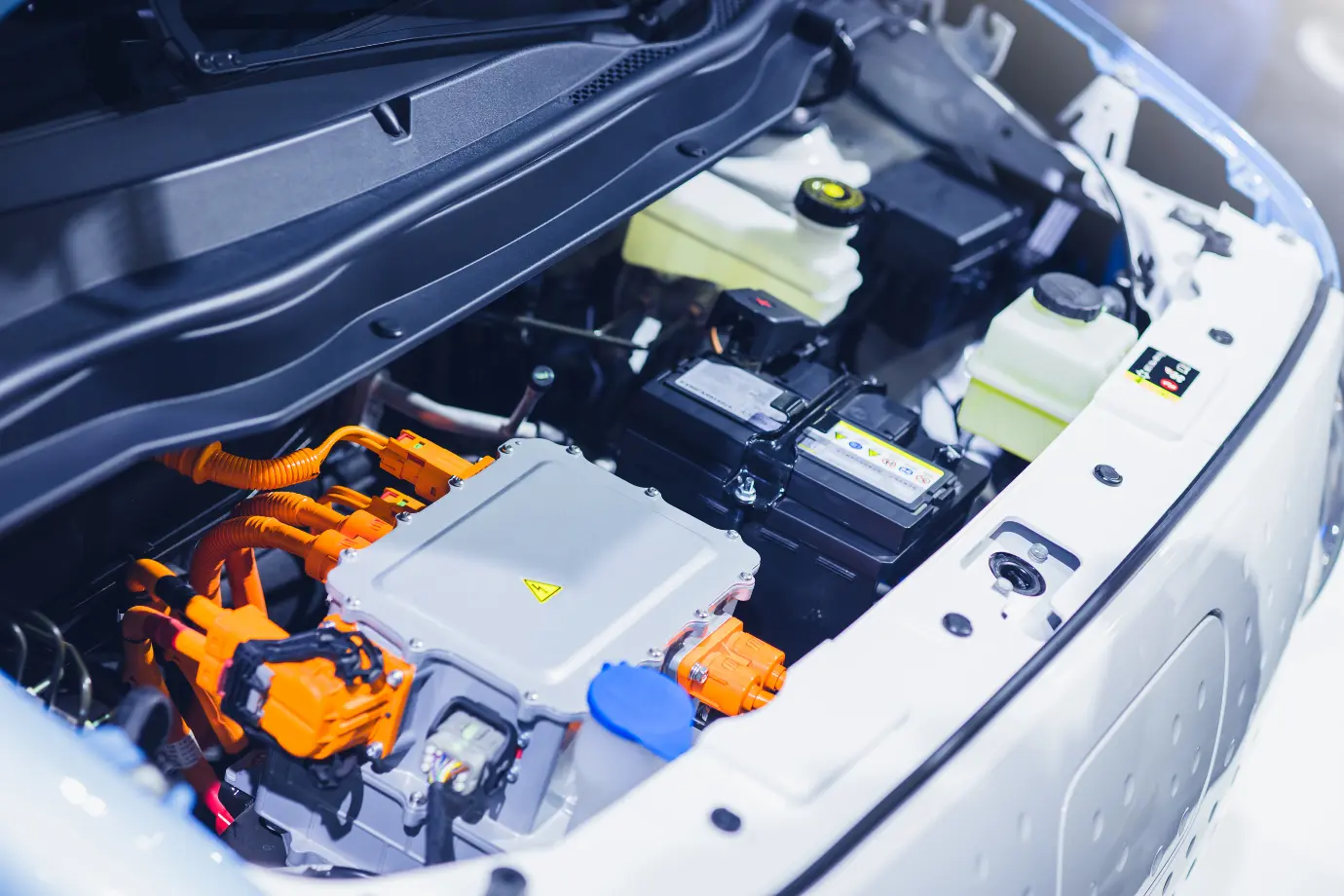
Parts identification in EV aftermarket operations presents challenges that were not present in traditional parts management. High-voltage battery modules, electric drive units, inverter assemblies, and charging systems all have overlapping configurations across model years and build variants. A minor assembly change can create a parts supersession that makes an older part number obsolete.
When dealers lack access to a live EV parts catalog software system, they rely on manual static PDFs or phone calls to identify the correct part, which creates order delays and return cycles, leading to vehicle downtime being extended, that have direct financial consequences.
Interactive parts illustrations tied to serial number and VIN-based parts lookup eliminate most of this ambiguity. Intelli Catalog, a trusted EV parts catalog software, addresses this directly by giving service teams a digital parts identification environment where exploded-view illustrations are linked to real-time inventory visibility and live supersession chains, ensuring the right part is identified and ordered on the very first attempt.
Automating EV Warranty Management to Control Costs

Rising EV service and warranty costs are pushing OEM aftermarket leadership to re-examine every stage of the claims lifecycle. Because the traditional warranty solution is slow and inconsistent to scale with growing EV volumes.
AI-driven warranty validation changes how EV warranty management software screens submissions against OEM-defined eligibility rules directly at the point of entry. These rules include VIN-based configuration data, coverage period logic, and repair code validation, all run automatically, flagging exceptions such as battery misuse, fraudulent claims, or improper repairs before they become disputes.
Intelli Warranty integrates with OEM ERP systems to pull real-time vehicle configuration and coverage data, automates claim routing based on repair type and dealer tier, and provides OEM warranty teams with a live view of claim status across the entire dealer network, resulting in faster claim resolution, lower administrative cost, and tighter control over warranty cost exposure.
Digital Inspection Workflows in EV Aftermarket Operations

EV inspection software is but a data source because every completed pre-delivery inspection, every post-repair quality check, and every diagnostic inspection generates structured data that OEMs can use to identify systemic issues before they become warranty claims.
Mobile inspection workflows allow dealer technicians to complete structured checklists directly from the service bay, capturing photo evidence at each step. Battery health readings, charging system test results, and drivetrain calibration records are attached to the vehicle record automatically, creating an auditable inspection history that supports both warranty validation and product quality analysis.
With Intelli PDI, EV OEMs can configure digital inspection templates that match their specifications, and this mobile-first design tool can be directly integrated with warranty claim workflows so that completed inspection data flows directly into claims processing without re-entry.
Predictive Analytics and the Future of EV Aftermarket Operations
The most forward-looking EV OEMs are moving beyond reactive service management toward predictive aftermarket operations. Predictive analytics in EV warranty management uses warranty claim patterns, inspection failure rates, and fleet telematics data to identify components at elevated failure risk before they generate widespread claims.
Building a connected aftermarket infrastructure now, one where warranty management, inspection workflows, and parts identification operate as integrated digital systems, positions US EV OEMs to absorb that growth without a proportional increase in operational overhead.
EV OEM aftermarket operations will only grow more complex as electric vehicle software becomes more deeply integrated with service outcomes. The OEMs that automate their core aftermarket workflows today are building the operational foundation they will need to compete effectively in an EV service market that is scaling faster than most traditional service organizations are prepared to handle.
To see how Intellinet System can automate EV OEM aftermarket operations. Book a free demo today.
FAQs
1. How does automation improve EV OEM aftermarket operations?
Automation improves EV OEM aftermarket operations by streamlining processes such as service scheduling, warranty claims, spare parts management, diagnostics, and customer support. Automated workflows reduce manual effort, improve operational accuracy, and help OEMs deliver faster and more efficient after-sales service.
2. What aftermarket challenges can automation solve for EV OEMs?
Automation helps EV OEMs address challenges like complex battery service management, spare parts tracking, warranty processing delays, and inconsistent service workflows. It also improves real-time visibility into vehicle service history and enables faster issue resolution across dealer and service networks.
3. Why is automation important for the future of EV after-sales service?
Automation is important because EV aftermarket operations require faster diagnostics, connected vehicle data management, and efficient service coordination. Automated systems help OEMs scale operations, reduce downtime, improve customer satisfaction, and maintain service quality as EV adoption continues to grow.


Explore More Insights




.webp)


About the Author


Chandra Shekar
Chandra Shekhar is the Senior Manager, Strategy & Business Development at Intellinet Systems. With over a decade of experience in the automotive industry, Chandra Shekhar has led digital transformation and aftersales strategy initiatives for OEMs across multiple markets. His background combines deep industry knowledge with a practical understanding of how technology can solve real operational challenges. He focuses on making complex ideas clear and relevant for automotive and aftermarket professionals navigating ongoing change.


