

A single incorrect part order costs more than just the price of the part. The technician stops work, the lift stays occupied, the repair order slips, the customer waits, and the service department absorbs the loss in billable hours and customer confidence. Multiply this across a dealer network of hundreds of locations, and the financial impact becomes significant. With over 270 million repair orders processed annually and USD 156.46 billion in service and parts revenue, even low rates of incorrect part orders translate into a material financial problem for US dealer networks.
Traditional year, make, and model searches in parts catalogs achieve only 70% to 80% accuracy, which means that, on a conservative estimate, up to 3 in every 10 parts selected through a model-based search may not be the correct fit for the specific vehicle in the workshop.
VIN-based parts lookup closes that gap entirely. Because each Vehicle Identification Number (VIN) encodes a vehicle's exact build specifications, including engine type, transmission, trim level, drivetrain, and production date, a VIN-driven catalog search returns only parts confirmed compatible with that specific unit. This article explains how VIN-based parts lookup works, where it eliminates fitment errors that other search methods miss, and how Intelli Catalog implements it across US and international OEM dealer networks.
Why Model-Based Parts Search Fails at the Variant Level

The most common parts search method in dealer service departments is based on selecting by year, make, and model. A service advisor selects the vehicle year, chooses the manufacturer, picks the model, and browses compatible parts. For simple, high-volume applications, this works. For anything involving variant-specific parts, it fails regularly.
Two vehicles can share the same model name, model year, and exterior appearance, yet require entirely different parts for the same repair. A 2022 vehicle produced in January may use a different sensor specification than the same model produced in September of the same year. One trim level may use a different brake caliper than another. A vehicle destined for one market may carry different emissions equipment than the same unit sold in a different region. None of these differences is visible in a year, make, or model search. All of them result in the wrong part being selected if the catalog does not filter to the exact vehicle specification.
According to Motor1, poor parts supersession management and incomplete catalog updates lead dealerships and repair shops to place wrong orders regularly, stalling repairs and eroding customer trust.
What a VIN Contains and Why It Matters for Parts Identification
A Vehicle Identification Number is a 17-character code assigned to every vehicle at the point of manufacture. Each character encodes specific information about the vehicle's origin, manufacturer, build specifications, and production sequence. The VIN is not a summary of the model. It is a record of that specific unit.
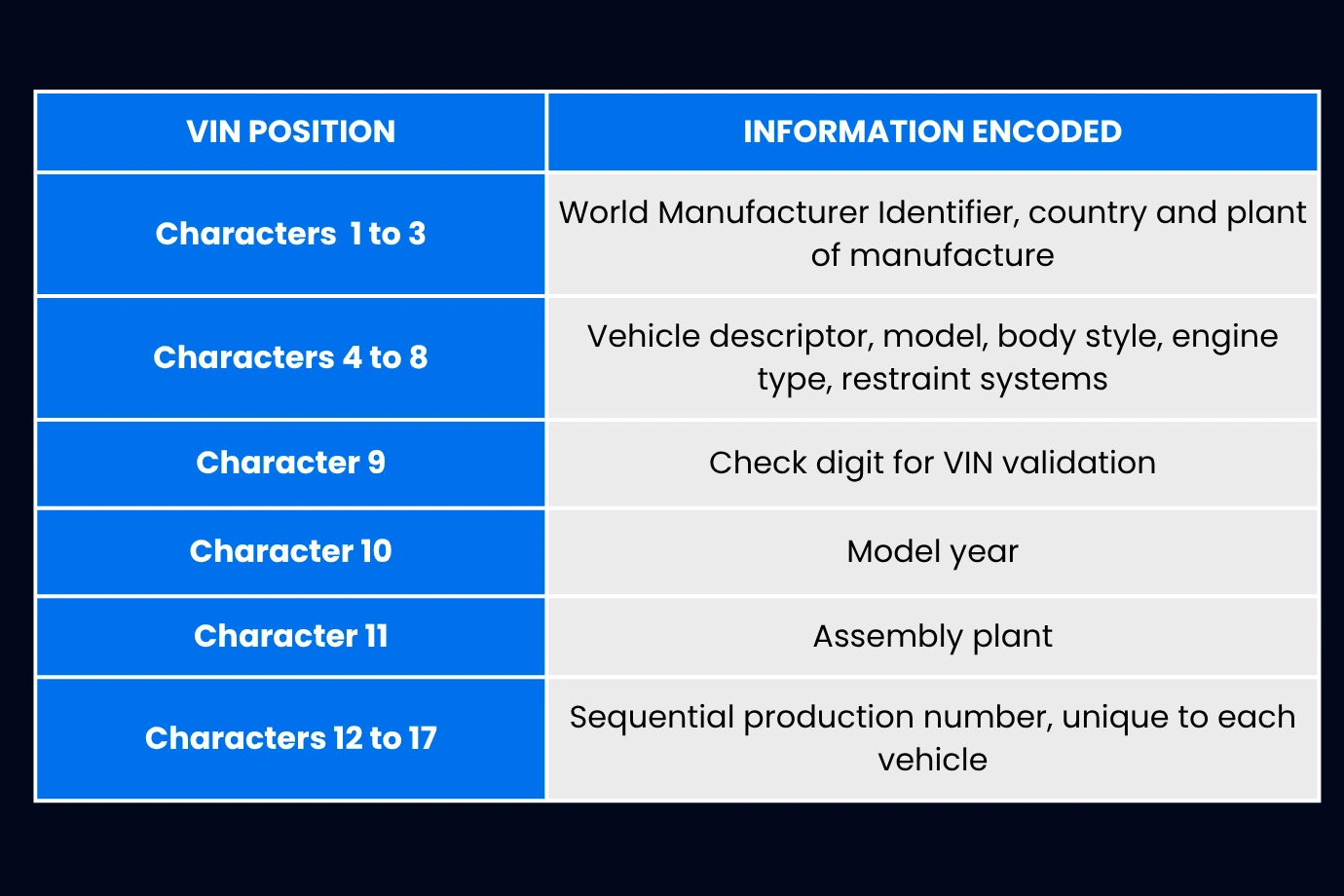
When a dealer enters a VIN into Intelli Catalog, the system decodes all 17 characters and maps the vehicle to its exact bill of materials as specified by the OEM. The results are not limited to parts that fit the model. They are those that fit this vehicle specifically, at the trim, engine, and production date levels. This is what parts identification by VIN delivers that no model-based search can replicate.
Where Fitment Errors Occur Without VIN-Based Lookup
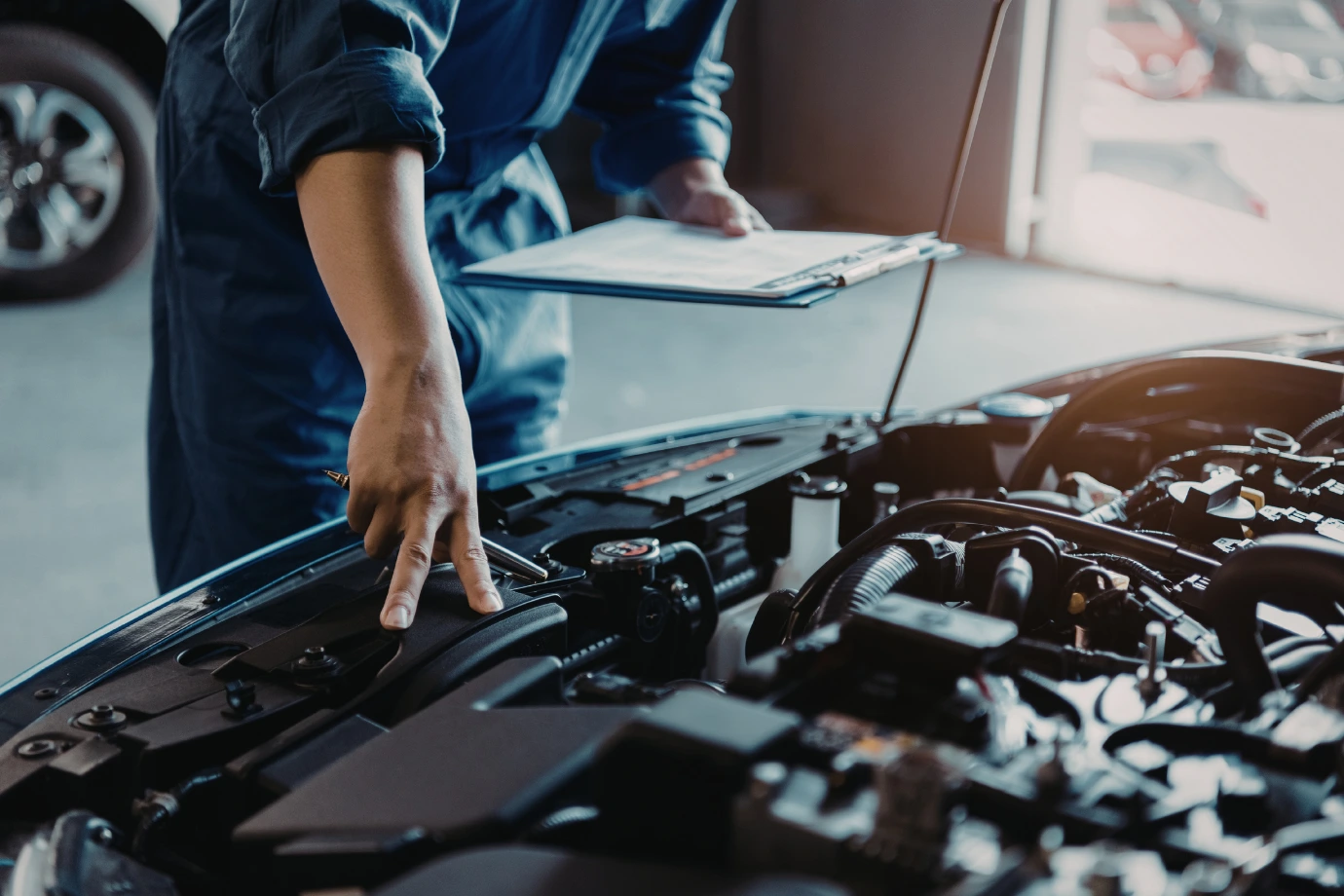
Fitment errors in service departments are not random. They follow predictable patterns that trace directly to the limitations of catalog search methods that do not use VIN.
1. Mid-year production changes
Manufacturers frequently make component changes within a model year without changing the model name or year designation. A supplier change, a design update, or a regulatory adjustment may result in a different part being fitted to vehicles built after a specific production date. A dealer searching by model and year has no way of knowing which part applies to the vehicle in the workshop without checking the production date against OEM service bulletins. VIN-based parts lookup handles this automatically by mapping the vehicle's production sequence number to the correct part.
2. Trim-level and option-specific parts
Many vehicle components differ by trim level or factory-fitted option. A vehicle with a factory-fitted tow package requires different suspension components than the same model without it. A vehicle with a premium audio system requires different door panel trim than the base specification. When a dealer selects parts by model alone, these distinctions are invisible. The wrong part is ordered, arrives, and doesn’t fit.
3. Regional specification differences
OEMs selling into the US market must comply with EPA emissions standards and NHTSA safety regulations that differ from those in Europe, Asia, and other markets. The same vehicle model sold across multiple markets may carry different catalytic converter specifications, different lighting systems, and different restraint system components depending on the regulatory environment. A parts catalog that does not filter by regional specification produces incorrect results for dealers in any market where the vehicle specification diverges from the default catalog configuration. For US OEMs managing dealer networks across multiple states and export markets, this is a daily operational reality that VIN-based lookup resolves automatically.
4. Superseded part numbers
When a component is updated or replaced by an improved version, the original part number is superseded. A dealer searching for the original part number in a catalog that has not handled supersession correctly may order the discontinued version, which is either unavailable or incompatible with later production vehicles. Intelli Catalog automatically manages supersession chains, ensuring dealers are routed to the current valid part regardless of whether an outdated part number is used in the search.
How VIN-Based Parts Lookup Works in Intelli Catalog
Intelli Catalog's VIN-based parts lookup is built directly into the catalog search interface. A dealer or technician enters the vehicle's 17-digit VIN in the search bar. The system decodes the VIN against the OEM's parts database, identifies the exact vehicle configuration, and filters the entire parts catalog to show only components confirmed as compatible with that specific vehicle.
The process eliminates several steps that currently generate errors in dealer service departments. There is no need to identify the trim level manually. There is no need to cross-reference production dates against service bulletins. There is no need to check whether a supersession applies. The VIN contains all of this information, and the catalog applies it automatically at the point of search.
VIN lookup in Intelli Catalog works alongside other search methods, including part number, keyword, and model-based search, as well as AI visual and voice search. For service departments working on vehicles already in service, VIN entry provides the fastest and most accurate path to the correct part. For dealers handling walk-in customers or phone enquiries where the VIN is not immediately available, the other search methods remain accessible.
Operational Impact on Dealer Service Departments
The business case for eliminating incorrect part orders through VIN lookup spans three measurable dimensions within OEM dealer service departments.
- Reduction in return processing costs
Every wrong part order that reaches a dealer generates a return transaction. The dealer packages the part, raises a return request, the part is collected, inspected, repackaged, and credited. The OEM absorbs the logistics and administration costs. For dealer networks processing thousands of parts orders daily, even a modest reduction in wrong-order rate produces significant cost savings. Traditional dropdown searches achieve 70% to 80% accuracy. VIN-based parts lookup delivers fitment accuracy well above 90%.
- Faster repair turnaround
US dealerships wrote over 270 million repair orders in 2024, generating USD 156.46 billion in service and parts sales. At that volume, the time lost to wrong part orders across the dealer network is substantial. When the correct part is identified and ordered on the first attempt, vehicle turnaround time decreases, service bay utilisation improves, and the dealer can process more repair orders per day without adding technician headcount. For US OEM dealer groups operating fixed ops departments under margin pressure, this efficiency gain translates directly to profitability.
- Reduction in warranty claim errors
The use of incorrect parts under warranty results in failed repairs, repeat vehicle visits, and subsequent claims, driven by inaccuracies in catalog-based part selection. The OEM then absorbs both the additional parts cost and labour reimbursement. By ensuring the correct part is identified at the first repair, VIN-based lookup directly reduces repeat warranty repairs, one of the most controllable drivers of warranty cost for OEMs.
VIN Lookup as Part of a Connected Aftermarket Platform
For OEMs managing large dealer networks, VIN-based parts lookup is most effective when integrated within a connected aftermarket platform rather than used as a standalone tool. When the spare parts catalog software is integrated with inventory management, order management, and dealer management systems, the VIN search does more than identify the correct part. It confirms real-time availability, surfaces accessory recommendations relevant to the vehicle, and routes the order directly to the fulfillment system without a second manual step.
Intelli Catalog connects VIN-based search with Intellinet Systems' broader aftermarket suite, including Intelli OMS for order management and Intelli DMS for dealer management. A dealer who identifies a part through VIN search in Intelli Catalog can confirm its availability and place the order without switching systems, removing the transcription step where many fitment errors currently occur. For OEMs managing dealer networks across the US and multiple international markets simultaneously, this single connected workflow eliminates the version and specification inconsistencies that arise when dealers operate across disconnected systems.
Ready to eliminate fitment errors across your dealer network?
Intelli Catalog's VIN-based parts lookup is built for OEMs managing multi-tier dealer networks. Book a personalised demo and see how your dealers can identify the correct part for any vehicle in under two minutes.
Frequently Asked Questions
What is VIN-based parts lookup, and how is it different from year, make, model search?
VIN-based parts lookup uses the vehicle's unique 17-digit identification number to filter a parts catalog to only those components confirmed compatible with that specific vehicle, including its trim level, engine specification, production date, and regional configuration. Year, make, and model search returns parts that are generally compatible with the model, typically achieving 70% to 80% accuracy. VIN-based lookup identifies the exact vehicle build and eliminates fitment errors caused by variant-level differences that model-based search cannot detect.
How does Intelli Catalog use the VIN to filter parts results?
When a dealer enters a 17-digit VIN into Intelli Catalog, the system decodes the VIN against the OEM's parts database and maps it to the vehicle's exact bill of materials. Only parts confirmed as compatible with that specific vehicle configuration are returned. The system handles trim-level differences, mid-year production changes, supersession chains, and regional specification variations automatically, without requiring the dealer to cross-reference any of this information manually.
Can VIN-based parts lookup handle mid-year production changes?
Yes. Mid-year production changes are one of the most common sources of fitment errors in dealer service departments. Because the VIN encodes the vehicle's production sequence number, Intelli Catalog can identify which part specification applies to a vehicle built before or after a production change date, even when both vehicles share the same model name and model year.
Does VIN-based lookup work for all vehicle types in the OEM's range?
During onboarding, Intelli Catalog’s VIN-based parts lookup is configured directly against the OEM’s proprietary parts database. It applies to all vehicle types, models, and variants for which the OEM has provided VIN-to-parts mapping data.
How does VIN-based parts lookup reduce warranty costs for OEMs?
VIN-based parts lookup eliminates the primary cause of repeat warranty repairs driven by incorrect part identification, directly reducing the frequency of repeat claims and associated parts and labor costs.


Explore More Insights







.webp)


About the Author


Chandra Shekhar
Chandra Shekhar is the Senior Manager, Strategy & Business Development at Intellinet Systems. With over a decade of experience in the automotive industry, Chandra Shekhar has led digital transformation and aftersales strategy initiatives for OEMs across multiple markets. His background combines deep industry knowledge with a practical understanding of how technology can solve real operational challenges. He focuses on making complex ideas clear and relevant for automotive and aftermarket professionals navigating ongoing change.


