Overview: The choice of the best warranty management software depends on the OEM’s industry, claim volume, dealer network, and technology ecosystem. Intelli Warranty is a strong option for OEMs looking for a solution that has purpose-built warranty workflows, AI-assisted claim validation, and supplier recovery.
Warranty management has become an increasingly important operational priority for OEMs across the United States of America. Product portfolios are becoming expansive, and dealer networks are becoming more complex, which makes managing warranty claims difficult through spreadsheets, emails, and disconnected systems. These kinds of systems make it difficult to control costs, maintain consistent policies, and identify recurring product issues.
For original equipment manufacturers, warranty management means much more than just approving or rejecting claims. OEMs need to manage warranty registrations, coverage validation, dealer claim submissions, return of parts, supplier recovery, and analyse product failures. When processes are inefficient, it leads to an increase in administrative costs, delays in reimbursements, and an inefficient supplier recovery process.
This is where the best warranty management software comes into play. It becomes a valuable solution for OEMs that are looking to modernise their aftermarket operations. OEMs should choose a platform that offers flexibility in managing the company’s warranty policies, dealer workflows, existing enterprise systems, and reporting requirements.
This blog covers the 10 best warranty management software solutions for US-based enterprises. A particular focus has been given to solutions meant for OEMs.
Key Takeaways:
- The featured choice for OEMs managing dealer claims and supplier recovery across manufacturing sectors is Intelli Warranty.
- Enterprise fit matters more than feature count: OEMs must consider dealer workflows, configuration of policies, ERP integration capabilities, audit functionalities, and reporting.
- Not every platform serves the same buyer: OEMs focus on manufacturing warranty operations; some businesses specialise in service management, low-code workflows, or consumer returns.
- AI can support claim validation: OEMs should look for a solution that has built-in AI capabilities. This should ease the warranty management workflow in the business’s favour.
- Evaluate the full cost of ownership: OEMs should consider licensing, implementation, integrations, training, and ongoing maintenance costs.
What Should USA-based Enterprises Look for in A Warranty Management Software?
It is essential for enterprises to define their operational requirements for warranty management software before they start comparing vendors.
Let us look at a few evaluation criteria and why they matter:
For all USA-based enterprises, they should assess the implementation capabilities, arrangements for support, data-hosting options, and the ability of the vendor to meet contractual and regulatory requirements. These details should be confirmed with the vendors.
The 10 Best Warranty Management Software Solutions
The following shortlist presents platforms with different capabilities and does not show a ranked list. The best choice for any USA-based enterprise would be dependent on the business model and requirements of the OEM evaluating the warranty management software.
Intelli Warranty: Best Overall Fit for USA-Based OEMs Seeking AI-Powered Warranty Management
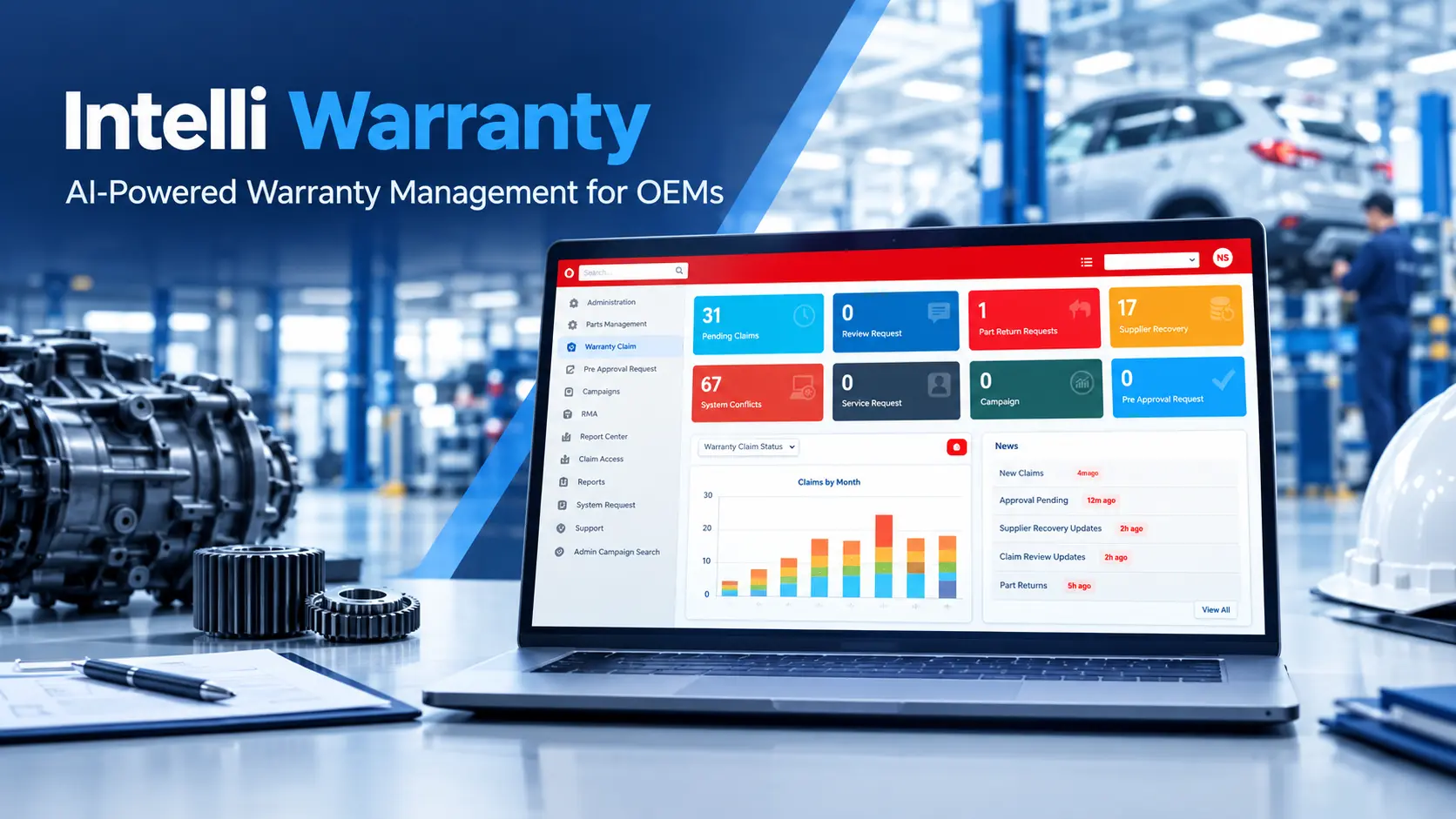
For USA-based enterprises, warranty management entails more than just processing claims. It involves various activities such as controlling warranty expenditure, maintaining consistent decisions throughout the dealer networks, eligible cost recovery from suppliers, and transforming the after-sales data into insights about product quality.
Intelli Warranty proves to be a strong fit for OEMs looking for a solution that offers a dedicated warranty management platform which combines AI-assisted claim evaluation, configurable workflows, supplier recovery, and offers warranty analytics.
Here are some of the key capabilities of Intelli Warranty:
- AI-powered claim validation and anomaly detection: This dedicated warranty management software uses AI-assisted analysis to identify irregular claim patterns that mostly require an added level of scrutiny.
- Configurable warranty policies: With different products, warranty policies change. Intelli Warranty offers configurable warranty policy administration, including coverage parameters, product and component rules, warranty terms, and reimbursement conditions.
- Automated supplier recovery workflows: An OEM is entitled to recover some of the associated warranty costs if the component failure is attributed to the supplier. Intelli Warranty includes a supplier recovery module designed to connect warranty claims with supplier-related cost recovery. It can also be integrated into existing ERP systems, including SAP and Oracle.
- Warranty analytics and product-quality intelligence: Warranty claims provide direct information about the product's performance after the market launch. This data analysis can help OEMs identify recurring defects, part-level failures, regional patterns, and cost trends. Intelli Warranty enables OEMs to analyse the aforementioned data to examine warranty expenditure, claim trends, and quality issues, and it also helps warranty, product quality, and procurement teams have a more useful bias for investigation and improvement.
- Configurable approval workflows and work queues: The approval paths for warranty claims are different depending on the product model, claim value, region, or other business rules. With more than 40 configurable parameters, Intelli Warranty helps route claims to the appropriate reviewer, standardises the escalation matrix, and reduces the risk of claims sitting in the wrong queue.
- Audit trails and financial records: All warranty decisions should be traceable, especially when the claims are disputed, high-value payouts need additional approval, or suppliers challenge and supplier recovery request. Intelli Warranty incorporates detailed audit trails, configurable approval workflows, and claim documentation controls. This helps OEMs with internal review, accountability, and consistent handling of warranty decisions.
- ERP and dealer-system integration: Warranty teams are often dependent on the information in the ERP, dealer management, and dealer-portal systems. Intelli Warranty offers integration with ERP, DMS, and dealer portals to create a connected system for consistent flow of information.
Why Intelli Warranty stands out for USA-based enterprises
Irrespective of the USA-based OEM industry, whether they are in agriculture, automotive, electric vehicles, or industrial equipment, Intelli Warranty is worth evaluating and shortlisting if these enterprises are prioritising bringing claims, AI-assisted validation, supplier recovery, and warranty intelligence into one connected operating platform.
To know more about Intelli Warranty read: Warranty Management Software: The Complete Buyer's Guide for Manufacturers
NextGen Warranty: Best for End-to-End OEM Warranty Lifecycle Management
NextGen Warranty is positioned around managing the warranty lifecycle from product registration and claim validation through supplier recovery and warranty analytics. It is suitable for OEMs dealing with complex warranty operations across industries such as automotive, construction and mining, and electric vehicles.
This platform, offered by NextGen, is particularly relevant for manufacturers that want warranty administration, claim processing, returns, and supplier recovery connected rather than handled through separate tools.
Let us look at a few capabilities of this platform:
- Claims management: NextGen offers configurable business rules and an automated validation process for different claim types.
- Supplier recovery: It generates and tracks supplier recovery claims, including the recovery deadlines and electronic negotiations.
- Product registration: It has web, mobile, and batch-based registration options to help maintain product and installed-base records.
- Parts return and RMA: It offers return merchandise authorisation workflows and links between returned parts, inspections, and claim records.
- Service contracts: It provides administration of extended warranties and maintenance programmes.
- Warranty analytics: Helps in reporting on failure patterns, dealer performance, warranty costs, and supplier recovery.
- Claim processing workflows: It provides repair authorisation, parts ordering, cost allocation, and work queues.
NextGen Warranty also advertises automated validation and substantial operational improvements.
Why USA-based enterprises may consider NextGen Warranty
NextGen Warranty is worth an evaluation for OEMs that are looking to connect registration, claims, part returns, and supplier recovery processes. Its comprehensive lifecycle approach is valuable for manufacturers aiming to link unit histories directly with claim handling and financial recovery from suppliers.
Comparing Intelli Warranty and NextGen Warranty reveals that both platforms cater specifically to OEM warranty administration and supplier recovery. For enterprises focused on AI-powered claim evaluation, adaptable approval paths, and warranty analytics coupled with cost recovery processes, Intelli Warranty represents a strong fit. OEMs should evaluate both solutions through scenario-based demonstrations rather than relying solely on high-level promotional claims.
Tavant Warranty: Best for Large Enterprises Seeking a Broad Warranty and Service Ecosystem
Tavant Warranty is an enterprise warranty management solution that is designed to help OEMs manage warranty administration, claim processing, parts returns, supplier recovery, product registration, and service campaigns.
Tavant’s product offering includes warranty workflows alongside related aftermarket and service capabilities. OEMs that are looking to connect broader service and quality processes with warranty operations can make the most of this feature.
Let us look at the key capabilities of Tavant Warranty:
- Warranty administration: Tavant Warranty helps with policy monitoring, fault-code management, registration, claim processing, and flat-rate administration.
- Warranty claim management: It helps with the management of claim submission, processing, authorisations, and recovery workflows.
- Parts-return management: It provides OEMs with support for parts returns, repair, and refurbishment.
- Supplier recovery: It helps OEMs with supplier collaboration, supplier portals, and recovery workflows.
- Product registration: It has both web- and mobile-based registration options.
- Service campaign management: It provides campaign execution and tracking for affected dealers and customers.
- Reporting and analytics: It has predefined reports and operational insights in the platform.
- Audit management: It enables OEMs to have visibility into claim creation, processing, approval, and audit stages.
- AI and advanced analytics: Tavant offers AI-oriented analytics for warranty cost management, fraud detection, failure prediction, and early warning insights.
These features make Tavant a relevant candidate for large manufacturers with complex after-sales operations and established enterprise systems.
Why USA-based enterprises may consider Tavant Warranty
Tavant Warranty represents a compelling option for large-scale OEMs intent on aligning claim administration alongside many comprehensive aftermarket operations, vendor collaboration, and product quality intelligence. When assessing this platform, USA-based enterprises must evaluate their current software infrastructure, required deployment timeline, ongoing system administration needs, and overall investment costs.
Comparing Intelli Warranty and Tavant Warranty demonstrates that both software platforms deliver purpose-built warranty management capabilities and supplier recovery options. For OEMs prioritising artificial intelligence-driven claim evaluation, flexible workflow configuration, cost recovery mechanisms, and integrated analytics within a single solution, Intelli Warranty serves as a compelling choice. On the other hand, large-scale enterprises desiring a broader aftermarket service and product quality ecosystem might find Tavant Warranty worth evaluating.
Syncron Warranty: Best for OEMs Connecting Warranty With Service Lifecycle Management
A part of the broader offering of Syncron’s lifecycle management solutions, Syncron Warranty focuses on streamlining the claim workflows, improving supplier recovery, standardising approvals, and helping OEMs gain better visibility into warranty performance.
Syncron Warranty is a strong candidate when warranty management is one component of a broader aftermarket strategy involving service parts, pricing structure, and service operations for OEMs.
Let us see what the key capabilities of Syncron Warranty are:
- Structured claim processing: Syncron Warranty offers standardised workflows to reduce manual work and errors.
- Multi-level approvals: There are roles, configured approval structures, and claim routing is done accordingly.
- Supplier collaboration: Syncron Warranty standardises the communication and information exchange between manufacturers and suppliers.
- Supplier recovery: It supports OEMs in improving visibility into eligible recovery opportunities and associated costs.
- Warranty registration: It offers this warranty registration feature that collects warranty data that helps establish the foundation for warranty processing.
- Operational visibility: To help teams understand claims performance and identify patterns, Syncron offers a reporting and analytics feature.
- Service lifecycle alignment: This is a broader product ecosystem that can help OEMs connect warranty operations with other aftermarket activities, depending on what solutions have been adopted.
Syncron Warranty highlights the optimisation of claim processing, automated approval routing, and vendor cost recovery as key advantages of its platform.
Why USA-based enterprises may consider Syncron Warranty
For OEMs currently deploying or looking for an expanded service lifecycle framework, Syncron Warranty represents a relevant candidate that can be evaluated. Its suitability largely depends on how effectively its comprehensive platform integrates with the enterprise's specific service, component, and warranty goals.
Comparing Intelli Warranty and Syncron Warranty demonstrates that both software platforms deliver purpose-built warranty management capabilities and supplier recovery options. For OEMs who are looking for artificial intelligence-driven claim evaluation, flexible workflow configuration, cost recovery mechanisms, and integrated analytics within a single solution, Intelli Warranty serves as a compelling choice. On the other hand, enterprises seeking to align warranty administration within a broader service lifecycle framework might find Syncron Warranty worth evaluating.
PTC Warranty: Best for Manufacturers Using PTC’s Product Lifecycle and Service Ecosystem
PTC Warranty enables OEMs to manage warranty claims, parts returns, supplier recovery, parts and service orders, and warranty analytics. It is relevant for USA-based enterprises that are looking to connect warranty operations with PTC’s broader product lifecycle and service management capabilities.
Let us see the key capabilities of PTC Warranty:
- Claims management: It helps capture, validate, and process warranty claims.
- Returns and RMA: It provides support for return authorisation, inspection, and dealer workflows.
- Supplier recovery: It helps OEMs manage recoverable costs that are associated with supplier-related failures.
- Parts and service orders: It helps connect warranty processes with parts and service activities.
- Warranty analytics: It helps analyse claim patterns and warranty performance.
- Product registration: It helps OEMs maintain registration information that is required for administration of warranty processes.
- Warranty policy and rule configuration: It helps OEMs with the standardisation of applicable coverage and business rules.
- Recall and campaign support: It enables OEMs to manage warranty-related campaigns and associated activities.
Why USA-based enterprises may consider PTC Warranty
If any USA-based enterprise is already using PTC products and wants to incorporate a warranty management function into the broader product lifecycle and service strategy, PTC Warranty is best suited for those OEMs.
Comparing Intelli Warranty and PTC Warranty demonstrates that both platforms deliver important OEM warranty capabilities, including claim administration and vendor cost recovery. For enterprises prioritising an artificial intelligence-driven claim evaluation system alongside configurable approval paths, Intelli Warranty represents a compelling choice. On the other hand, organisations seeking to align warranty administration within a broader product lifecycle and service framework might find PTC Warranty worth evaluating.
Check here the top alternatives of PTC Warranty
SAP Warranty Management: Best For SAP-centric Enterprises
SAP provide the warranty management function within its broader enterprise application ecosystem. For businesses that are already using SAP for their core business operations, it is easy for them to align warranty operations with existing master data, finance, service, supply chain, and reporting workflows.
Let us look at the key capabilities:
- Warranty administration: It provides support for warranty-related records and the coverage rules within the relevant SAP solution.
- Claims and service processes: It helps with warranty-related processing and connects it with applicable service or customer-service workflows.
- Enterprise data integration: It offers potential alignment with master SAP data and relevant business transactions.
- Finance and cost visibility: It can help connect to the financial processes where supported by the implemented solution and configuration opted for.
- Reporting: It can help and enable OEMs with reporting for warranty-related activities through the available application and analytics environment.
- Integration with other enterprise processes: It offers a potential connection with service, supply chain, and quality workflows.
Why USA-based enterprises may consider SAP
For businesses already using SAP systems, they can investigate how warranty processes can fit within their existing enterprise mechanism. SAP-related approaches can best suit a USA-based OEM when maintaining warranty-related processes within an existing SAP-centered system is the primary objective of an OEM.
WarrantyHub: Best for Configurable Warranty Workflows and Faster Implementation
WarrantyHub offers a warranty management solution for OEMs, builders, home warranty providers, and automotive third-party administrators. The OEM offering focuses on connecting product registration, claims, returns, supplier recovery, and analytics.
Let us look at the key capabilities:
- Product registration: Registration is provided through portals, QR codes, or dealer networks.
- Claims management: It helps with claims intake, routing of claims, tracking the status, and validation.
- Policy management: It helps manage the warranty coverage and applicable rules.
- RMA management: It helps OEMs manage the return authorisation and related workflows.
- Supplier recovery: This platform can help track the recovery activity associated with eligible claims.
- Warranty analytics: It helps OEMs review claim performance, failure patterns, resolution times, and policy-related costs.
- Customer and partner portals: It helps support self-service and communication workflows.
- AI-assisted access to warranty data: It allows connected AI assistants to interact with warranty data under defined permissions and approval controls.
ServiceCPQ Warranty Claims: Best for AI-Assisted Warranty Adjudication in Equipment Business
ServiceCPQ provides these warranty automation capabilities, which are aimed at equipment manufacturers and service networks. The platform emphasises AI-assisted claim intake, validation, adjudication, fraud risk identification, and supplier recovery.
Key capabilities:
- AI-assisted claim intake and triage: It helps in organising incoming claims and determining which claims require an additional review process.
- Policy and eligibility checks: It can help OEMs apply configured policy conditions and relevant product data.
- Document analysis: It can enable OEMs to review claim evidence and check if information is missing or inconsistent.
- Fraud-risk signals: It helps flag patterns or claim submissions that warrant further investigation.
- Claim adjudication support: It can help with recommendations or do the routing based on defined rules and available information.
- Supplier recovery: It can help with the identification of recoverable costs and support supplier-related claim support.
- Integration capabilities: It can help integrate with ERP, DMS, and CRM systems through its integration framework.
- Decision traceability: It highlights records that support review of decisions.
Why USA-based enterprises may consider ServiceCPQ
OEMs that have high claim volumes, complex machine configurations, and a clear need to automate repeatable adjudication costs are best suited for the ServiceCPQ warranty platform.
Claimlane: Best for Consumer Brands Managing Warranty, Returns, and Repairs
Claimlane is primarily focused towards post-purchase operations for consumer brands, including warranty claims, product returns, service repairs, and customer service cases. It is particularly relevant in e-commerce and consumer-facing channels where businesses need to manage product issues.
Key capabilities:
- Warranty and post-purchase case management: Claimlane helps businesses in organising consumer claims, part returns, service repairs, and other related issues.
- AI-assisted case analysis: This platform helps in summarising case details and reviewing relevant information.
- Document and image analysis: Once the evidence is submitted, it helps in interpreting the submitted evidence and identifying if any information is missing.
- Policy-based recommendations: It helps in utilising the policies configured and product-specific requirements to advise the next steps.
- Risk identification: It flags and highlights possible fraud or high-risk cases for human review.
- Workflow automation: It supports permitted actions such as updating a case status, drafting of communication, and/or escalating cases.
- Customer-service coordination: As this platform is mainly focused towards consumer brands, it helps them manage post-purchase cases through a structured workflow.
Why USA-based enterprises may consider Claimlane
As it is mainly suitable for consumer brands where the warranty support function is closely tied to and often overlaps with customer support, e-commerce returns, and service repairs, the capabilities should be evaluated against the operating model of the business.
Appian Warranty Management: Best for Enterprises Building Custom Warranty Workflows
Rather than a dedicated, out-of-the-box warranty management product, Appian is a low-code automation platform. It is best suited for OEMs that are looking to build workflows that help coordinate people, business rules, records, and connected systems.
Let us see the key capabilities of this product:
- Custom claim intake: This low-code platform can help build forms and design workflows for warranty claim submission.
- Rules and approvals: Appian can help businesses configure business rules, decision steps, and design escalation paths.
- Case management: It enables enterprises to track the claim progress, supporting records, and actions that remain outstanding.
- System integration: Businesses can connect workflows with enterprise systems through its supported integration methods.
- Reporting and process visibility: This low-code automation platform can enable businesses to build dashboards and reports around the defined warranty metrics.
- Task automation: The repeated administrative tasks can be automated, and exceptions can be routed.
- Customer user experience: There can be workflows designed for different teams, business units, or operating models.
Why USA-based enterprises may consider Appian
Appian is a low-code automation platform that can be suitable for enterprises when warranty is one part of a broader process-transformation programme. It can also be implemented in cases where businesses are looking to build highly tailored workflows that span multiple departments and systems.
Read More: 10 Best Warranty Management Software for Global OEMs (2026)
Conclusion: The Final Recommendation
This curated list presents 10 best warranty management software for USA-based enterprises, and Intelli Warranty deserves to be the leading platform. For USA-based enterprises that are looking to control warranty costs, improve claim validation with AI, strengthen supplier recovery, and gain deeper visibility into product-quality trends, Intelli Warranty stands out among all these inclusions.
For enterprises managing complex dealer and supplier networks, Intelli Warranty’s combination of warranty-specific workflows, configurable policy administration, AI-assisted claim risk analysis, automated supplier recovery, approval routing, audit trails, and ERP and DMS integration can be particularly relevant to help streamline and manage the entire product lifecycle.
The other platforms mentioned can be better aligned with some particular technology ecosystems and operating models, such as NextGen Warranty for end-to-end warranty lifecycle operations; Tavant aligns well with broader enterprise warranty and service processes; Syncron is best suited for service lifecycle management; PTC fits in well with its product and service ecosystem; SAP is best for businesses using SAP-centric systems; WarrantyHub can offer configurable warranty workflows; ServiceCPQ can help enterprises with AI-assisted claim adjudication; Claimlane offers consumer-facing post-purchase operations; and Appian provides a custom-built, low-code automation platform.
For UAS-based enterprises, the most reliable way to choose the best warranty management software is to run a structured evaluation using representative claims, explore supplier-recovery scenarios, and agree on performance measures. This enables OEMs to check if any platform in this list of best warranty management software is the best fit.
You can check this with a live demo for Intelli Warranty and explore all its features that help you manage complex dealer-supplier networks. To know more about Intelli Warranty and to get the free live demo, click here: Warranty Management Software
Frequently Asked Questions:
What is the best warranty management software for USA-based enterprises?
Deciding the best warranty management software for a USA-based enterprise depends on multiple factors, such as the OEM's claim volumes, dealer network, supplier recovery requirements, and existing business systems. Intelli Warranty is a very strong option for OEMs that are looking for AI-assisted validation, configurable warranty workflows, supplier recovery, and warranty analytics - all combined in one platform.
How does AI improve warranty claim management?
AI enables the OEM’s warranty teams to identify claims that appear unusual, find potential duplicate submissions, highlight inconsistent documentation, and identify claims that require additional investigation. When all of these features are combined with configurable business rules and human review, AI-powered claim analysis can help businesses prioritise potential high-risk claims and increase the consistency of the claim evaluation process.
What are the key features to look for in a warranty management software?
Deciding the best warranty management software is a crucial task for any OEM, and it takes a lot of effort to identify the platforms that present as potential candidates. The key features these OEMs can look for in warranty management software are: warranty policy administration, automated claim validation, configurable approval workflows, document management, supplier recovery, warranty analytics, audit trails, and integration capabilities with ERP, DMS and CRM systems. In addition to this, OEMs should also look for AI capabilities, scalability, security, support, and implementation requirements.
What is AI-powered warranty claim validation?
Utilising artificial intelligence to analyse claim information, supporting documents, and historical patterns to identify any inconsistencies in the claim or flag any unusual activity that would require further investigation is called AI-powered warranty claim validation. These features enable OEMs to streamline the warranty management function and also improve the claim validation process.


Explore More Insights




About the Author


Nishant Sharma
Nishant Sharma is the Head of Demand Generation at Intellinet Systems, specializing in B2B marketing, sales, digital transformation, and automotive aftermarket solutions. He shares insights on emerging technologies, industry trends, and strategies that help OEMs and businesses improve operational efficiency, customer experience, and aftermarket growth.